Sovereignty and the rule of law are under threat from Trump’s attacks on Lula’s administration just as they have been across Latin America, argue CARLOS MARTINEZ and SARA VIVACQUA


 Latest editorial

Finding d’Artagnan: the search for the man behind the myth
A remarkable excavation in the Netherlands has raised hopes of locating the grave of Louis XIV’s famed captain of the King’s Musketeers. JOHN CALLOW introduces the real figure behind the hero of Dumas’s novels
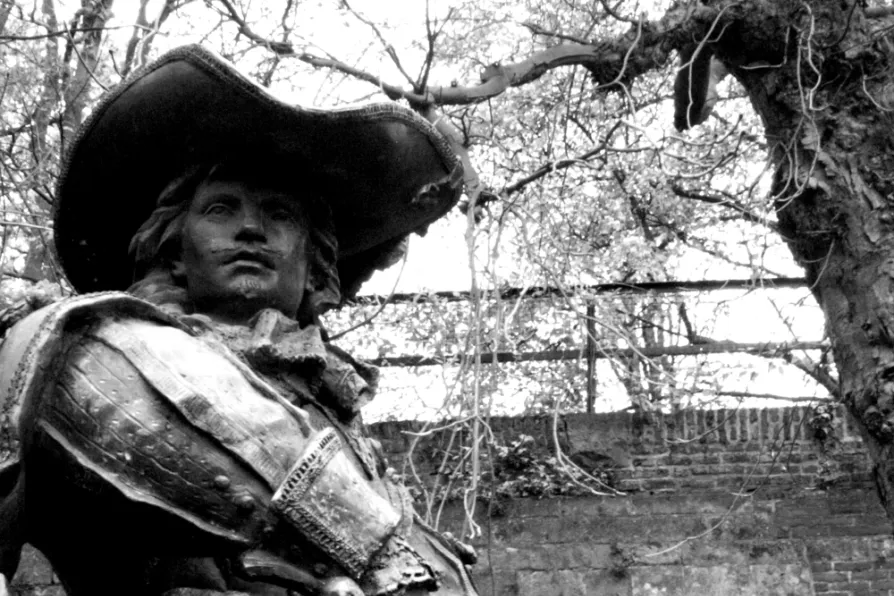 MYSTERY: Statue of d’Artagnan in Maastricht

Glasgow will remember the martyrs of the 1787 strike this weekend in speech and song, their spirit is sorely needed today, writes JIM LISTER
ALEX BROWN explains how medieval Europe was plunged into sunless years, with widespread crop failures and devastating famines
Police crackdowns on Israeli peace demonstrators combined with court rulings and settler organisations are designed to strip Palestinian families of their homes and land. The Israeli state has tried to silence both Israelis and Palestinians who resist, according to Zo HaDerekh (This Is The Way) the Communist Party of Israel’s Hebrew-language weekly
Remembering a legendary trade unionist and inspirational leader
Communists in Australia, Britain and the US outlined a joint state agreement against their governments’ militarist provocations.





AT THE start of the year, the floor of the church of St Peter and Paul, in the village of Wolder, outside Maastricht, began sinking. The tiles cracked and the outline of a grave became visible, close to the spot where the altar table had once stood.
Local archaeologists were brought in and a complete skeleton excavated, along with a coin from the reign of Louis XIV and a musket ball.
Stories had long circulated that the church had been the last resting place of d’Artagnan, the captain of the King’s Musketeers made famous by Alexander Dumas’s novels, and Jos Valke, the deacon, broke the story to the worldwide media, in late March, telling the BBC that he was “99 per cent sure” that the bones were those of the French soldier.
The parallels with the sensational discovery of the remains of Richard III in Leicester were immediately apparent and the church basked in the publicity and looked forward to becoming a major tourist centre. However, the archaeologists were more cautious and samples taken from the jaw bone were sent away for DNA testing and comparison with living descendants, while the municipal authorities in Maastricht reacted strongly to the church’s excavation, claiming that it had not been properly conducted, seeking to dampen down the excitement, and wrapping the whole endeavour in layers of red tape. Romance, not for the first time in d’Artagnan’s story, had collided with harsh reality.
His modern fame rests squarely upon Dumas’s Three Musketeers, published in 1844, and successive film versions, since 1916, which found their surest expression in Richard Lester’s movies in the 1970s, starring a young Michael York; and in Bertrand Tavernier’s feminist retelling, with Sophie Marceau as d’Artagnan’s Daughter, in 1994.
In his tale of friendship and of a hot-headed, yet intelligent, Gascon’s career as a duellist and adventurer in the service of the French crown, Dumas captured the public imagination and made his fortune. Yet, the novel also contained veiled criticisms of the abuses of an absolutist monarchy and events reworked from the life of the novelist’s own father, a black Jacobin and French revolutionary general.
For his public, however, Dumas was keen to create the impression that his story was founded upon historical fact and upon d’Artagnan’s own “memoirs,” wherein he did, indeed, meet Athos, Porthos and Aramis in the antechamber of the commandant of the King’s Musketeers.
The trouble, however, is that the “memoirs” were, in reality, an earlier novelisation of d’Artagnan’s life, published in 1700, which romanticised the underworld of spies and conspiracies woven and controlled by Cardinals Richelieu and Mazarin.
We need to look elsewhere for the “real” d’Artagnan, who was born Charles de Batz, in about 1611, into a family of newly ennobled merchants. On taking military service, which consciously defined him, he assumed his mother’s maiden name (d’Artagnan) and never looked back. He saw action throughout the 1640s in sieges on France’s borders, during the wars with Spain, and on the outbreak of civil war (known as the Fronde) took the side of the crown and Mazarin against the nobles and regional assemblies.
It was in the service of Cardinal Mazarin, the architect of the centralisation of the French state and of Louis XIV’s absolute monarchy, that d’ Artagnan won recognition, going into temporary exile alongside his master, and honing his skills in espionage as well as warfare.
When the youthful Louis XIV sought to topple his chief minister, Nicholas Fouquet, who — it seemed — had grown too proud and powerful, it was d’Artagnan who, in September 1661, effected a clinical and devastating arrest outside the royal council chamber, that amounted to a coup d’etat. For the next four years, d’ Artagnan would serve as Fouquet’s jailer in the Alpine fortress of Pignerol.
Promoted as commander of the King’s Musketeers in 1667, d’Artagnan was effectively Louis XIV’s head of security, a man adept at acting silently in the shadows, overseeing policing actions and stamping out dissent.
His character and capacities were splendidly delineated but subsumed within the fictional figure of “Fabien Marchal,” the ruthless security chief, in the recent Canal+ / BBC co-production of Versailles. The TV series fought shy of naming d’Artagnan lest his allure overshadowed, and challenged, its own narrative arc, which celebrated the excesses and splendour of the absolutist monarchy alongside its squalor and increasingly vicious intolerance.
In many respects, d’Artagnan was fortunate that his career spanned the zenith of the Sun King’s reign. He was a key instrument in France’s expansion, military victories, and pursuit of glory. He was not there for its decline into financial insolvency, famines, religious persecution, and defeat.
After a period as the uniquely unpopular governor of Lille (a newly conquered fortress city), he hurried to join the concentration of Louis XIV’s armies that swept across the Rhine into Holland, in 1672, and came within an ace of destroying the republic. However, the brilliance of the early victories soon foundered under the flooding of the Dutch countryside and the grind of siege warfare, amid the mud, strained supply lines, entrenchments, and withering case shot.
Heavily fortified and well-garrisoned, Maastricht stubbornly held out against the French invaders, with Louis XIV hearing mass each day in the repurposed church of St Peter and Paul, close to his command post at Wolder.
On June 25 1673, d’Artagnan planned and led a daring raid on the Dutch bastions, accompanied by troops from the King’s household and a scattering of English volunteers, including the Duke of Monmouth and John Churchill (the future Duke of Marlborough).
The fleur de lis standards were briefly planted atop the first line of walls but at a terrible cost, and d’Artagnan was killed by a shot to the throat as he charged at the head of the Musketeers.
Due to the summer heat, his body was not returned to France but was hurriedly buried “in consecrated ground.” We know no more than that and the presumption that he was interred at the little church at Wolder is the product of educated guesswork.
That said, the recovery of the musket ball, found above chest height, from the anonymous grave does provide a tantalising link with d’Artagnan’s death. Whether or not the DNA evidence provides conclusive proof remains to be seen but, even after some 350 years, the Glory of the Sun remains compelling.
It is personified by d’Artagnan, the eternally youthful soldier, whose fictional idealism masked the ruthlessness, determination, and devotion to the state that hallmarked the no less remarkable career of Charles de Batz: Captain of the King’s Musketeers.

Similar stories
JOHN CALLOW introduces the work of Geoffrey Trease, who placed ordinary people at the centre of his historical fiction for children, creating adventurous stories to inspire the possibilities of social change

STEPHEN ARNELL looks at some of the notorious political corruption cases from British history
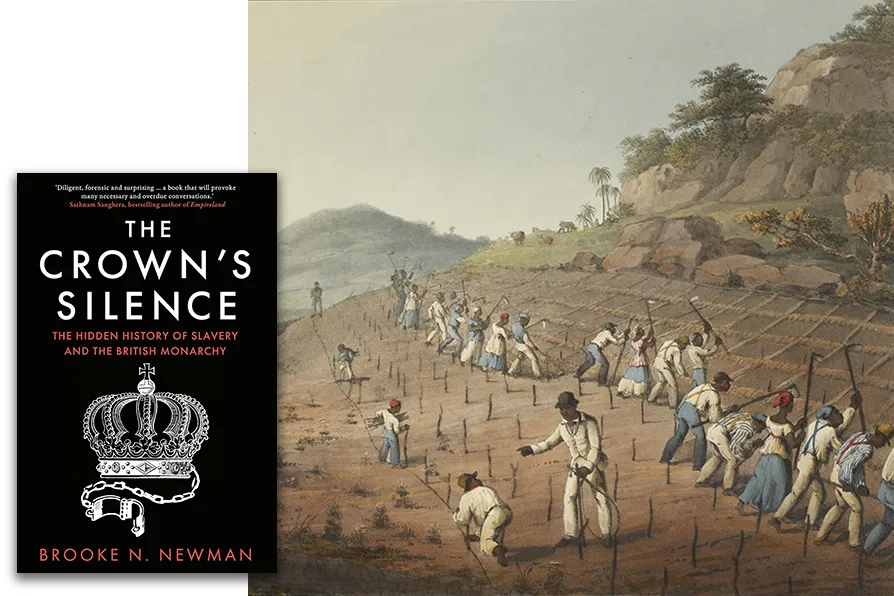
ELLIS RAE recommends a stunning history of the active role played by the British monarchy in establishing and profiting from slavery