DOUG NICHOLLS says the parasitic finance markets must be challenged or another British government could be toppled


 Latest editorial

The radical power of African oral tradition
ROGER McKENZIE draws attention to the much-neglected oral traditions of the global South that define the identity – and therefore the liberation – of its custodians
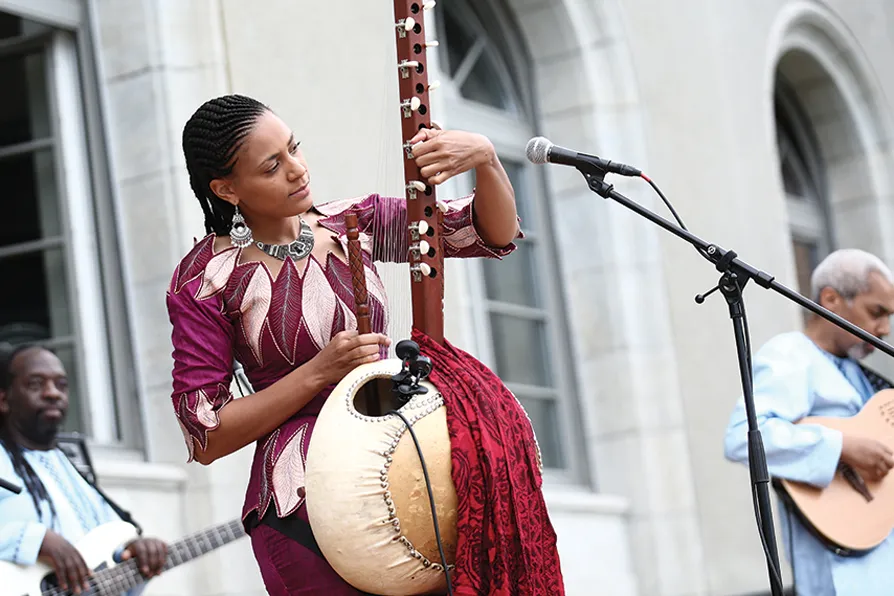 The kora-playing, London- born Maya Sona Jobarteh is a member of one of the five principal griot practicing families from West Africa / Pic: World Trade Organisation/Jay Louvion

The late country singer’s Imagination Library has put hundreds of millions of books into children’s hands. We should build on that legacy by defending the libraries at the heart of our communities, says BRENDA AITCHISON
Deprivation is a fundamental factor in criminal behaviour that must be addressed but, KENNY MacASKILL argues, there needs to a major rethink in sentencing to tackle overcrowding
MML director MEIRIAN JUMP outlines the recently refreshed library’s busy autumn schedule that ranges from book sales, archival exploration, community work with online education and the ever popular site tours
Some thinkers and authors on the right are openly discussing the possibility that the historically successful party of the British ruling class may be exhausted
Class struggle is the motor of history but the direction and detail of change at any time and place is the outcome of many factors, suggests the Marx Memorial Library and Workers’ School
TONY BURKE surveys the shifting political landscape and the challenges Labour needs to address if it is to prevail in the 2028 federal elections





THERE’S an old African proverb that says: “Until the lions have their own historians the history of the hunt will always glorify the hunter.”
This came to mind last weekend when I watched a one woman performance of America, Who Hurt You? in Oxford by Sarah Jones.
The Tony Award-winning comedian used multi-character monologues to explore the trauma that has beset the United States since, if we are to be honest, way before the far-right leadership the country has twice elected in the shape of Donald Trump.
At the centre of Jones’s exploration of US trauma is the portrayal of the US as a whiney teenager who has been persuaded to come to the couch of a psychiatrist (Britain) at the behest of every other nation on the planet to answer for the atrocities that it has committed.
Britain, rightly, does not get away with not answering for its own atrocities, such as enslavement and its brutal colonial rule across the globe. If you get a chance to see this remarkable show, then I strongly urge you to do so but my intention here is not to provide a review of the performance.
In my mind it wasn’t even a performance.
It was rooted very much in the tradition of African storytelling even though the testimonies she introduced included voices of Native Americans, African-Americans, Japanese, Jews, Chinese, Irish and a fully fledged supporter of Trump’s Make America Great Again project.
Oral storytelling is at the centre of many African societies. They connect generations who are encouraged to pass on the stories to those that follow.
One problem arises with the term “pre-history.” This refers to everything that happened in human history before people began to keep written records.
The earliest known writing appeared around 3200 BC in Mesopotamia. This means prehistory covers an enormous stretch of time, from the emergence of the first humans in Africa roughly 300,000 years ago all the way up to the point when cultures began to write things down.
The fact that humans began in Africa speaks to me of the term encouraging us to believe that the oral traditions of Africans and many indigenous communities across the world are considered to have less value than the written word.
I realise that the historians reading this can dissect what I have just said and tell more where my perception is wrong but this, rightly or wrongly, is the impression that I have been left with.
The African oral tradition of storytelling is more than just a primitive narrative-sharing. It is a dynamic process that has sustained communities for centuries and has enabled the “darker people” to stay connected and sustained even through the horrors of enslavement and colonialism.
I believe that any attempts to decolonise thinking and behaviour in Western society, whether you are black or white, requires a deeper understanding of other ways of living our lives, including the way that we pass on our histories, stories and lessons.
I talk of African traditions or storytelling not in the singular but in the plural.
Africa is not a country. It is a vast continent of around 1.4 billion people with many histories and traditions.
The Egypt empire, so often portrayed as having little or nothing to do with the continent of Africa, has, as we have seen through the explorations of the ancient pyramids, an amazing and rich history of written storytelling.
Many of the other great civilisations of Africa, such as Mali, Great Zimbabwe and Carthage, all had rich traditions of storytelling, some of it a mixture of written and oral.
Oral traditions in African societies include diverse forms such as the teaching of folk tales, mythological narratives, epic stories and, as I began this feature, proverbs, conveying powerful messages.
At the heart of the African oral tradition is a belief in the power of the collective storytelling experience and, with that, in west Africa in particular, the important role of the griot.
Griots served as living archives of community memory. Their role was, and is, to preserve genealogies, historical events, and cultural knowledge through intricate oral performances that bridge past and present.
This was one of the first things that came to mind watching last week’s performance by Jones.
Having used the word performance again I do want to emphasise that the ancient practice of storytelling goes far beyond entertainment.
It preserves culture and promotes intergenerational learning.
I often talk to people about how I believe that my ancestors are constantly watching over and guiding me through life.
This does not always go down well with some of the comrades who believe that, as a communist, I should be much more grounded in reality. Maybe so?
But when I walk to the end of the street and invariably see a red kite bird fly over my head it often comes to my mind that my dear and much-missed mum is watching over me in the shape of the bird.
Equally when I have a difficult decision to make, I know that closing my eyes and taking a moment to commune with my ancestors helps to provide me with at least some measure of clarity.
I suggest that dismissing these beliefs or practices does not help us towards the often stated goal on the left of decolonising our thinking and behaviour.
The role of the griot in African culture is critical in maintaining unity and a link to a past that was deliberately stolen from us and reduced to a level of mystical evil mumbo jumbo — as with voodoo — one of the spiritual practices developed in the West to keep the connection with Mother Africa during enslavement.
African storytelling transforms what might seem to be abstract spiritual concepts into collective experiences.
When a griot does their thing, they’re not just sharing a story — they’re maintaining a tradition that helps to bind together a people fractured by enslavement and colonialism.
Without telling our stories in the way that we want to tell them our histories and our lives remain in the hands of those that enslaved and colonised us.
The future of the oral tradition of African storytelling is not just about preservation. It also helps us to understand the rich radical tradition of black resistance.
How else do you think resistance to enslavement, colonialism and racism has been enabled for centuries?
Imagine the ingenuity that it took during enslavement on plantations for people to develop methods of communicating with each other when people of different nationalities and languages were deliberately put together in an effort to block communication and therefore thwart resistance.
Oral storytelling developed through music such as jazz and African drumming. Those are writings for another time, but they are absolutely linked to the oral tradition of African storytelling.
These traditions of African-inspired oral storytelling continue to develop.
Those of us reading this in the belly of the beast of colonialism would do well to recognise its significance as part of our efforts to decolonise our thinking and practices.

Similar stories
ROGER McKENZIE looks at how ancient traditions practiced today can be the cornerstone of anti-imperialism in Africa
1943-2025: How one man’s unfinished work reveals the lethal lie of ‘colour-blind’ medicine
ROGER McKENZIE argues that Western powers can see the beginning of the end in the rise of the global South — and racist reactions are kicking in
ROGER McKENZIE argues that the BRI represents a choice between treating humans as commodities or as equals — an essential project when, aside from China’s efforts, hundreds of millions worldwide are trapped in poverty