


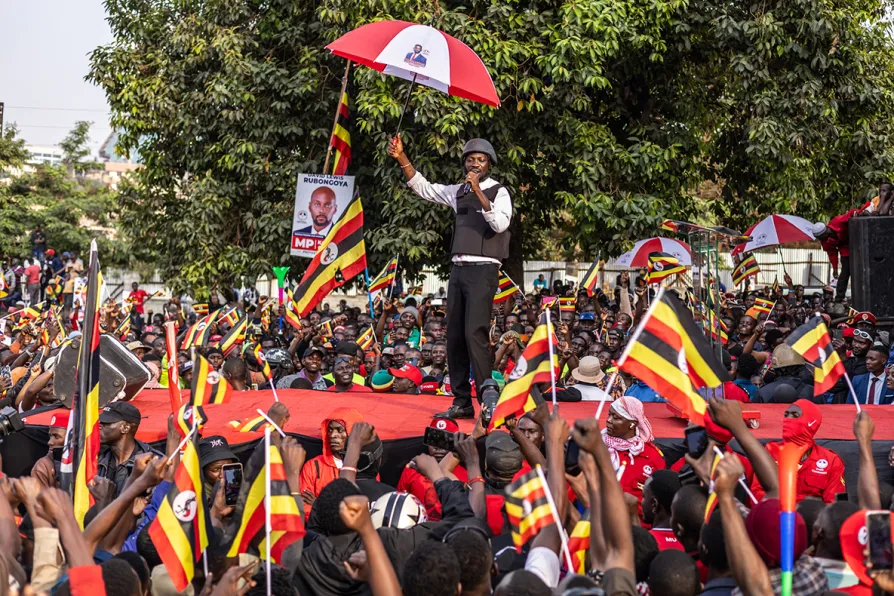
 Uganda opposition presidential candidate Robert Kyagulanyi Ssentamu, known as Bobi Wine, addresses supporters during his final campaign rally at Aga Khan Grounds, in Kampala, Uganda, January 12, 2026
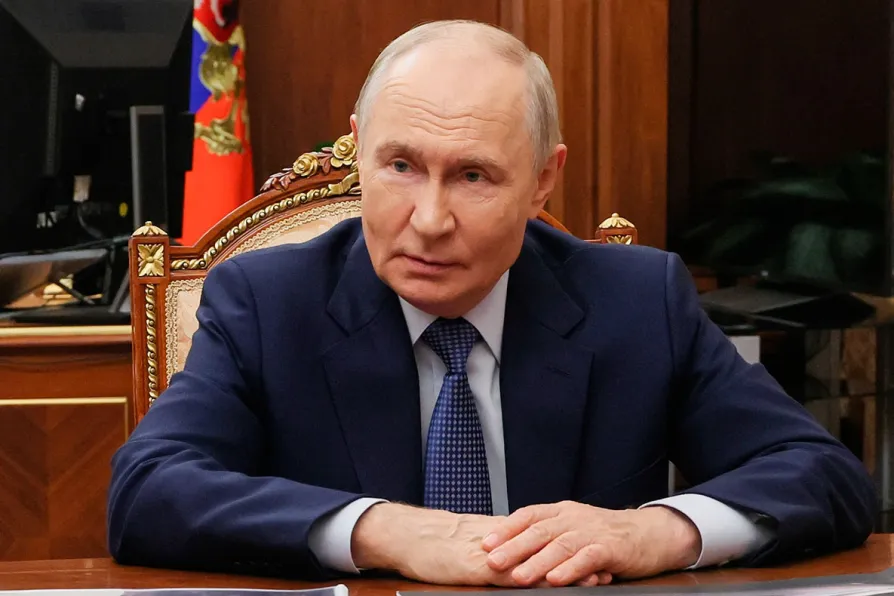





UGANDANS go to the polls today in an election that is likely to extend the rule of the long-term president while raising concerns about transparency, hereditary rule, military interference and an opposition strategy to prevent vote tampering at polling stations.
President Yoweri Museveni, who has held power since 1986, seeks a seventh term that would bring him closer to five decades in power.
But he faces a strong challenge from the musician-turned-politician best known as Bobi Wine, who appears to be the main voice of those that yearn for political change.
Six other candidates are running for president in the East African nation of roughly 45 million people. Electoral authorities say there are 21.6 million registered voters.
Analysts say President Museveni will almost certainly retain power, but at 81 he has become even more reliant on the nation’s security forces to enforce his authority.
His son and presumptive heir, General Muhoozi Kainerugaba, is the top commander of the military, which Mr Wine accuses of interfering in the electoral process.
On Tuesday, the Uganda Communications Commission directed internet service providers to suspend the general public’s access to the internet, as well as the sale and registration of new SIM cards.
The government agency said the measure was “necessary to mitigate the rapid spread of online misinformation, disinformation, electoral fraud and related risks.”
Mr Wine’s party, the National Unity Platform, has urged followers to stay near polling stations and remain watchful after voting as part of an effort to prevent rigging.
The Office of the United Nations High Commissioner for Human Rights in Geneva has cited “widespread repression,” including the abduction and disappearance of opposition supporters.
Ugandan authorities say the presidential campaigns have been mostly peaceful. Ugandan authorities began deploying troops on Saturday in parts of the capital, Kampala, with armoured trucks spreading into different parts of the city and soldiers patrolling the streets.
