

 Latest editorial
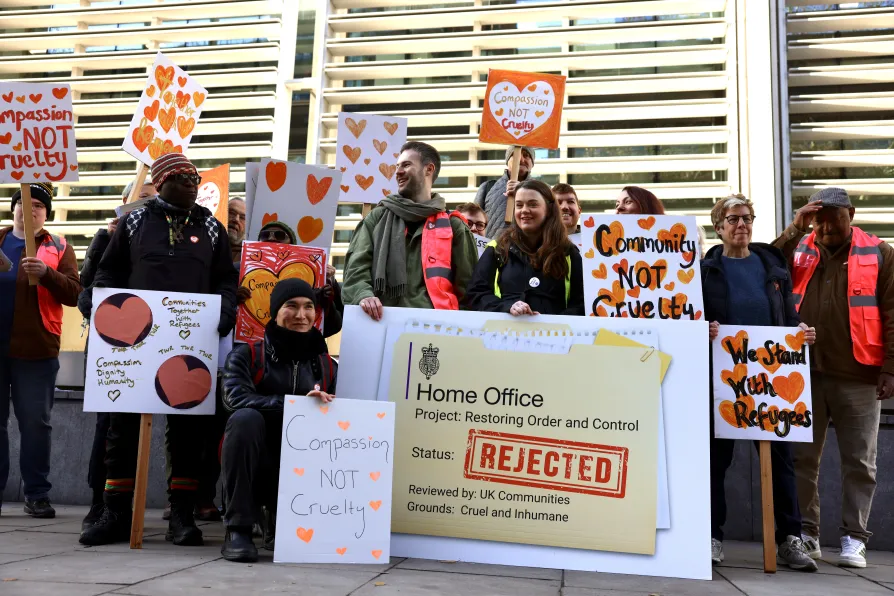 Photo: Together With Refugees/Sylvie Pope






A HOME OFFICE protest kicked off a week of nationwide campaigning against “cruel” proposals to erode refugee rights today.
Last month, Home Secretary Shabana Mahmood announced plans to make refugee status temporary — lasting until they are “safe” to return — narrow the appeal process and threaten visa bans on countries that block returns.
Today, 225 local community groups condemned her “ruthless new plans to erode refugee rights” in an open letter alongside a demonstration outside the department.
More than 30 “Communities Together for Refugees” actions are now planned, alongside 10,000 posters with the message “We Stand Together with Refugees” to appear in windows across the country at homes, community spaces, businesses and places of worship.
Minda Burgos-Lukes, an organiser at the Together With Refugees Community Organising Network, said: “We are coming together from communities across the country to tell the Home Secretary that we reject her cruel plans.
“The far-right marches and attempts to spread fear do not reflect what we witness on the ground. This weekend, we stand together with refugees to show what our communities are truly capable of — showing each other appreciation, respect, dignity and hope.”
The letter states: “We — communities across the UK — are standing together to reject your plans. Now is not the time to play into the hands of those seeking to build them-and-us division between local communities and refugees.
“Now is the time to focus on what unites us, find common ground and offer our humanity to those who have already suffered enough.”
The Home Office was contacted for comment.
Gaps in official migration statistics are hampering public debate and policy decisions on immigration, including on cases relating to human rights laws, according to research by the University of Oxford’s Migration Observatory.
Migration Observatory director Madeleine Sumption said: “The UK’s membership of the European Convention of Human Rights (EHCR) is a major issue in public debate, in large part due to its impacts on migration policy.
“But the current data can’t give us a clear picture of where and when it has most impact. This makes it harder for the public or policymakers to make an informed choice about an important decision with long-term repercussions for the UK.”
