Latest editorial

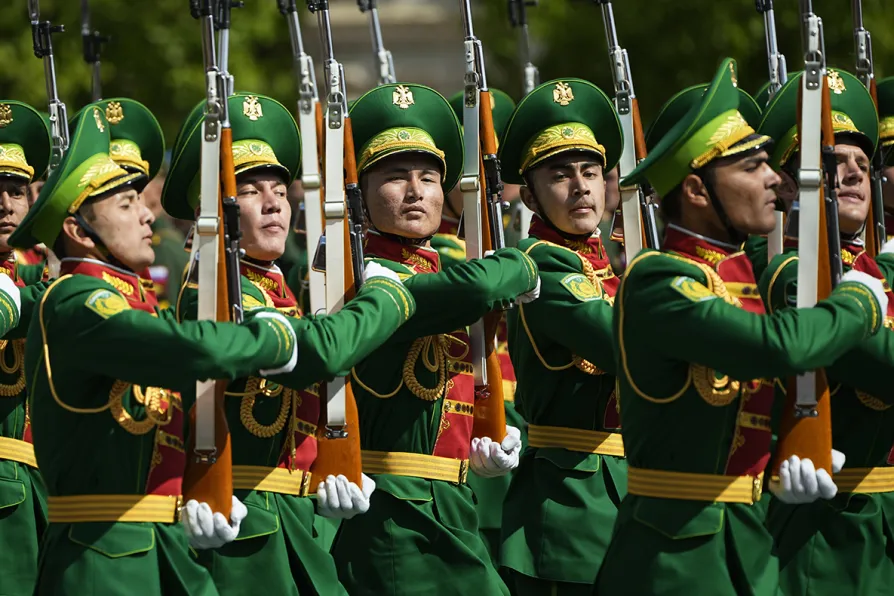 Turkmenistan's servicemen march along Red Square during the Victory Day military parade in Moscow, Russia, Friday, May 9, 2025, during celebrations of the 80th anniversary of the Soviet Union's victory over Nazi Germany during the World War II





A WESTERN boycott of the Victory Day parade in Moscow, marking 80 years since Nazi Germany’s surrender to the Soviet Union, has not stopped global South leaders from flocking to the event.
The leaders of long-established socialist states China, Vietnam and Cuba joined those from a newer wave of anti-imperialist movements — Brazil’s Lula, Venezuela’s Maduro and significantly Ibrahim Traore of Burkina Faso, one of the west African states which has recently thrown off French domination. Leaders from multiple former Soviet states also attended.
The EU’s boycott call, accompanied by threats of penalties for going, is motivated by the war in Ukraine, and undoubtedly Vladimir Putin hopes to exploit the memory of the Soviet Union’s heroic war against Nazism for his own ends.
But the open celebration of Nazi collaborators by the Ukrainian government and the EU’s attempt to draw an equivalence between fascism and communism undermine the attempt to portray a boycott as a straightforward anti-war statement. History is being contested here, and the left should honour the memory of those who fought fascism, and of the Red Army which liberated Europe.
The number of world leaders at the Moscow parade is a statement of its own, a signal from the global South that they are not interested in Western strictures. And China’s Xi Jinping’s insistence that marking the victory of World War II is also about upholding its legacy, in the authority of international law and the United Nations, is absolutely correct.


Internationalism is deeply embedded in socialist theory and practice. Examination illuminates its complexity asserts the Marx Memorial Library and Workers’ School
International solidarity can ensure that Trump and his machine cannot prevail without a level of political and economic cost that he will not want to pay, argues CLAUDIA WEBBE