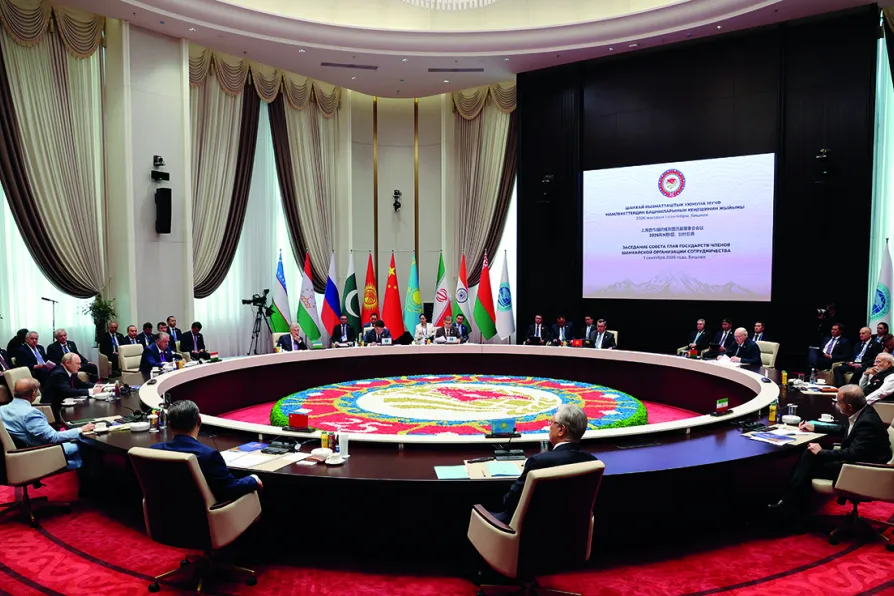
The 25th anniversary meeting of the Shanghai Co-operation Organisation in the Kyrgyz capital may offer a glimmer of hope that international relations do not need to be defined by endless confrontation, writes KENNY COYLE


 Latest editorial

The price of women’s equality is eternal vigilance
Women’s hard-fought-for rights are facing sustained and serious ideological attack. Let this International Women’s Day be a call to arms, says Professor MARY DAVIS
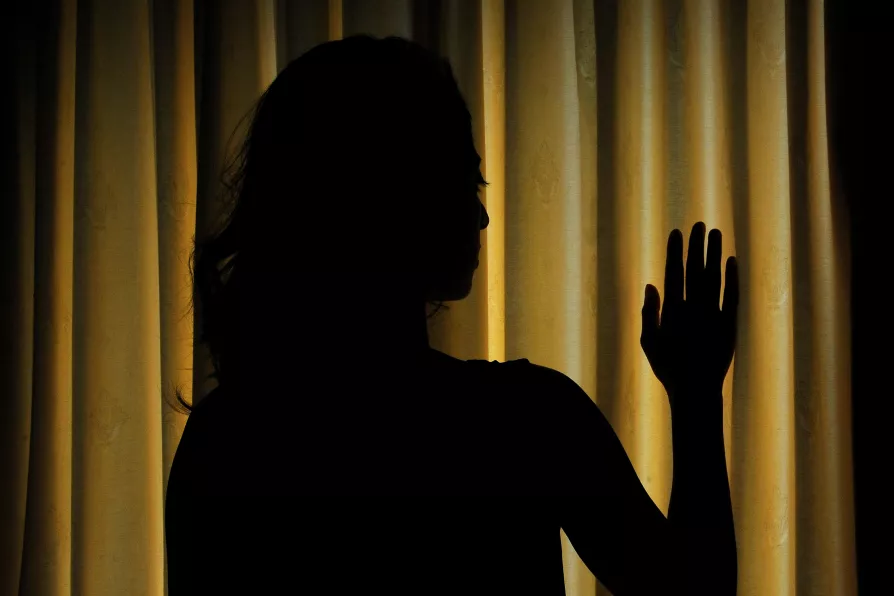 A woman showing signs of depression (picture posed by a model)
The artist, who has just died, is embedded in the subconscious of the Palestinian people
The five young men killed in the A66 crash were responsible for a devastating tragedy — but the crash should force us to ask difficult questions about wider society, argues RENATA MEDEIROS MIRRA
The unwillingness of the British political elite to acknowledge that we are on the edge of a direct conflict with Russia leaves the peace movement with an urgent and onerous task
Committee for the Defence of the Iranian People’s Rights general secretary GAWAIN LITTLE discusses the impact of the US-Israeli war on the Iranian people and economy
Capitalism has extracted itself from crisis before, argues PRABHAT PATNAIK – but through methods no longer available. So it is turning to authoritarianism, militarism and neocolonialism





IT WOULD be tempting to mark International Women’s Day as a day to celebrate women’s victories. That would be a mistake because even after 50 years of the Equal Pay Act & Sex Discrimination Act, working-class women in Britain cannot chalk up many victories.
Some have argued that women have made great progress in the 21st century, and thus they question whether it is necessary to continue the debate on women’s inequality.
Compared to previous centuries when women were the property of men and had no rights at all, it is clear that women’s status in many countries has improved, at least juridically — although it has gone backwards in others. However, apart from the right to vote and own property, equality for women as it now exists is based, by an unseen process of co-option, on the successes of a favoured few; for working-class women little has altered.

Similar stories
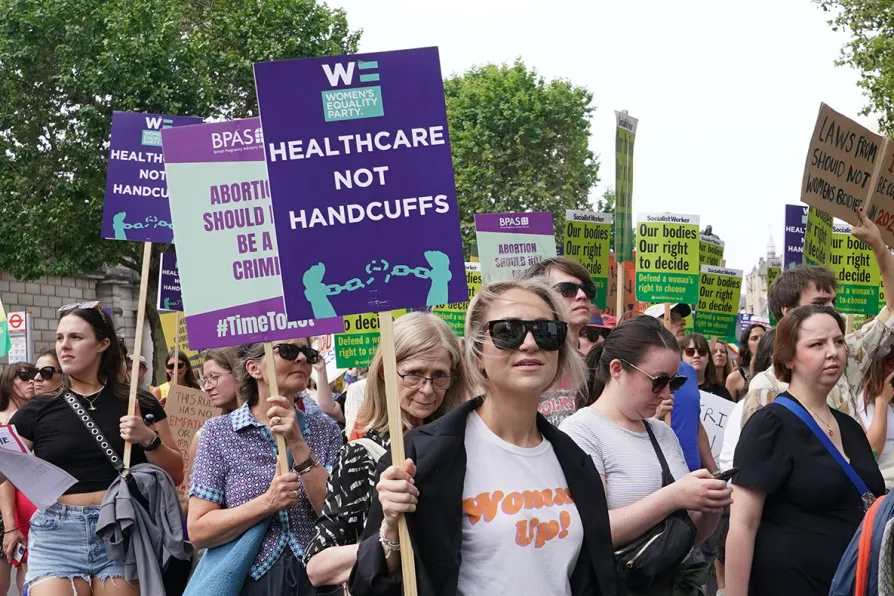
Professor MARY DAVIS argues that feminism has been hollowed out by liberal co-option – and only a revival of socialist, class-based politics can restore International Working Women’s Day’s original, radical purpose

Legal frameworks designed to safeguard women are too often weaponised against them, reinforcing male power and entrenching injustice. The FiLiA Ending MVAWG Team highlight some of the issues
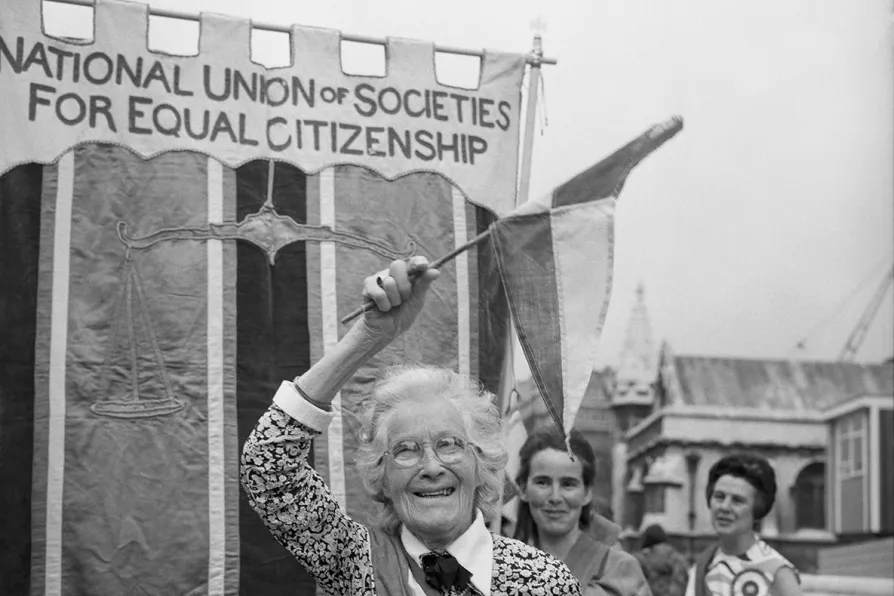
Half a century after transformative laws reshaped Britain, women’s rights are again contested. This International Women’s Day is a call to remember how change was won, and to organise to defend it, says KATE RAMSDEN

The legacy of socialist feminists such as Alexandra Kollontai challenges us today to confront an uncomfortable truth: framing prostitution as empowerment lets the abusers of the Epstein class off the hook, warns HELEN O’CONNOR