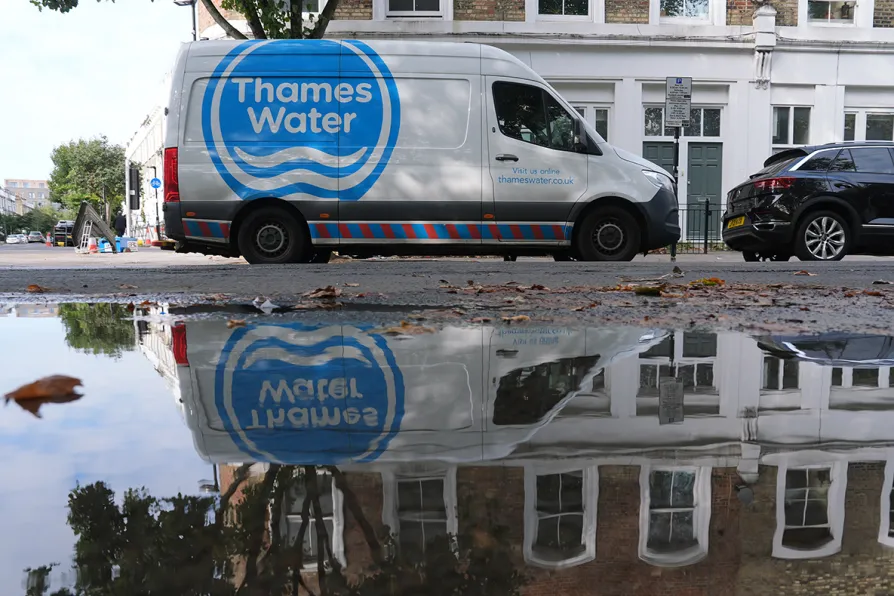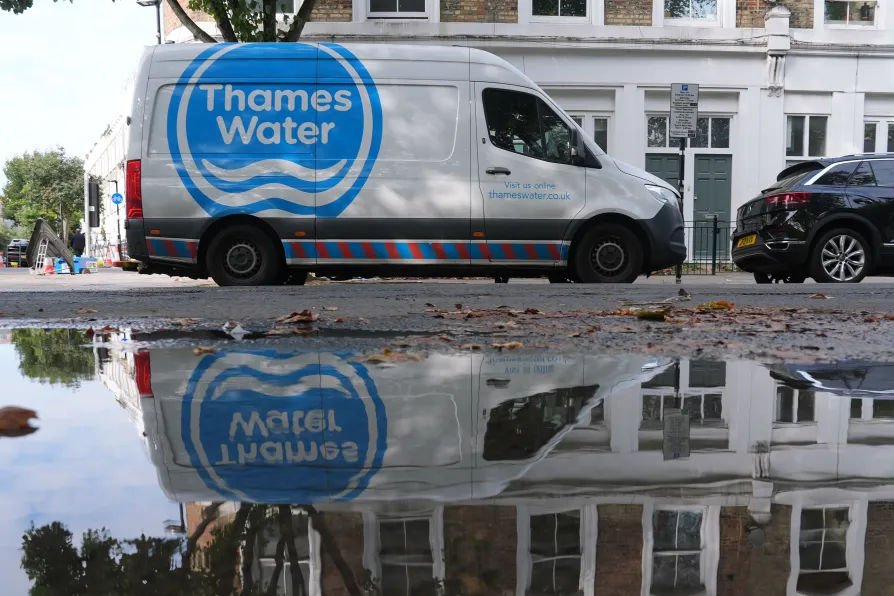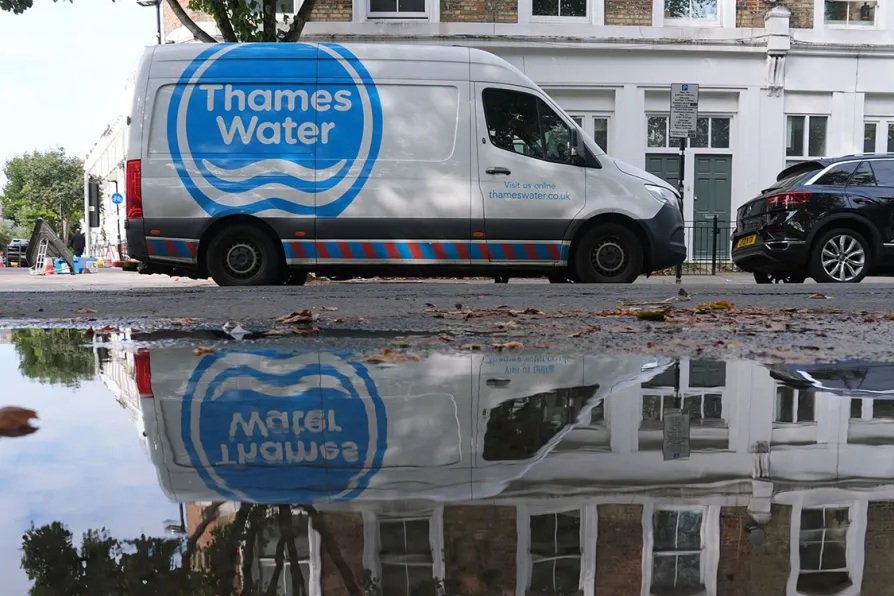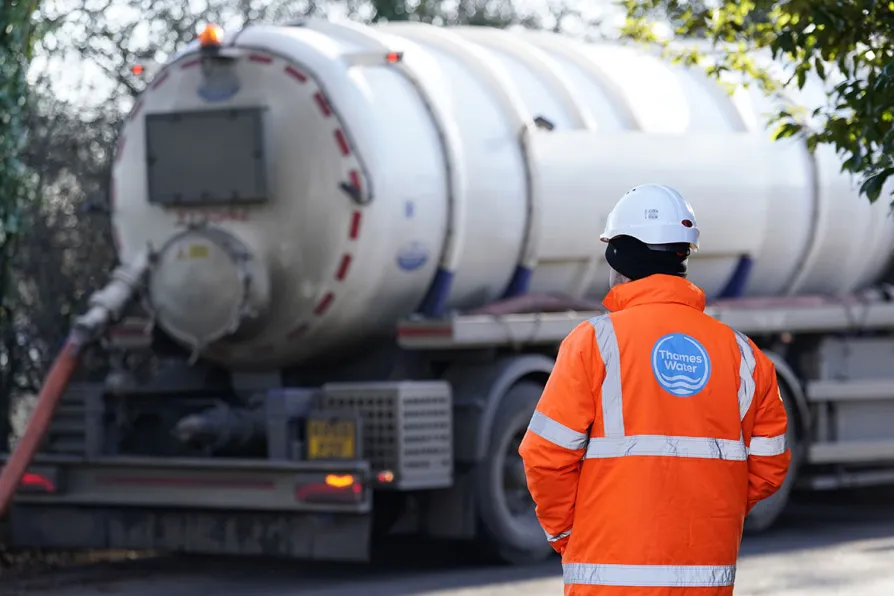
 A tanker pumps out excess sewage from the Lightlands Lane sewage pumping station in Cookham, Berskhire, January 10 ,2024





THAMES WATER is in a “doom loop” and must be brought back into public control, an influential group of MPs said today.
PM Andy Burnham faced fresh pressure to reject a rescue deal for the supplier, which is in £20 billion debt, by lenders, after unions slammed the move at TUC Congress this week.
TUC general secretary Paul Nowak urged the Labour leader to effectively put the company into public ownership under a special administrative regime (SAR).
Today, a report by the environment, food and rural affairs (Efra) committee said that the £10bn takeover plans by a consortium of more than 100 hedge funds and other creditors in Thames Water do not have “the interests of the public, the company or the environment at heart.”
The top priority for the bidders, called London & Valley Water, is to “extract immediate value from Thames Water, not steer it to long-term success,” said the cross-party committee.
Its report also raises concerns among the MPs on the committee over the lack of information available on the many creditors in what it claims is an “opaque” consortium.
The rescue plan by creditors is seen as the final realistic option to avoid Thames Water being placed into SAR.
Efra committee chair Alistair Carmichael said: “We believe Thames Water can be turned around, but not by giving the keys back to the people who have been joy riding in the family car.
“This will likely see Thames Water placed in special administration once its money runs out at the end of the year.”
The Department for the Environment, Food and Rural Affairs insisted all options were still under review.
A spokesman for London & Valley Water said: “Our enhanced proposal will address all feedback from Ofwat and ministers and is the fastest route to fix Thames Water’s complex problems.”
A Thames Water spokesperson said: “Thames Water needs to be recapitalised and put on a firm financial footing… anything that delays the recapitalisation risks slowing the turnaround.”
We Own It lead campaigner Sophie Conquest said that “anything less than” SAR followed by permanent public ownership of the firm would be a “grave betrayal” of Mr Burnham’s promise “to end 40 years of neoliberalism and hand power over to the public.”