The late country singer’s Imagination Library has put hundreds of millions of books into children’s hands. We should build on that legacy by defending the libraries at the heart of our communities, says BRENDA AITCHISON


 Latest editorial

Who should govern Britain, Parliament or the bond markets?
DOUG NICHOLLS says the parasitic finance markets must be challenged or another British government could be toppled
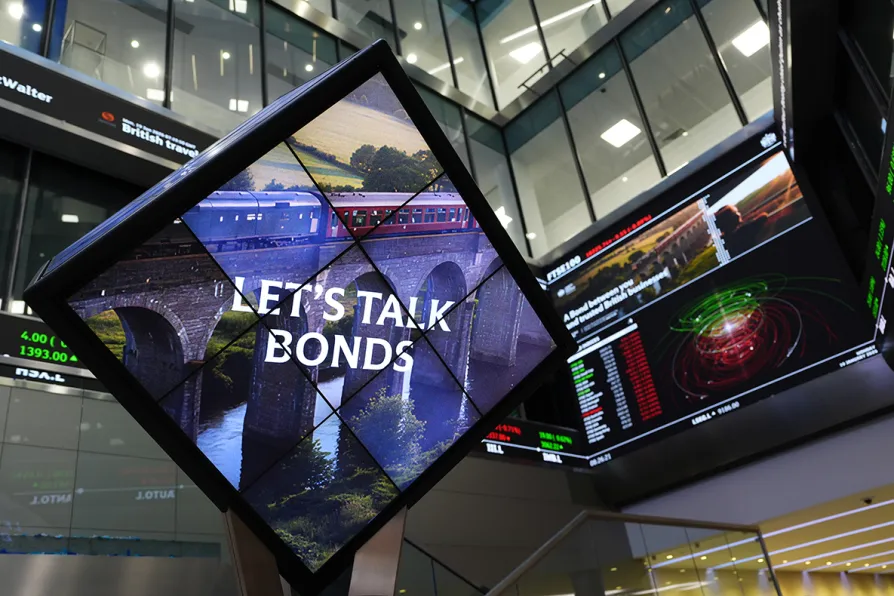 Market opening at London Stock Exchange Picture date: Monday January 19, 2026. Picture by: Jonathan Brady/PA Archive/PA Images

Deprivation is a fundamental factor in criminal behaviour that must be addressed but, KENNY MacASKILL argues, there needs to a major rethink in sentencing to tackle overcrowding
MML director MEIRIAN JUMP outlines the recently refreshed library’s busy autumn schedule that ranges from book sales, archival exploration, community work with online education and the ever popular site tours
Some thinkers and authors on the right are openly discussing the possibility that the historically successful party of the British ruling class may be exhausted
Class struggle is the motor of history but the direction and detail of change at any time and place is the outcome of many factors, suggests the Marx Memorial Library and Workers’ School
TONY BURKE surveys the shifting political landscape and the challenges Labour needs to address if it is to prevail in the 2028 federal elections





DURING the 1974 disputes with the National Union of Mineworkers, the then prime minister Ted Heath famously asked: “Who governs Britain?” Of course, trade unionists answered: “We do.”
The great strength of the organised British working class proved that we were one of the strongest in the capitalist world and had an ability to topple governments. From the mid-70s onward, this power had to be weakened.
Our unions were fiercely independent and bargained for over 80 per cent of workers. They articulated a sense of democracy and power in sharp contrast to the parliamentarians.
Anti-trade union legislation, and the demolition of shipyards, mines, steelworks, agriculture and engineering, were key weapons in the subsequent war against us.
But there was one other devastating weapon we sometimes overlooked.
In October 1979, Thatcher removed controls on capital, all limits on the amount of money that could be taken out of Britain were lifted. Measures were introduced to deregulate the financial institutions.
The City of London boomed while manufacturing, public services and the rest of the country went bust.
Financial speculation on the world’s money markets replaced the wealth-creating productive base of our society. There were bigger profits to be made in speculation and gambling.
This hollowing out of the economy and the rise in unemployment caused new burdens on the taxpayer. Privatisation and the loss of nationalised industries further weakened the government’s income-generating powers.
Bailing out the banks in 2008 didn’t help either, when the whole shebang they had created finally crashed.
Add to this mix, the increasing dependency on imported goods and services. Combined with the penetration of US and other foreign owners of British property, markets and assets, and the stage was set for a fundamental shift in political power.
Since the 19th century, Britain’s power elites had been a peculiar amalgam of merchant-based capitalists, who bought and sold things, manufacturing capitalists with their roots in productive industries who made things, vestiges of the landowning aristocrats, who lived off rents, and bankers, who oiled productive activity. But, essentially, in the past, producers and traders were in charge.
At one point, this motley crew almost all wore bowler hats around the Square Mile — a uniform of unity.
Thatcher and Blair changed all that.
Off with the bowler hats and in with the coke-snorting spivs and snake-oil salesmen from the financial institutions. The 1 per cent took over. They even hoofed out the poor old unelected peers remaining in the House of Lords.
They amassed great power in the City of London. The financial institutions moved into land ownership, property ownership, asset-smashing venture capitalism, trading in debts and derivatives, auctioning British machine tools overseas and would do anything to make a quick buck without any regard for its social and economic impact on Britain.
They loved Britain’s ever-deepening embroilment in the European Union, which created a free market for capital flows and this feathered their nests nicely.
As tax revenues, national income and assets declined and trade deficits mounted, so British governments became more reliant on borrowing money to pay for what remained of welfare provision and other public expenditure.
The mechanism used is selling government bonds at a fixed rate of interest to the private institutions. The lender lends to government in return for a guaranteed repayment at the fixed rate and usually over a long term.
The lenders in the deregulated money markets then trade these bonds on a secondary market with other financial institutions which guarantee a quicker repayment or higher rate. It’s all about making a quick buck.
But the price of the bond was fixed in the original government transaction, so the secondary buyer gets a bigger margin if bought at a lower price than first buyer. This is the bond yield which goes up when the bond price goes down.
Because of this insane bond market, which is bigger than the stock market, Britain’s long-term borrowing costs have increased to their highest level since 1998.
So seemingly powerful have the bond markets become that every government is scared to death of them.
It became an orthodoxy in the Treasury that the government should not spend too much on public services but should focus instead on paying back those finance institutions which had lent it money.
Putting a transaction tax on these will not solve the problem.
Government control over the capital markets is essential. He who pays the piper in bailouts and bond issues can call the tune through Parliament.
Britain used to do this before 1979 and many successful countries still do. Even the IMF concedes countries should be able to control capital flows in difficult circumstances.
International bond markets are super sensitive to global pressures such as the current increase in inflation, the unpredictable war-mongering of the US, the economic slow-down of the EU. In addition there is the increasing size of government debts, which was significantly worsened by bailing out the banks in 2008, the costs of the pandemic, the euro debt crisis, and now renewed calls for extra defence spending.
But this does not mean that the bond markets should not be controlled, in fact it is one of the most important reasons for re-introducing capital controls.
It is good to see so many joining this debate about how this can be achieved and how an elected government rather than unelected bankers can assert control.

Similar stories



Only an ambitious programme of state-led investment can restore growth and improve living standards, argues MICHAEL BURKE