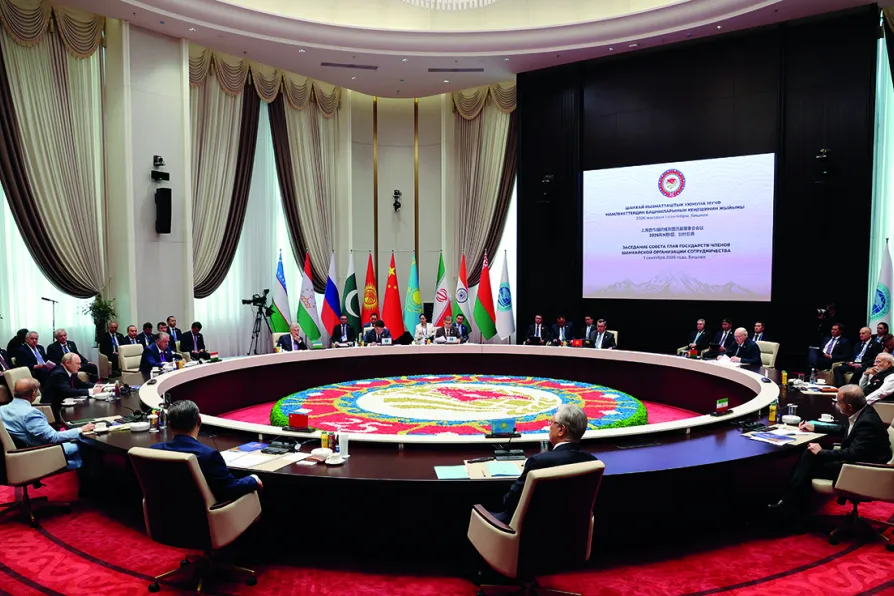
The 25th anniversary meeting of the Shanghai Co-operation Organisation in the Kyrgyz capital may offer a glimmer of hope that international relations do not need to be defined by endless confrontation, writes KENNY COYLE


 Latest editorial

Germany ups the stakes in confrontation with Russia
Without evidence or Nato consultations Berlin’s answer to the Leipzig incident is a rupture of relations. SEVIM DAGDELEN examines why
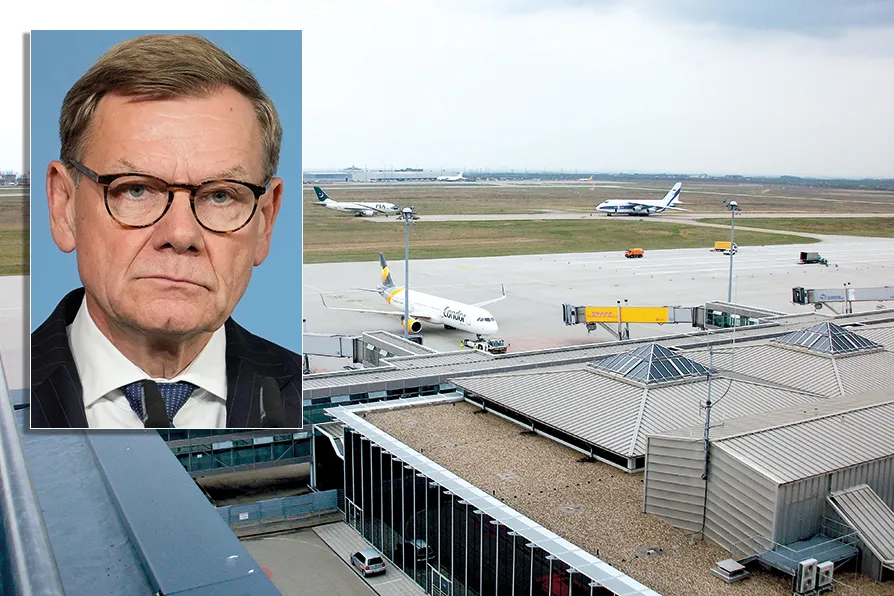 BARKING UP THE WRONG TREE: (L to R) Germany's Foreign Minister Johann Wadephul at a press conference in Berlin on Tuesday, about the attempted attack on Leipzig/Halle Airport last month; view of the airport's runway / Pic: Aagnverglaser/CC
The artist, who has just died, is embedded in the subconscious of the Palestinian people
The five young men killed in the A66 crash were responsible for a devastating tragedy — but the crash should force us to ask difficult questions about wider society, argues RENATA MEDEIROS MIRRA
The unwillingness of the British political elite to acknowledge that we are on the edge of a direct conflict with Russia leaves the peace movement with an urgent and onerous task
Committee for the Defence of the Iranian People’s Rights general secretary GAWAIN LITTLE discusses the impact of the US-Israeli war on the Iranian people and economy
Capitalism has extracted itself from crisis before, argues PRABHAT PATNAIK – but through methods no longer available. So it is turning to authoritarianism, militarism and neocolonialism





GERMANY’S Foreign Minister Johann Wadephul’s announcement on September 1 in response to the attempted attack in Leipzig aimed at nothing less than the destruction of Russian–German relations.
What the closure of the Russian consulate general in Bonn, of the Russian House in Berlin, and his announcement that Russian ships would in future be seized are supposed to have to do with the attempted attack remains the secret of the federal government.
No evidence, full escalation
What is certain, however, is that Berlin has presented neither proof nor evidence for the grave accusations against Russia. This deficiency weighs all the more heavily because, in the case of Nord Stream, the federal government likewise initially assumed Russian authorship.
In this way Chancellor Friedrich Merz himself opens the space for speculation of every kind. That the federal government has moreover refrained from requesting consultations in the Nato Council under Article 4 leaves open whether it even possesses usable material that would support its own accusations.
The more recent history of drone alarms, in any case, speaks against the haste with which Berlin once again pins the blame on Russia.
In none of the publicly hyped cases of recent years has a Russian perpetration been proven.
Where there actually was an explosion and enormous damage – at Nord Stream – the investigations were not directed towards Russia but against suspected perpetrators from Ukraine.
The political response was nevertheless not confrontation with Kiev, but the next multi-billion gift at the taxpayers’ expense.
To announce retaliation against the nuclear power Russia on September 1 of all days – the day on which Nazi Germany in 1939 exacted “retaliation” for an attack on the Gleiwitz radio station that it had itself staged – seems fitting.
Megalomania and historical amnesia increasingly mark the political style of the Merz government in the face of poll numbers that could hardly be worse.
The strategy of tension returns
It is clear that with this step by the federal government the path into escalation is already mapped out. The announcement that Russian ships are to be seized has the potential to lead rapidly to a direct military confrontation with Russia.
The premature attribution of authorship to Russia by the federal government, as in the case of Nord Stream, is alarming for another reason as well.
In the 1980s there was a Nato strategy, the strategy of tension, intended to delegitimise Nato-critical forces in the West. Attacks committed by neonazis, who in part had contacts with state agencies, were then pinned on the left.
Everything must be done to ensure that we do not experience a revival of this Nato strategy of tension. Europe needs peace, and Germany needs good economic, cultural and diplomatic relations with Russia. The federal government’s path into escalation and war is irresponsible.
Sevim Dagdelen is the author of the bestseller “Nato- A Reckoning” and was a member of the German Bundestag from 2005 to 2025.

Similar stories
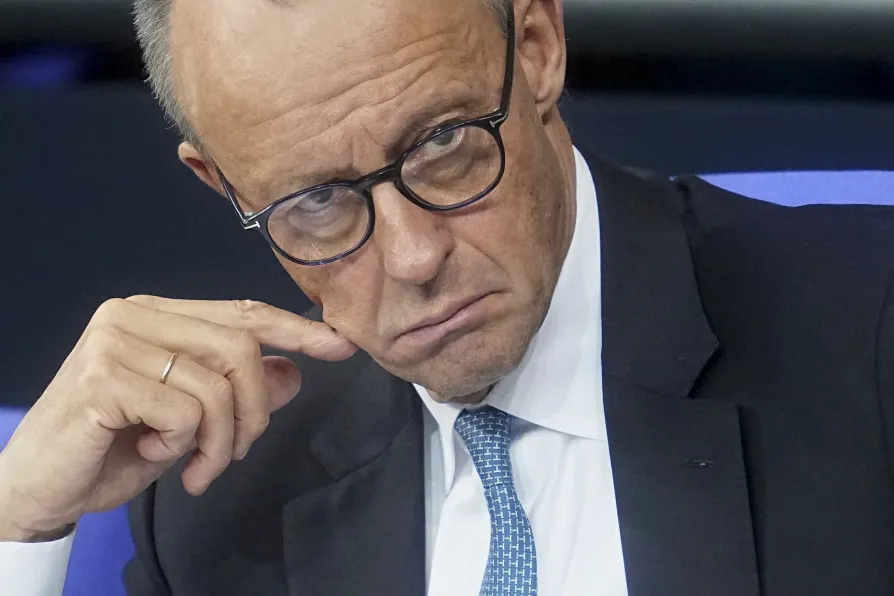
German Chancellor Friedrich Merz is pouring €11.5bn into the Kiev swamp, blocking Trump’s peace plan, and pushing Nato right up to Russia’s borders – no matter if it costs hundreds of thousands of lives, warns SEVIM DAGDELEN
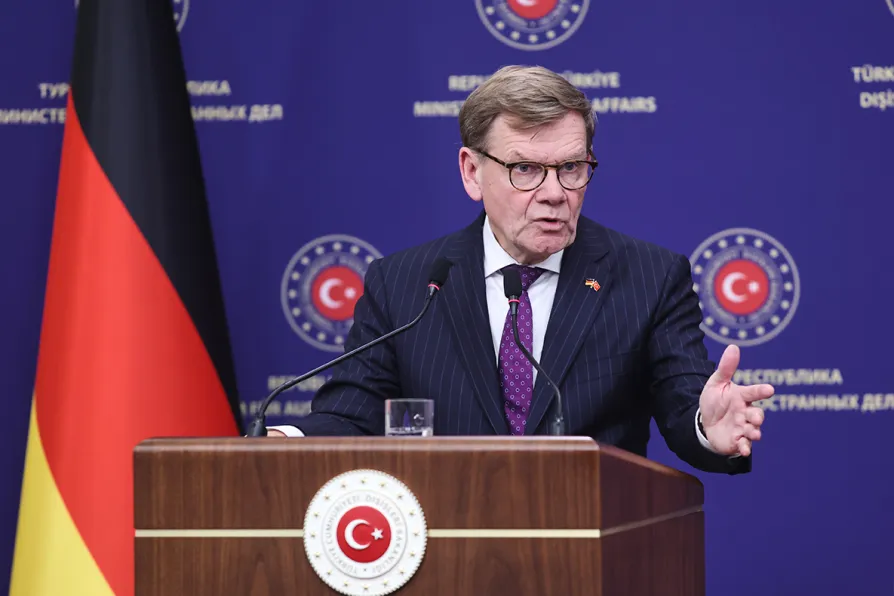
The cancelled China trip of the German Foreign Minister marks a break with Helmut Schmidt’s China policy and drives Germany further into Washington’s confrontation course, warns SEVIM DAGDELEN