DOUG NICHOLLS says the parasitic finance markets must be challenged or another British government could be toppled


 Latest editorial

Cost creep or cost leap? The staggering price of nuclear
In the fourth and final part of our serialisation from LINDA PENTZ GUNTER’S book No to Nuclear, she asks how anyone can see nuclear as value for money given its constantly ballooning costs
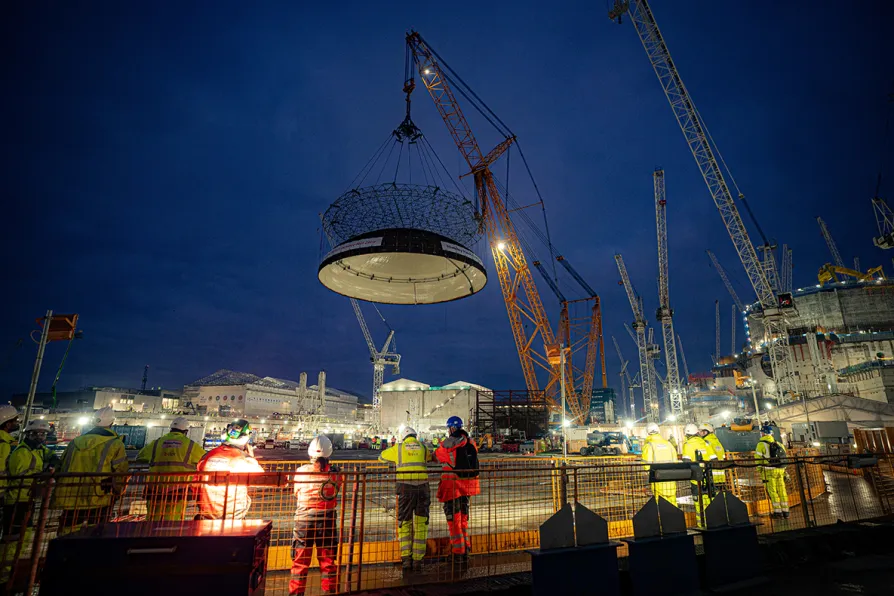 Engineering teams use the world's largest crane - Big Carl - to lift a 245-tonne steel dome onto Hinkley Point C's first reactor building, at the nuclear power station construction site in Bridgwater, Somerset, December 15, 2023
The late country singer’s Imagination Library has put hundreds of millions of books into children’s hands. We should build on that legacy by defending the libraries at the heart of our communities, says BRENDA AITCHISON
Deprivation is a fundamental factor in criminal behaviour that must be addressed but, KENNY MacASKILL argues, there needs to a major rethink in sentencing to tackle overcrowding
MML director MEIRIAN JUMP outlines the recently refreshed library’s busy autumn schedule that ranges from book sales, archival exploration, community work with online education and the ever popular site tours
Some thinkers and authors on the right are openly discussing the possibility that the historically successful party of the British ruling class may be exhausted
Class struggle is the motor of history but the direction and detail of change at any time and place is the outcome of many factors, suggests the Marx Memorial Library and Workers’ School
TONY BURKE surveys the shifting political landscape and the challenges Labour needs to address if it is to prevail in the 2028 federal elections





COST creep is a universal affliction in the nuclear power industry and sometimes it isn’t so much creep as leap.
The two-reactor nuclear power plant at Hinkley Point C on the UK coast went from an estimated $19bn to $26bn, then $35bn, $40bn and now $59bn! By the time you read this, the number will likely be even higher. That makes the plant — consisting of two evolutionary power reactors (EPRs) — the second most expensive building in the world, after the Great Mosque of Mecca, which cost more than $100bn. And the most expensive power plant ever.
Plant owner the French government energy utility, EDF, had bragged that Britons would be roasting their 2017 Christmas turkeys with the power from Hinkley Point C. Instead, the latest projected start date, says EDF vaguely, is “after 2029,” and the company wants to burn British taxpayers with the extra costs.
The price of two American Westinghouse AP1000 reactors at the Vogtle site in Georgia, featured in the previous chapter, stood at $14bn in 2013. By the time they became oper- ational, the costs had more than doubled, surpassing $35bn.
Two AP1000 reactors planned for the VC Summer site in South Carolina were partially built before being halted after squandering $9bn. Executives of then plant owner SCANA were found to have lied about the delays and financial losses, leading to charges of conspiracy and wire fraud that eventually saw company executives jailed and fined.
These deceits effectively defrauded the South Carolina Public Service Commission and its customers of at least $2bn, a conspiracy that FBI Special Agent in Charge of the ensuing investigation, Jody Norris, described as “breathtaking in scope and audacity.”
The exorbitant construction cost overruns of the Vogtle and Summer nuclear projects led to Westinghouse filing for bankruptcy on March 29, 2017, and pushed its Japanese parent company, Toshiba, close to financial ruin.
Westinghouse is now owned by a Canadian partnership of private equity fund Brookfield Renewable Partners and Cameco, the world’s largest publicly traded uranium company.
EDF’s flagship EPR, Flamanville-3 on the Normandy coast, came in more than 13 years behind schedule and saw its 2007 starting budget of $3.7bn balloon to at least $14bn.
Due to fuel loading problems, startup dates were routinely delayed.
Olkiluoto 3, another French EPR in Finland, began con- struction in 2005. The budget tripled to more than $11bn. In September 2022, surrounded by much fanfare, the reactor reached full power for the first time. The following month, damage to all four feed water pumps prompted it to be shut down. It tried again in February 2023, but a valve fault prompted another delay. It finally got running in April 2023, 18 years in the making.
If your local car showroom offered you a deal like this — a vehicle that never seemed to make it to the lot but whose price kept ballooning — you’d cancel the order. You might even buy a bicycle instead (better for the environment and your waistline). But the one thing you would not do is stick with the dealer and pay three times as much for a car that took years to arrive in your driveway, if at all.
Nevertheless, like Lazarus, the builders of large-scale nuclear plants are hoping to rise from the dead.
French President, Emmanuel Macron is already promoting the EPR2 as the next big nuclear breakthrough, even though the EPR1 has been one of the biggest financial fiascoes in industrial history.
Even the wraith of Westinghouse has reappeared, still hoping for a comeback, despite its nuclear projects having crashed on the rocks of financial unaffordability.
In July 2025, the company’s then interim CEO, Dan Sumner, vowed his company would build ten new AP1000 reactors in the US with construction underway by 2030. Notably, he did not offer a completion date.
Britain is determined to let EDF have another go at gouging ratepayers and its own Treasury — with two more EPRs at the Sizewell C site in Suffolk. EDF is already ripping up precious habitat and once pristine countryside there to make way for a project that may never be built. It was originally estimated to cost $25bn. By the summer of 2025, it was at $51bn.
Research by the University of Greenwich and reported by the Guardian in May 2022 had predicted that eventual costs at Sizewell C could exceed $59bn.
In 2017, a Guardian headline asked of the Hinkley Point C debacle: “Building Britain’s first new nuclear reactor since 1995 will cost twice as much as the 2012 Olympics — and by the time it is finished, nuclear power could be a thing of the past. How could the government strike such a bad deal?”
How, indeed?
No To Nuclear: Why Nuclear Power Destroys Lives, Derails Climate Progress and Provokes War by Linda Pentz Gunter is published by Pluto Press, £14.99 (www.plutobooks.com).

Related articles
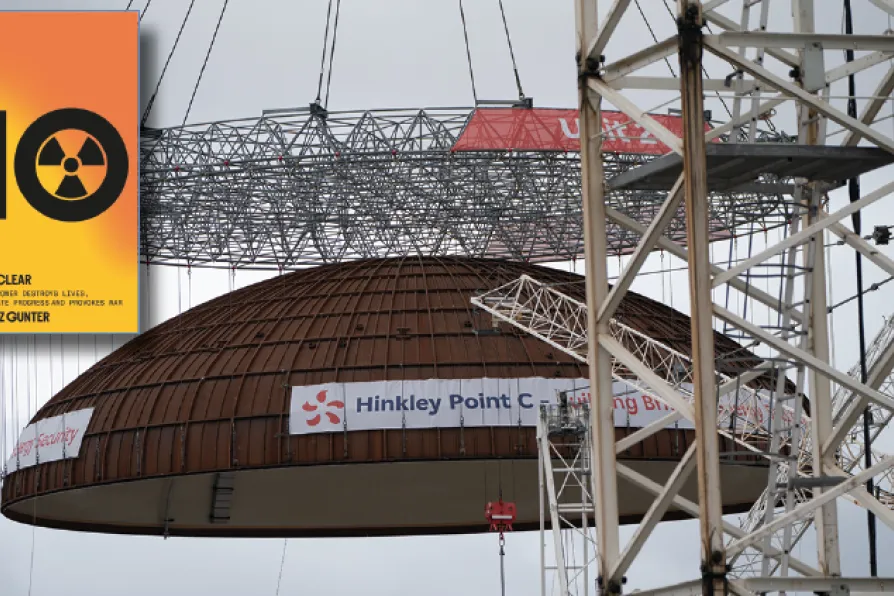
In the first of a four-part serialisation from her new book No to Nuclear, LINDA PENTZ GUNTER outlines the case she will make against this dangerous technology
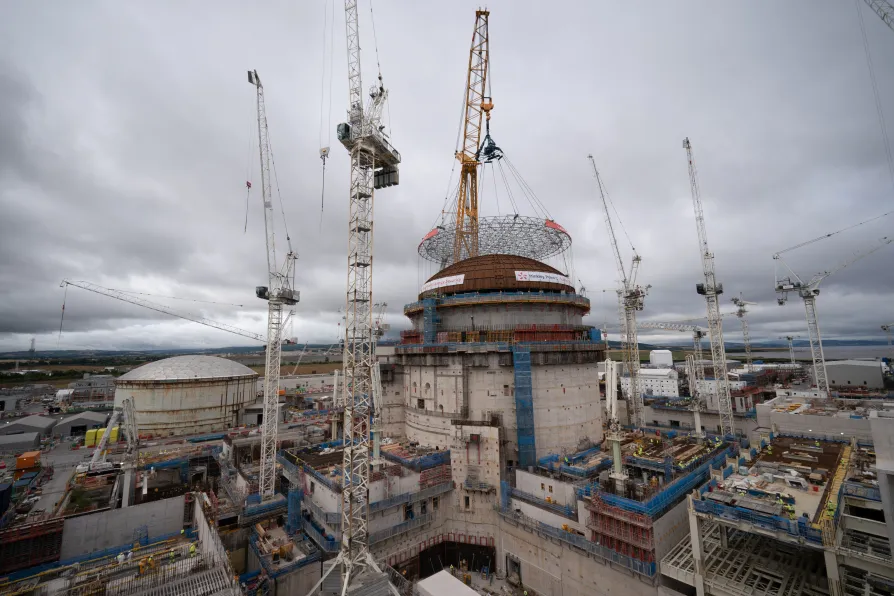
In the second of a four-part serialisation from her new book No to Nuclear, LINDA PENTZ GUNTER highlights how the industry is searching for ways to preserve its relevance
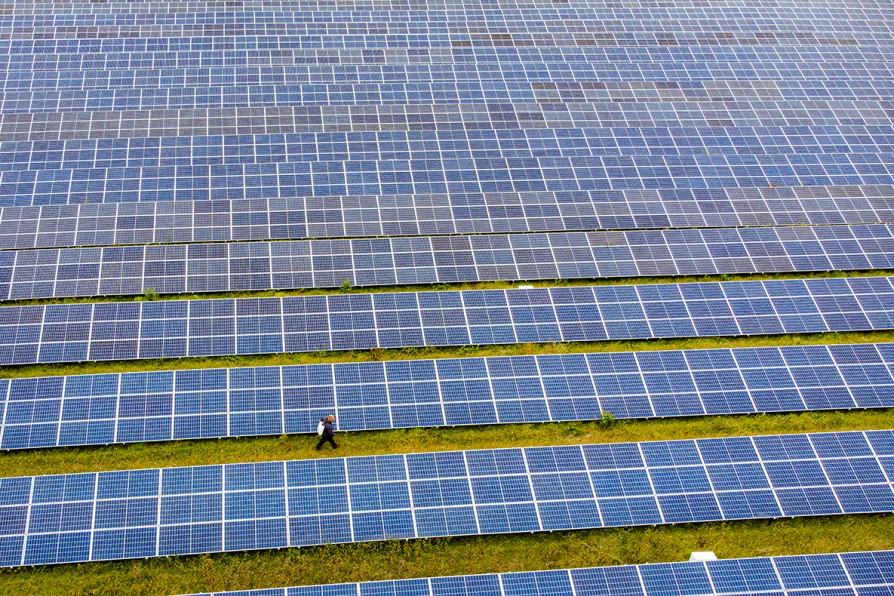
In the third of a four-part serialisation from her new book No to Nuclear, LINDA PENTZ GUNTER explains how the world had a chance to build an energy system around renewables more than 70 years ago — instead, it chose nuclear