DOUG NICHOLLS says the parasitic finance markets must be challenged or another British government could be toppled


 Latest editorial

The solar world we might have had
In the third of a four-part serialisation from her new book No to Nuclear, LINDA PENTZ GUNTER explains how the world had a chance to build an energy system around renewables more than 70 years ago — instead, it chose nuclear
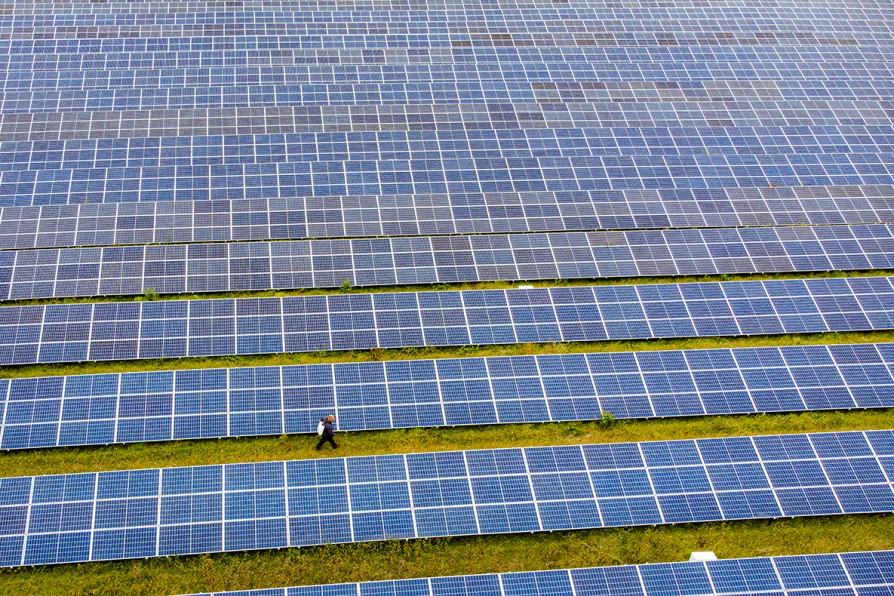 A solar power farm at Yealhampton in Devon, August 17, 2021

The late country singer’s Imagination Library has put hundreds of millions of books into children’s hands. We should build on that legacy by defending the libraries at the heart of our communities, says BRENDA AITCHISON
Deprivation is a fundamental factor in criminal behaviour that must be addressed but, KENNY MacASKILL argues, there needs to a major rethink in sentencing to tackle overcrowding
MML director MEIRIAN JUMP outlines the recently refreshed library’s busy autumn schedule that ranges from book sales, archival exploration, community work with online education and the ever popular site tours
Some thinkers and authors on the right are openly discussing the possibility that the historically successful party of the British ruling class may be exhausted
Class struggle is the motor of history but the direction and detail of change at any time and place is the outcome of many factors, suggests the Marx Memorial Library and Workers’ School
TONY BURKE surveys the shifting political landscape and the challenges Labour needs to address if it is to prevail in the 2028 federal elections





WE NEEDN’T have had Fukushima, or Chernobyl, or Three Mile Island, or Church Rock. But all of these serious nuclear-power-related accidents happened.
We could have avoided climate change as well, not just by responding promptly to the early warning signs of the damage fossil fuels were doing but by heeding one sensible plan that, if it had been acted upon, might have saved us from plunging into the climate abyss in which we now find ourselves.
The mistake we made, in 1953, was venturing down the nuclear power path at all. Nuclear power was never the answer to climate change and it’s only making its case now as a last-ditch survival tactic. Renewables were always the answer, and we have known this for decades.
Since the 1950s, nuclear power has been on the table for one reason only and it has nothing to do with reducing carbon footprints or sound science or strong economics.
What the nuclear power choice has always been about is its inextricable link to nuclear weapons. And that, in turn, along with our fatal addiction to fossil fuels, has resulted in our current climate emergency.
Studies also clearly show that the political choice being made today to continue with or build new nuclear power plants, rather than concentrate on renewable energy, only further impedes progress on carbon reductions, takes longer and of course costs far more.
But because nuclear power got in the way of what could have been a global renewable energy revolution decades ago, there is a case to be made that it is far more a contributor to climate change than it could ever be a solution to it. That is because, when nuclear power got started in the US, it was chosen for all the wrong reasons. What it supplanted was solar energy, but because nuclear power was so slow and expensive even then, it opened the way to rampant fossil fuel development instead.
On July 2 1952, US president Harry Truman commissioned a report under the President’s Materials Policy Commission called Resources for Freedom. Chapter 15 was entitled “The Possibilities of Solar Energy.” It went through many technical and economic scenarios for solar, recognising its great potential while also flagging some stumbling blocks, most of which have since been overcome.
Here is what the commission concluded more than 70 years ago: “If we are to avoid the risk of seriously increased real unit costs of energy in the United States, then new low-cost sources should be made ready to pick up some of the load by 1975.”
Nuclear power was not considered one of those “low-cost” options. “Nuclear fuels, for various technical reasons, are unlikely ever to bear more than about one-fifth of the load.
We must look to solar energy,” read the report’s conclusion.
Even at that early date, the report’s authors recognised the abundance offered by solar energy, observing that “the United States supply of solar energy is about 1,500 times the present requirement.”
And then the big what-might-have-been: “Efforts made to date to harness solar energy economically are infinitesimal. It is time for aggressive research in the whole field of solar energy — an effort in which the United States could make an immense contribution to the welfare of the free world.”
That “immense contribution” never happened. Instead, when Truman’s presidency ended, his successor, Dwight D Eisenhower effectively tossed the report in the bin. It was replaced with the now infamous Atoms for Peace, which of course was a lie, because it was never about atoms for peace. It was really about atoms for war.
Atoms for Peace eclipsed solar and led instead to a series of studies contained in the May 1953 document, “Reports to the US Atomic Energy Commission on Nuclear Reactor Technology.” The report was designed to explore ways in which to bring private industry into the nuclear sector, the latter hitherto almost entirely focused on weapons and under the control of government and the military.
The report to the US Atomic Energy Commission contained four sets of proposals from a rogues’ gallery of energy and chemical companies including Dow, Monsanto, Bechtel and Detroit Edison. They suggested “dual use” reactors that would produce plutonium first — for the nuclear weapons program — but also electricity. This approach, as the report acknowledged, was due to the fact that “no reactor could be constructed in the very near future which would be economic on the basis of power generation alone.”
But the “dual-use” reactor concept also proved to be too uneconomical, and none was ever built in the commercial sector. Instead, and despite the financial warning signs, the US opened the way for private industry to develop, own and operate commercial nuclear power plants for the purpose of generating electricity alone.
Thus, nuclear power became and remains an expensive, slow and impractical choice, cumbersome then and today. It is entirely unsuited to distributed generation and the coming smart grids and lacks any practical applicability to rural Third World environments. Nuclear power can also do nothing to reduce emissions from the transportation sector or agriculture and has never successfully addressed its other show-stopping liabilities — safety, security and radioactive waste.
What nuclear power can boast is that is has slowed progress on achieving a low-carbon economy; wasted precious time on fruitless promises of “dual use,” “too cheap to meter” and a “Nuclear Renaissance”; diverted funds from renewable energy; and captured sectors of the energy market at our expense and for no other reason than to claim continued legitimacy.
No To Nuclear: Why Nuclear Power Destroys Lives, Derails Climate Progress and Provokes War by Linda Pentz Gunter is published by Pluto Press, £14.99 (www.plutobooks.com). The fourth and final part of this serialisation will appear in tomorrow’s edition.

Related articles
In the first of a four-part serialisation from her new book No to Nuclear, LINDA PENTZ GUNTER outlines the case she will make against this dangerous technology
In the second of a four-part serialisation from her new book No to Nuclear, LINDA PENTZ GUNTER highlights how the industry is searching for ways to preserve its relevance