TUC president and POA leader STEVE GILLAN speaks to Ben Chacko on the eve of Congress 2026


 Latest editorial
Confronting the lies about our ‘unaffordable’ welfare budget
As a proportion of GDP the total welfare bill is lower than it was 15 years ago. The claim that it is spiralling out of control is mythmaking, argues DIANE ABBOTT
 STARMER’S CUTS MAN: Alan Milburn at a presentation of his interim Report into Young People and Work, at West Library Youth Employment Hub, north London, May 28 2026

DOUG NICHOLLS welcomes a turning point at this year’s Congress, where many motions call for a co-ordinated plan to revive British industry, a perspective outlined in his new book
HOPE VIRGO of campaign Dump the Scales warns MPs voting today they should be alert to the threat legalised assisted death poses to people with eating disorders
The Together Alliance is hosting two summits, North and South, to build power and plan action against the scourge of racism peddled by the right. DANIEL KEBEDE urges mass participation
The drift toward militarisation in Europe is not inevitable, left-wing and peace movements can preserve sovereignty and prevent war, says DÁIRE HUGHES MP
Whatever differences exist among international sympathisers of the Bolivarian revolution about its current trajectory, they should unite against the imperialist power that is the source of an enforced retreat, argues ROGER D HARRIS
Trade unions need to step up and force a turn in the policies of the labour movement to effectively confront the far-right threat, argues NICK WRIGHT





THERE has been a series of wild accusations about both the rising welfare bill and excessive welfare claims. Together they amount to a concerted campaign attempting to legitimise planned cuts to welfare, and switch spending to the military budget.
But this a complete distortion on two counts. It is a false picture of the overall position on welfare. It is also far removed from the lived experience of those on benefits and my experience as an MP whose constituency has a large proportion of people entitled to claim benefits.
Too often they find that the social security safety net has gaping holes that they end up hurtling straight through.
Constituents who have contacted my office have frequently experienced exceptionally long delays in receiving responses from the Department for Work and Pensions (DWP), causing significant hardship for claimants.
Many enquiries submitted by my constituency office to the DWP between November 2025 and January 2026 still remain unanswered, with some cases now outstanding for more than nine months.
Constituents frequently report receiving no response to messages left on their Universal Credit journals and are waiting extended periods for Mandatory Reconsideration decisions, with no indication of when their cases will be resolved.
These prolonged delays are having serious real-world consequences. Many people are experiencing severe financial hardship, falling into rent arrears, facing the threat of eviction, and relying on food banks while they wait for decisions or responses from the DWP.
In many cases, when responses are eventually received, they can result in substantial backdated payments worth several thousand pounds.
The DWP has also made consolatory goodwill payments in recognition of the excessive delays, unanswered journal messages, and follow-up calls that were not returned.
These outcomes demonstrate that many claimants were entitled to support but were left waiting for months before their cases were resolved.
The growing backlog highlights the scale of the administrative delays and the profound impact they are having on individuals and families.
Reflecting this trend, Universal Credit-related enquiries now make up the largest volume of casework received by my constituency office, surpassing all other areas of constituent support.
It is just as well I have a truly outstanding caseworker, who is incredibly assiduous and super-efficient. Other constituents may not be so lucky.
Hackney North and Stoke Newington is not atypical, but like many parts of London is more unequal than the rest of the country, with both a bigger proportion of higher managerial and clerical jobs as well as an unemployment rate higher than the national average.
Yet the incompetence and mismanagement of the DWP seems to be a near-universal factor across the country.
To take just one example rom the government’s own analysis, last year the DWP ran a compensation scheme targeting around 57,000 claimants who lost Severe Disability Premiums (SDP) after moving to Universal Credit, with individual payouts reaching up to £5,000.
Total scheme costs were projected up to £452 million.
These types of changes, and the DWP’s incompetence in managing them, are a constant feature of the welfare system. The changes are incessant, always designed to exclude claimants and reduce payments.
The hardship caused is unending because the culture of the DWP is punitive and hostile, overwhelmingly at odds with people’s needs.
It has also become customary to launch campaigns against benefit fraud and overpayment when cuts to welfare are planned. But, according to the Department’s own analysis, levels of both are tiny in relation to the overall totals.
What these campaigns usually omit is any reference to benefits underpayment. These can be substantial, as the anecdotal evidence suggests.
In some categories, DWP analysis shows underpayments often exceed overpayment totals. Disability Living Allowance underpayments of £190 million in the financial year 2025/26 significantly exceeded overpayments of £70 million.
There is frequently a net underpayment in the state retirement pension too, compounding the fact that it is already abysmally low, one of the lowest in Europe.
But the campaign against welfare and those entitled to welfare payments is not grounded in facts. Emulating the ceaseless campaign against migration and migrants, wild assertion and distortion serve a wider purpose of distraction and divide and rule.
We should be in no doubt that a concerted campaign is underway to attack benefits. It seems, for now, that the state pension “triple-lock” might be spared for electoral reasons, although there has clearly been some discussion about scrapping it.
Instead, there is a two-pronged attack on welfare, first about the alleged “unaffordability” of the total welfare bill and then, specifically an attack on the welfare entitlements of young people, dubbed NEETs (Not in Education, Employment or Training).
The unaffordability question has been thoroughly debunked by Professor Jonathan Portes among others, who point out that as a proportion of GDP the total welfare bill is lower than it was 15 years ago. The claim that it is spiralling out of control is myth-making, in an attempt to support cuts.
The second, more specific issue is on NEETs. Alan Milburn was clearly brought in by Starmer as a part of the process leading to welfare cuts for young people. The problem is that his report does not support his assertion that “something must be done.”
The proportion of NEETs is not growing out of control, as is claimed. It is below the 25-year average, when records began. Nearly half of NEETs do not claim benefits, so cutting welfare will not change their work status.
This simply highlights the real problem, which is the growing shortage of decent jobs or training. As a further 20 per cent of all NEETs have such severe disabilities that even the DWP does not expect them to work, this means that over 66 per cent of all NEETs’ job status cannot be affected by changes to welfare. However, their prospects, their self-esteem and their poverty will be.
Clearly, this anti-welfare campaign does not rely on facts. Instead, it relies on political momentum, with frequent repetition of false premises and distorted claims to achieve a political objective.
That political objective was neatly summed up in the Financial Times, arguing that Europe needs to move from a welfare to a warfare state. Welfare has been identified as the easiest target to fund the massive war drive.
Trump demands that we must support his global military rampage and it has been decreed that young people and the poor must foot the bill.
It is morally wrong. And if anyone thinks that this is the path to a Labour victory in 2029 they are utterly delusional.
Diane Abbott is MP for Hackney North and Stoke Newington and Mother of the House of Commons. She writes this column fortnightly.

Similar stories


Plans to delay access to the universal credit health element until age 22 have triggered fierce opposition from disabled people’s groups, who warn it would deepen poverty and entrench discrimination against young disabled people under the guise of ‘encouraging work.’ DYLAN MURPHY reports

DYLAN MURPHY reports that far from helping people back into work, the sanctions regime is inflicting unnecessary trauma on working-class families
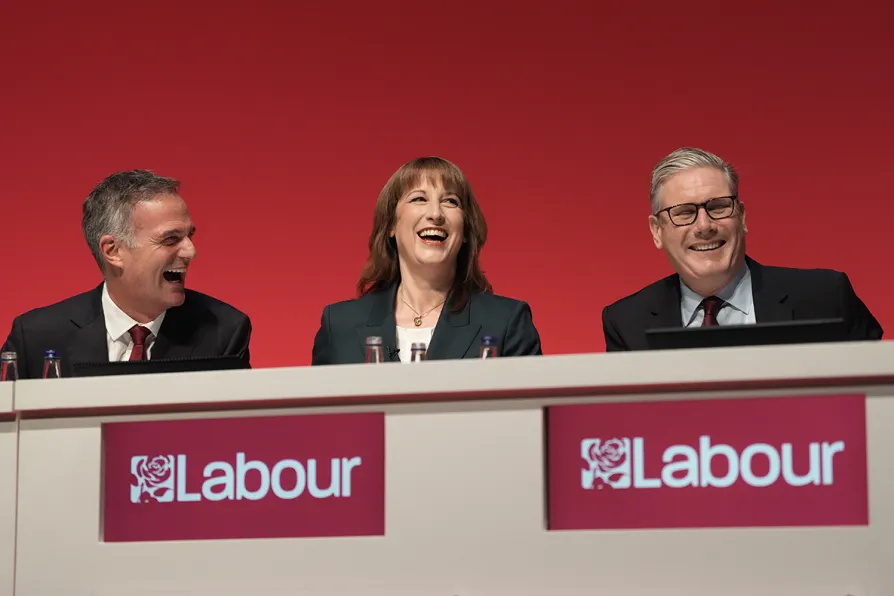
Labour will find increases in the state pension age are unacceptable, just as cuts to the Winter Fuel Allowance, personal independence payments and universal credit are — it needs to change direction immediately, writes PCS general secretary FRAN HEATHCOTE