WILL STONE samples the 20th anniversary atmosphere of this eclectic end-of-season indie festival


 Latest editorial
Fighting in Spain: in their own words
SUE TURNER recommends a rich and varied selection of the letters, diaries and memoirs of British volunteers
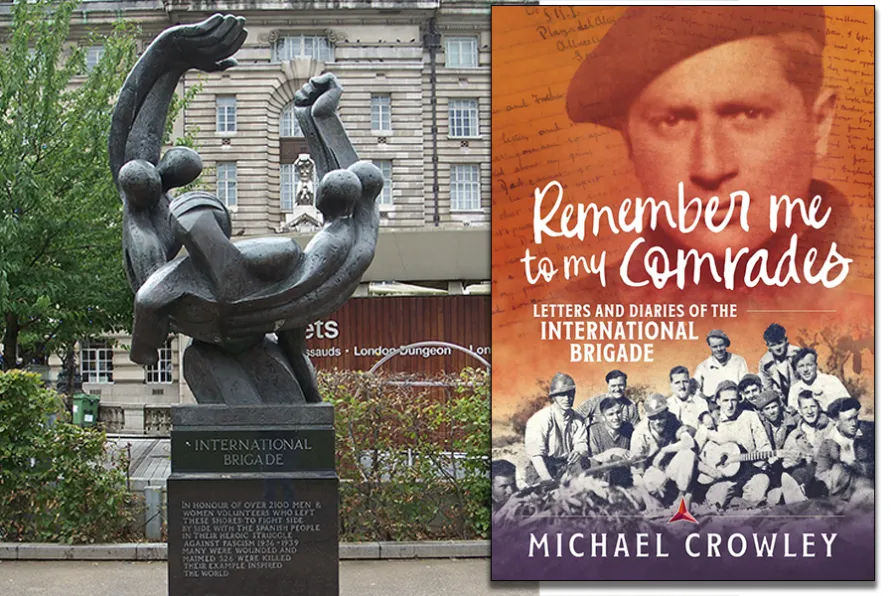 A memorial to the British volunteers in the International Brigades in Jubilee Gardens, Lambeth, London [Pic: Carlesmari/CC]

Comics are not just superheroes and spandex – it can be public art, telling public stories, suggests HARRIET EARLE
The bard serenades the Diggers of Wigan and their festive followers
ALEXEI SAYLE speaks to Angus Reid about a lifetime of protest, how to hone political art – and what to do now
ANDY HEDGECOCK, JAMES WALSH, LEO BOIX and MARIA DUARTE review Just An Illusion, Everybody Digs Bill Evans, Blue Film, Oasis: Don’t Look Back in Anger, and Runner
MARIA DUARTE recommends a nerve-wracking reconstruction of the 72 hours before the Normandy landings





Remember me to my Comrades: Letters and Diaries of the International Brigade
Michael Crowley, Barnthorn, £16.99
THIS is a well-written, interesting book ranging over the letters, diaries and memoirs of British volunteers; rich and varied primary source material that is largely previously unpublished.
These personal writings are embedded in a narrative of the events of the Spanish civil war and Crowley begins with the situation in Spain in 1936. Not only are the volunteers’ experiences of recruitment, travel and fighting examined, but also their thoughts and fears, as revealed in their writing.
The International Brigades along with the Comintern referred to the war not as the Spanish civil war, but as a war against fascism, and this term is at the forefront of many of the extracts included here, penned by men who saw the danger of fascism in their own country.
The composition of the 2,500 members of the British battalion was mainly working class and in work, usually self-taught people with a political background and a sound international perspective. Half to two-thirds were members of the Communist Party or the Young Communist League.
Many of the chapters are built around the lives of a single volunteer, such as Bob Cooney and Maurice Levine. A common thread runs throughout; a poverty-stricken childhood, but an upbringing often rich in political and cultural life.
Kenneth Bradbury a compositor from Oldham is typical. He formed a YCL branch when he was 17 and established cycling and rambling clubs. He travelled to Spain in a group of 10 from Oldham of whom six were killed. Kenneth died at Teruel in January 1938.
In a letter home he describes everyday life near Albacete:
“At night we stroll through the village from the barracks to the village green. It looks beautiful at night, there are wooden seats all around and behind are balconied buildings painted in various colours. In the centre of the square, or plaza as it is called, is a fountain. There are also a few cafes around the square. An amplified wireless is fixed up in the trees and the villagers gather to hear the music it blazes out at night. Later is the news (in Spanish of course) then it finishes with the Internationale.”
Kenneth writes that two YCLers had been elected to the town council and volunteers were helping with the harvest.
This bucolic picture changes with letters describing combat. Regarding the battle to capture Hill 481 near Gandesa, Commissar Peter Kerrigan wrote:
“From the 25th to the 30th they had nothing to drink but a little water, sometimes going a day without this… They are fighting and marching over mountains, the rocks of which have cut their Spanish shoes to pieces. Many are literally barefoot as well as being in rags.”
Walter Gregory, a rifleman from Lincoln writes of the death of George Stockdale from Leeds during the Ebro offensive.
“I found him lying among the sweet-smelling herbs which grow in Aragon. He was in a very bad way. A bullet from a concealed machine gun nest had cut a dreadful groove in his skull leaving his brain exposed. George tried to speak and I knelt to listen. I put my ear to his mouth but all l heard was the sound of death as his last breath rattled in his throat.”
A chapter is devoted to Harry Pollitt, leader of the Communist Party, who is acknowledged for his role in recruitment of volunteers, his morale-boosting visits to Spain, and the sensitive duty of informing families of a death in the battlefield.
George Orwell receives an entire chapter too, which seems rather more than he deserves.
Crowley discusses the aftermath of the war, for Spain and for the Brigades who faced unemployment on their return home. As he wryly points out, a man who has faced death on a battlefield is not likely to fear a foreman.
This book is a poignant yet inspiring read for anyone and particularly as an accessible introduction to the International Brigades and their lasting relevance today.

Similar stories
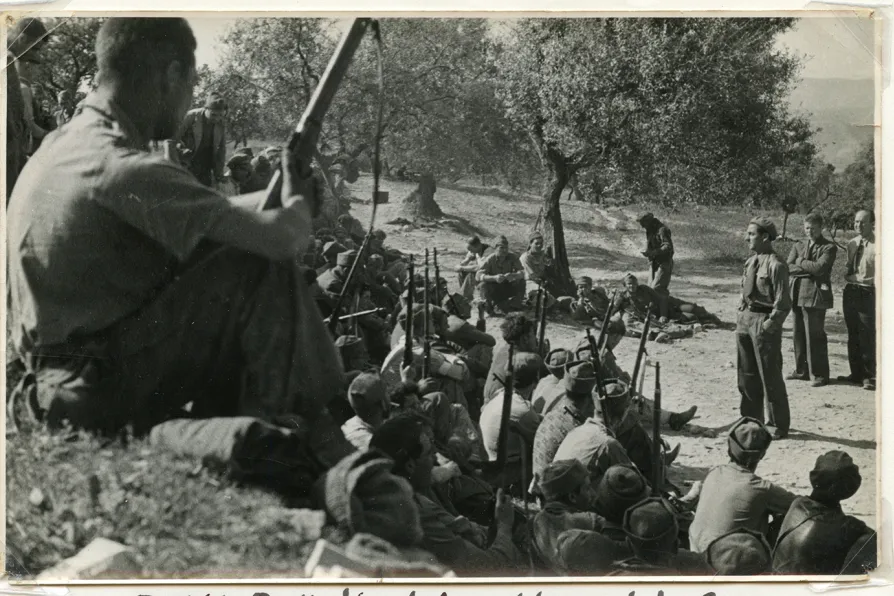
Thousands of remarkable Britons left ordinary lives behind to join the struggle against Franco. Here is a snapshot of those who answered the call
![Richard Baxell speaking at the Marx Memorial Library in London [Pic: Karl Weiss]](https://msd11.gn.apc.org/sites/default/files/styles/desktop/public/2026-07/RichardBaxell22Jul23.jpeg.webp?itok=HCh8iPRb)
Driven by anti-fascism and anger at Britain’s policy of non-intervention, thousands volunteered to fight in the Spanish civil war. Historian RICHARD BAXELL reflects on their sacrifices and enduring significance
![Harry Pollitt (right) with International Brigade volunteer David Guest, who was killed at the Ebro in July 1938 [Pic: Marx Memorial Library]](https://msd11.gn.apc.org/sites/default/files/styles/desktop/public/2026-07/a-2_a_50b_Harry%20Pollitt_David_Guest.jpg.webp?itok=Ag0u-8n5)
ALEX GORDON applauds the leading role played by Harry Pollitt and the Communist Party in the fight against fascism in Spain and salutes the memory of the International Brigades
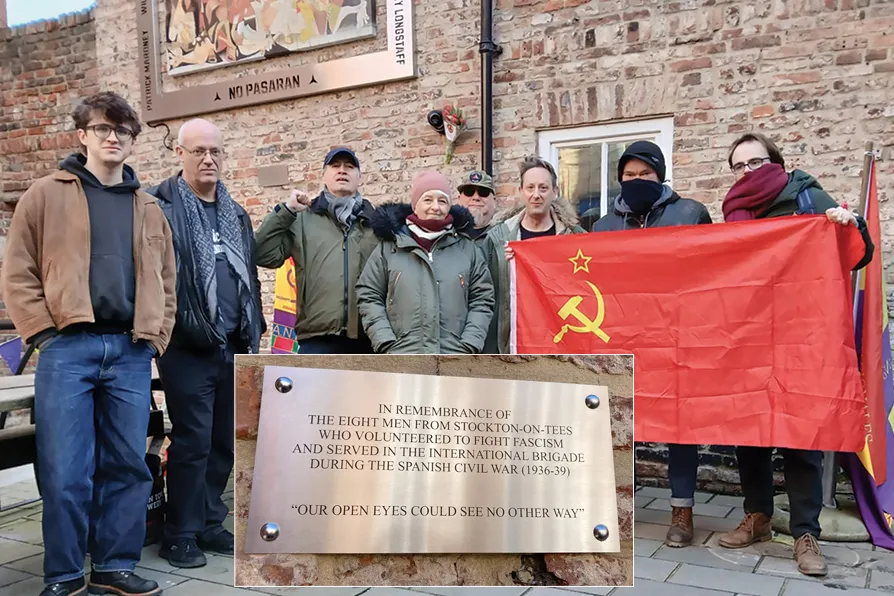
TONY FOX reports from a commemoration of the legendary Battle of Jarama in which four Stockton-on-Tees volunteers fell