
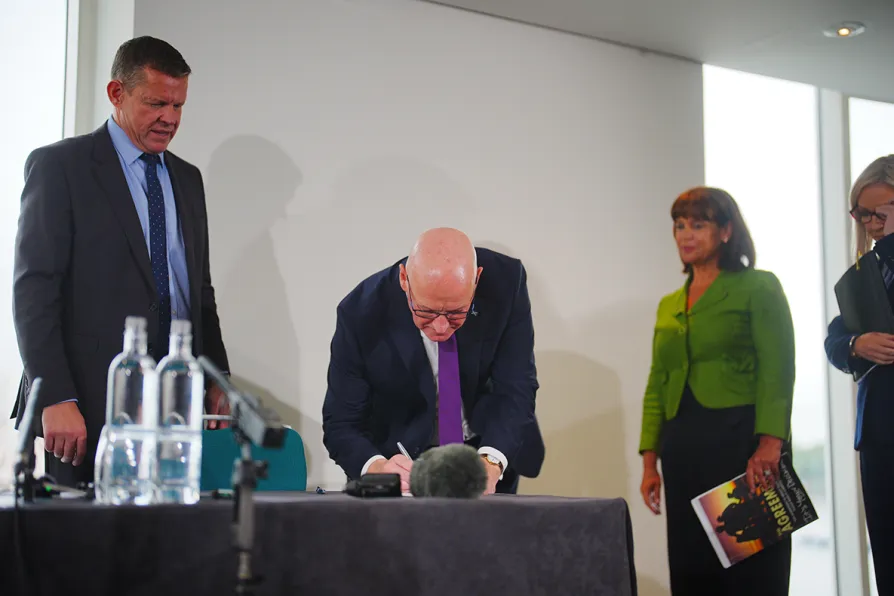
The UK Prime Minister may have the regal touch in northern England, but he’s been wrong-footed on the constitutional challenges posed by the Celtic Alliance of first ministers from Scotland, Wales and Northern Ireland, argues KENNY MacASKILL

Labour’s rent betrayal is bigger than housing
CLAUDIA WEBBE argues that Burnham’s U-turn on tackling greedy landlords has let the country down

 U-TURN: Andy Burnham and Angela Rayner
NEIRLAY ANDRADE, a member of the Communist Party of Venezuela’s political committee, outlines her party’s position on the crisis facing the country
A look at Taylor Wimpey’s accounts shows why Labour’s market-led housing strategy won’t deliver more, cheaper homes, as promised, says SOLOMON HUGHES
DAVID HORSLEY remembers the remarkable life and death of US black revolutionary George Jackson, whose politically passionate prison letters were published as Soledad Brother
Cuban trade union federation CTC leader OSNAY MIGUEL COLINA speaks to Ben Chacko about life and work under a crippling US siege
A part of the British empire’s network of slavery, today the Caribbean island of Nevis faces a new form of exploitation in the form of crypto-colonialism, CLAUDIA WEBBE writes
Challenges from the unscrupulous misuse of AI to steal actors’ voice and physical likenesses is being met with a firm union response, writes LYNDA ROOKE





IN 2023, as mayor of Greater Manchester, new Prime Minister Andy Burnham co-signed a letter with the mayors of London and Liverpool, to then-housing secretary Michael Gove, demanding the power to freeze private rents. The letter warned of a devastating social impact if nothing was done.
In their letter, the mayors wrote that rent controls would “immediately relieve pressure on millions of people and halt an eviction crisis that would have a devastating social impact.” Burnham knew then and knows now that we have a housing affordability crisis.
Yet last week his own new Housing Secretary, Angela Rayner, went on BBC Breakfast to close the door on the exact policy that Burnham knows we need: “I don’t think that rent freezes, rent controls, is a way forward at the moment.”
Asked about Burnham’s own past demand, she explained it away: he called for it then because there was a significant crisis. The implication, unstated but unmistakable, is that the crisis has somehow resolved itself. It has not – it is worse now.
Rayner’s central claim was that the Renters’ Rights Act (RRA), which took effect on May 1 this year, is already having a significant impact on the market. But this claim collapses under scrutiny. The Act abolished Section 21 no-fault evictions, converted fixed tenancies into rolling ones, and gave tenants the right to challenge rent rises through a tribunal if the increase exceeds the local market rate.
The Act now covers 11 million private renters in England and regulates the conduct of roughly 2.3 million landlords, according to the government’s own guidance, making this the biggest change to renting law in over 40 years. These are genuine, hard-won protections, and it would be dishonest to pretend otherwise. But they do not limit rent levels.
The tribunal mechanism has a structural flaw that campaigners like the Renters’ Reform Coalition have flagged from the start. It only intervenes when one landlord charges more than the going local rate. It does nothing when rents rise in step across an entire area, which is precisely the pattern renters have experienced for years. Renters must also pay tribunal fees to challenge increases, barring the poorest from the process.
According to the ONS, average rents in England rose by roughly the same margin in the year before the Act’s implementation as in the months since. The RRA provides a mechanism for challenging individual outliers.
There is no mechanism for controlling the overall level of rent rises, which is clearly – and Burnham knows – the far greater need. This is not a small technical distinction. It is the fundamental difference between rent regulation and rent control.
The government has spent the past week – because of parliamentary recess this has been without any parliamentary scrutiny – deliberately blurring it. Rayner’s second justification was that rent control “hasn’t necessarily brought rents down” where it has been tried in the UK, gesturing toward Scotland.
However, the government’s own data show that in 12 months to earlier this year, rents in Scotland where permanent rent control areas are now being rolled out under the Housing (Scotland) Act 2025, rose at less than half the rate recorded in England.
Contrary to Rayner’s claim, Scotland’s rent caps — inflation plus one percentage point with a ceiling of six per cent — are a live example of the effectiveness of rent controls that refutes the argument she used to dismiss them.
The international picture undercuts the government’s excuses even further. Germany operates a national rent cap alongside continued growth in housing supply and construction permits. This directly contradicts the standard argument of opponents to rent controls that capping rent starves the market of new homes. Paris and Catalonia have also seen falling rents under regulation with no measurable drop in available housing.
Of course, nothing is utopian. Even the free-market Institute of Economic Affairs, no friend of rent regulation, has reviewed dozens of international studies and found that a majority confirm rent controls do lower rents within the controlled sector, and can push landlords to convert rental stock into homes for sale.
The IEA presents both findings as costs of rent control rather than benefits, but the admission itself is telling: even its fiercest critics do not dispute that rent controls achieve their most basic aim. Ireland’s rent pressure zones have created a genuine tension between protecting sitting tenants and pricing new ones into the market, a trade-off Irish policymakers openly acknowledge rather than hide.
Vienna’s social housing model, held up internationally as a gold standard, still leaves newcomers facing a much harsher private market than long-settled residents. These are real problems worth debating in good faith. But they are arguments for designing rent control carefully, not arguments for refusing to attempt it at all.
What makes this policy reversal more than an ordinary political disappointment is the money that the alternative would release to reduce inequality for ordinary people and, in consequence, support economic growth.
Modelling by researchers at UCL, working with the New Economics Foundation, found that a rent freeze equivalent to one begun in November 2022, sustained through to today, would return close to £2,400 a year to the average renting household.
The same modelling projects roughly £2 billion in annual savings to government housing benefit spending as a direct consequence, a sum comfortably larger than the combined cost of every policy the Burnham government has announced in its first fortnight in office.
Separate research commissioned by the Joseph Rowntree Foundation found landlord returns averaging 6.9 percent in 2024, outperforming much of the wider economy. This undermines the claim that landlords are too financially fragile to absorb any form of price regulation.
Again, Burnham knows this. In a speech just last week at the People’s History Museum, he said that UK governments are “forced to chaserents in the private-rented sector through the benefits system.” Public finances are pouring into landlords’ bank accounts — £70 billion in just the past five years, while around a third of private tenants are forced to live in damp, unsanitary housing. Less than a week later, he was ready to continue “chasing,” even though introducing rent controls would help solve another of his self-imposed problems.
Burnham has said he will stick to the unnecessary “fiscal rules” embraced by Keir Starmer’s chancellor, Rachel Reeves. Yet by U-turning on rent controls, he is spurning a golden opportunity to reduce state spending.
As sociologist and urban expert Dr Abi O’Connor has written, rent controls restrict landlords’ ability to profiteer from crises and short supply. As she notes: “In the 1980s, when the UK had robust rent controls and a significant stock of council housing, the average person in the UK paid 10 per cent of their income on rent.
Today, with no controls on spiralling rents, this figure has risen to an average 39 per cent, reaching heights of 45 per cent in Manchester and 57 per cent in London.” There are 4.7m private rented households (around 11 million people) in the UK. Such costs are causing enormous hardship for millions of people and draining the public purse to enrich a few.
Arguably, Burnham’s new Chancellor John Healey is eager to cut benefits to free up cash to spend on weapons. By refusing to cap the landlord free-for-all, Burnham is ensuring that such cuts will fall, yet again, on those who can least afford them instead of on those who have profiteered from the rental market for decades. There is also an uncomfortable structural fact worth stating: more than one in 10 of the Labour MPs who elected Burnham as party leader are themselves landlords.
This does not prove any individual acted in bad faith. But it is an undeniable conflict of interests — the parliamentary party asked to legislate on rents has a material stake in the outcome. None of this exists in a vacuum.
Renters most exposed to unregulated rent rises are disproportionately those already living with the fewest cushions: Black and racialised households, low-income households, people with insecure immigration status, disabled tenants navigating housing stock rarely designed with accessibility in mind, and single-parent households, who are overwhelmingly women. Nationally, 134,210 households were in temporary accommodation at the end of last year, the highest figure ever recorded, including 176,130 children.
Housing policy that declines to intervene on price is not a neutral abstention. It is a decision about whose margin for error gets protected, and whose does not; it prioritises profit over poor people.
Burnham built his political identity on the claim that he would do things differently from Westminster orthodoxy. His first fortnight in office has produced a rapid sequence of announcements: an end to roughsleeping, a VAT cut on energy bills, discounted bus fares, business rate relief for pubs.
Each is welcome in isolation. However, none touches the single largest fixed cost in most renters’ monthly budgets. This is not accidental. It is the one policy area where his own backbenches have a personal financial interest in inaction, and it is the one policy area where he has, so far, chosen inaction.
The test of Burnham’s government was never going to be how quickly it could announce things. It was always going to be whether it was willing to challenge the interests of capital and its own MPs. On rent that test has now been taken, and failed. That is betrayal, not leadership. That is management of decline, on behalf of those who profit from it. The struggle continues.
Claudia Webbe was the UK Member of Parliament for Leicester East (2019–2024). You can follow her at https://www.facebook.com/claudiaforLE/

Similar stories

Social Housing Action Campaign blasts PM’s decision to break commitment to allocate 100% of Affordable Homes Programme to social rents
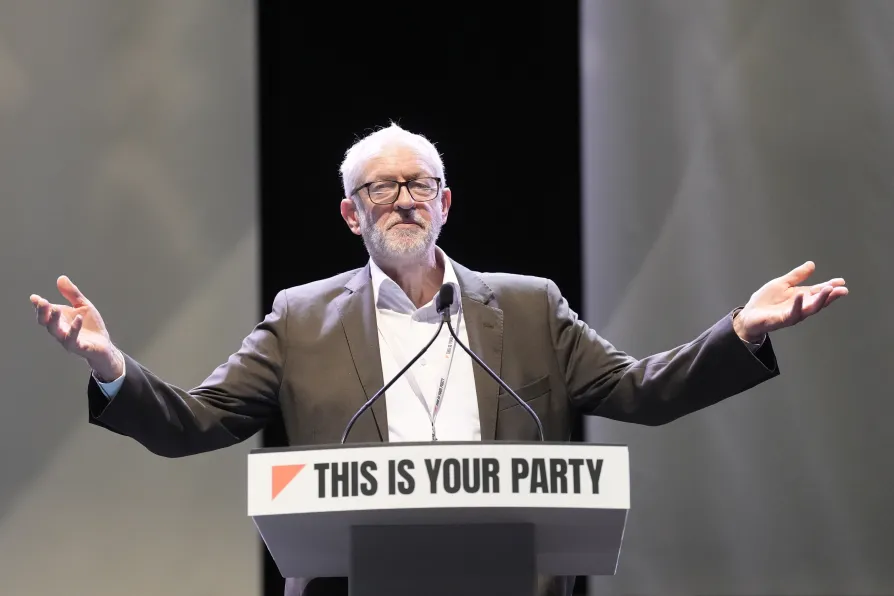

The new PM may offer more of the same, but early signs on his housing policies look promising, says GLYNN ROBBINS
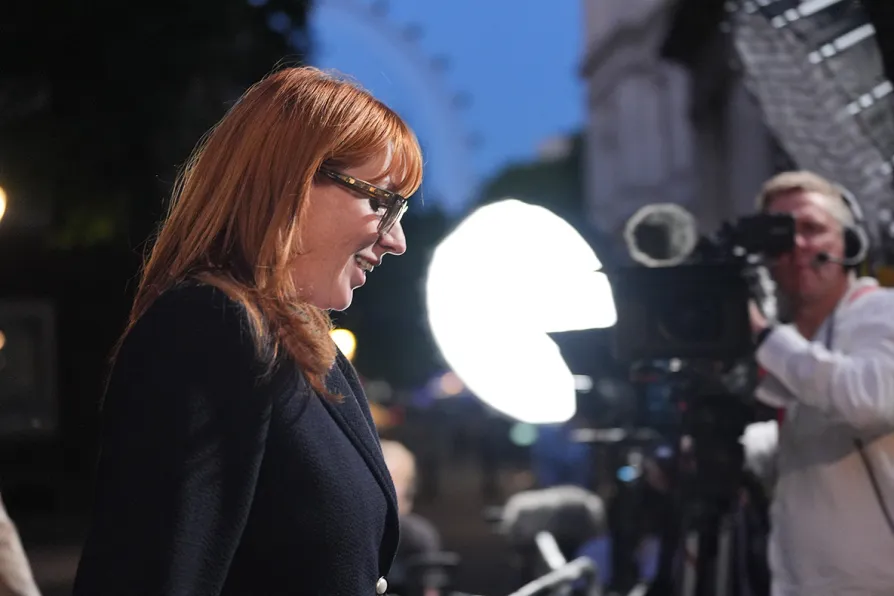
‘Rent freezes are not a way forward at the moment,’ Housing Secretary Angela Rayner says