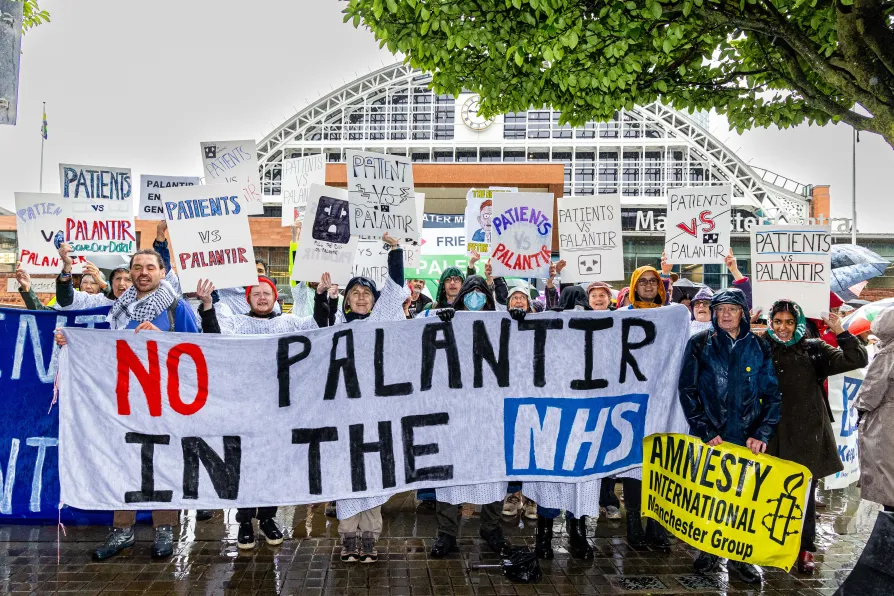
The UK Prime Minister may have the regal touch in northern England, but he’s been wrong-footed on the constitutional challenges posed by the Celtic Alliance of first ministers from Scotland, Wales and Northern Ireland, argues KENNY MacASKILL

Big tech: monopoly, not anarchy
Dealing in data not coal or steel, the new monopoly barons are harder to identify or control than their predecessors — and even more powerful than run-of-the-mill billionaires. Their political interests present an old threat, in a frightening new form, explains JULIAN JONES

NEIRLAY ANDRADE, a member of the Communist Party of Venezuela’s political committee, outlines her party’s position on the crisis facing the country
A look at Taylor Wimpey’s accounts shows why Labour’s market-led housing strategy won’t deliver more, cheaper homes, as promised, says SOLOMON HUGHES
DAVID HORSLEY remembers the remarkable life and death of US black revolutionary George Jackson, whose politically passionate prison letters were published as Soledad Brother
Cuban trade union federation CTC leader OSNAY MIGUEL COLINA speaks to Ben Chacko about life and work under a crippling US siege
A part of the British empire’s network of slavery, today the Caribbean island of Nevis faces a new form of exploitation in the form of crypto-colonialism, CLAUDIA WEBBE writes
Challenges from the unscrupulous misuse of AI to steal actors’ voice and physical likenesses is being met with a firm union response, writes LYNDA ROOKE





“Crises of every kind — economic crises most frequently, but not only these — in their turn increase the tendency towards concentration and towards monopoly” — Lenin, 1916
MORE than a century later, those words ring particularly true in the times of Covid-19, an era in which a medical crisis has precipitated an economic crisis of proportions unseen since the Great Depression.
Much like the historical crises which Lenin had been analysing, the coronavirus-triggered crisis we are living through can be characterised by a distillation in the wealth of the largest companies.
This accrual of wealth by the richest can be seen most starkly in recent figures by UBS Bank showing that there are now more than 2,189 billionaires, with a record collective wealth of $10.2 trillion.
Among this layer of uber-wealth, the “big five” tech giants have been the biggest winners. Microsoft and Amazon now have valuations of comfortably over $1 trillion, while Google (known as Alphabet) comes close to the trillion-dollar figure, and Facebook is valued in the region of $700 billion. Apple has now become the first company to reach a $2 trillion valuation.

Similar stories

Elon Musk says AI will make work optional. The world of abundance he predicts actually spells the end of the capitalist system, argues FAWZI IBRAHIM
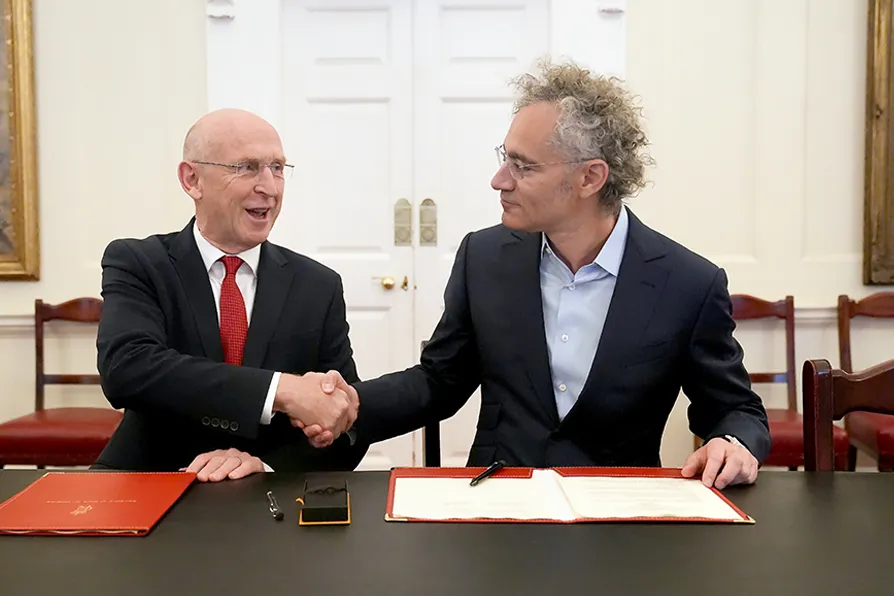
The greatest threat to democracy may no longer come from political parties but from unelected tech oligarchs like Peter Thiel and his powerful Silicon Valley network, argues JOHN GREEN
The future does not have to be climate chaos and social breakdown. MARC VANDEPITTE looks at the alternatives offered by the Global Justice Report, co-authored by Thomas Piketty