WILL STONE samples the 20th anniversary atmosphere of this eclectic end-of-season indie festival


 Latest editorial
Is this the world’s oldest image of a mind‑altering plant?
BENJAMIN POTHIER suggests that Palaeolithic cave paintings in Spain point to the ceremonial use of hallucinogenic flora
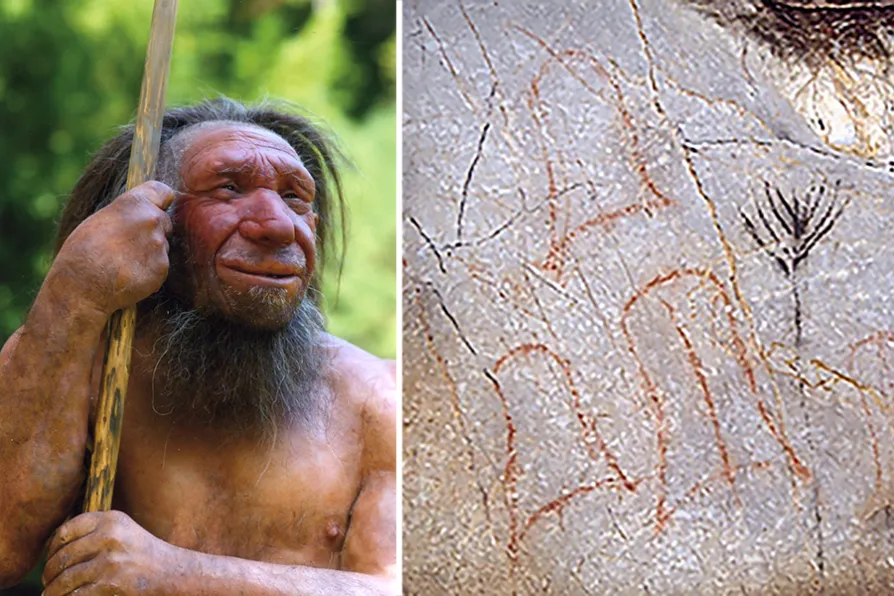 CEREMONIAL DRUG-USE: (L) Palaeolithic human reconstruction; (R) Detail of the El Castillo Cave bell signs [Pics: Neanderthal-Museum, Mettmann/CC; Geneviève Von Petzinger/CC]

Comics are not just superheroes and spandex – it can be public art, telling public stories, suggests HARRIET EARLE
The bard serenades the Diggers of Wigan and their festive followers
ALEXEI SAYLE speaks to Angus Reid about a lifetime of protest, how to hone political art – and what to do now
ANDY HEDGECOCK, JAMES WALSH, LEO BOIX and MARIA DUARTE review Just An Illusion, Everybody Digs Bill Evans, Blue Film, Oasis: Don’t Look Back in Anger, and Runner
MARIA DUARTE recommends a nerve-wracking reconstruction of the 72 hours before the Normandy landings





DEEP in the El Castillo cave in northern Spain, up a side passage off the main pathway, there is a small painted panel most visitors would walk straight past.
Created some 17,000 to 15,000 years ago, it shows five red signs, each shaped a little like a bell. A natural stone ledge runs beneath them like the lip of an altar. For over a century, archaeologists have simply catalogued these as “bell-shaped signs,” filed under the vast heading of ice age marks we don’t know the meaning of.
Building on my PhD research surveying plants used in shamanic ritual worldwide, I argue they may be flowers. Mind-altering flowers, to be specific – the bell of a psychoactive nightshade, most likely belladonna or a local henbane.
I published a paper in 2021 making a similar case for a tree drawn on the Chu Silk Manuscript, China’s oldest illustrated text. I read this tree as a plant credited in early Chinese herbals with letting its user see and speak with spirits.
If my interpretation is correct, then these unremarkable red signs would be the oldest known picture of a mind-altering plant anywhere in the world, by thousands of years. And it could be corroborated the way it was at Pinwheel Cave in California, where chewed bits of hallucinogenic plant matter found wedged into the rock gave the first unambiguous physical proof anywhere in the world that a plant depicted in rock art had been ingested at the site.
Look at a belladonna flower and then at the signs, and the resemblance is hard to unsee: a drooping, five-lobed bell, its mouth flaring outward, with faint veins running down the corolla.
Image

The El Castillo signs share this silhouette — the flared bell, the downward hang, and, on several, a central line echoing the vein of the living flower. Henbane, another psychoactive nightshade native to the region, produces a similarly shaped bell at certain stages of its growth.
Some might argue that a bell is a simple form, and simple forms recur by chance. But what I feel lifts these signs above coincidence is the company they keep: the deliberate grouping, the altar-like ledge, and the weight of independent evidence that prehistoric Europeans knew these plants intimately.
Other readings exist. Following the French archaeologist Andre Leroi-Gourhan’s mid-20th-century framework, ovals, triangles and rounded forms across Palaeolithic sites like these bell-shaped signs were often catalogued as vulvar or female symbols. Some specialists, including Canadian paleoanthropologist Genevieve von Petzinger, have since pushed back on this once-dominant interpretive lens. They argue that it reflects the assumptions of the – largely male – early researchers as much as the evidence itself.
The nightshades are among the most written-about psychoactive plants in European history. Their active compounds – atropine, scopolamine, hyoscyamine – produce vivid hallucinations and the striking sensation that one’s skin is sprouting fur or feathers.
This has echoes of the part-human, part-animal figures common in ice age art, from the lion-man of Hohlenstein-Stadel – a 40,000-year-old ivory carving with a human body and the head of a cave lion – and the “sorcerers” of French caves, human figures fused with antlers, claws or a beast’s tail, long read as shamans caught mid-transformation.
There is also evidence that these plants were used in rituals by later Europeans. Chemical analysis of bronze age human hair from the burial cave of Es Carritx in Menorca confirms people there consumed multiple psychoactive compounds, atropine and scopolamine among them, around 3,000 years ago.
Belladonna’s use threads through European history right up to the witch trials in Germany, France and Italy, roughly from the 15th to 17th centuries, where it was considered a staple of the “flying ointments” said to carry witches to the sabbath. The question this panel poses is how far back that thread runs.
The documented relationship between humans and mind-altering plants, in image form, essentially begins in the neolithic. The famous “mushroom” figures of Tassili n’Ajjer in the Sahara – a vast Algerian plateau of prehistoric art, where humanoid figures appear studded with mushroom-like shapes – have been read by some researchers as an early depiction of ritual mushroom use. The oldest widely discussed candidates date to roughly 7,000–9,000 years ago.
The El Castillo panel belongs, according to a chronological study of the cave’s iconographic stratigraphy (overlapping layers of cave art), to the lower Magdalenian period – some 17,000 to 15,000 years ago, deep in the last ice age. That would push the picture back 7,000 to 10,000 years, into the upper Palaeolithic.
It’s a large leap, and one that opens a long gap in the record that is reason for caution: a 2023 survey of 5,786 catalogued images across 113 European Palaeolithic caves found that plants account for just 0.07 percent of them, against over half for animals. This near-absence may reflect how little we have looked for plants, and how easily a painted flower gets filed away as an abstract sign.
Directly beneath the panel sits a shrine-like stone concretion – exactly the kind of surface on which offerings might have been placed. This would not be unprecedented: at Chauvet Cave in south-eastern France, a cave bear skull was deliberately placed on a flat stone block, with traces of a fire lit beneath it, in what excavators have described as an altar-like arrangement roughly 36,000 years old. Modern techniques for recovering ancient environmental DNA from sediment are sensitive enough that traces of Solanaceae — the nightshade family, which includes belladonna and henbane — could support the reading.
That testability is why the claim is worth putting before a wider audience now. If wrong, a field study will show it. If right, it would mean the human impulse to make images and the human use of mind-altering plants are entangled at the very origin of art.
Benjamin Pothier is Researcher in Anthropology, Ethnobotany and Art History, University of Plymouth
This article is republished from The Conversation under a Creative Commons license.


Similar stories
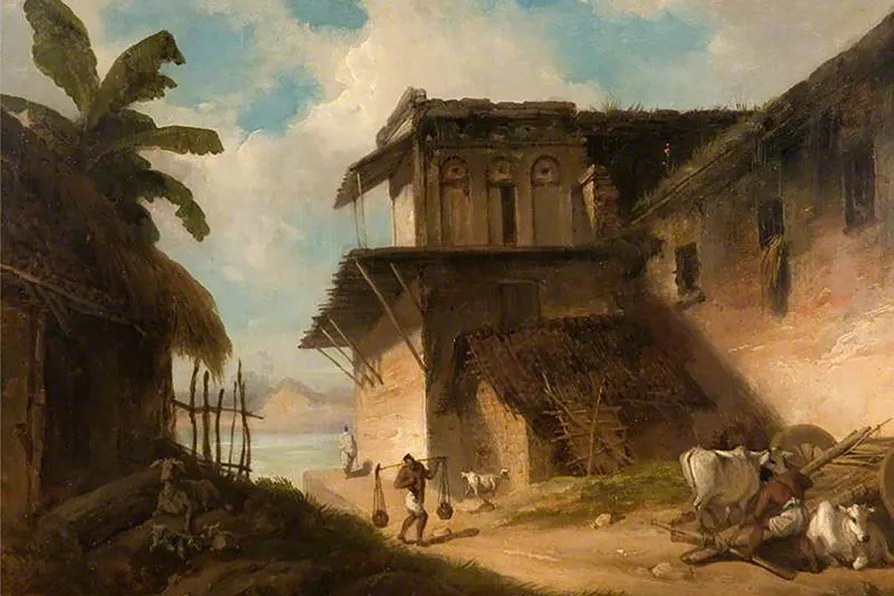
APURBA CHATTERJEE explains how British artists in India used the “picturesque” to reshape colonial landscapes and celebrate imperial power
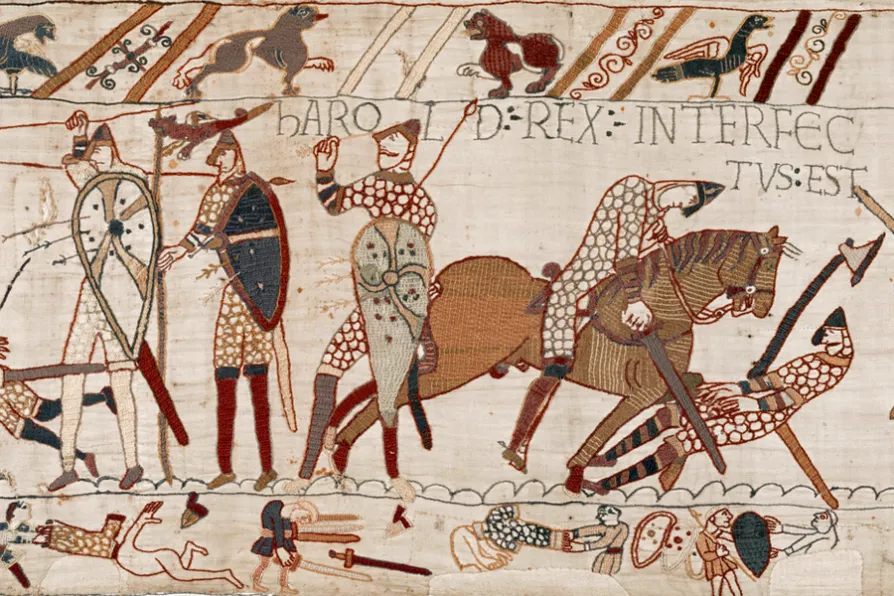
STEPHANIE BROWN draws attention to the hidden labour of the female embroiderers, and how a 19th century replica made no such error
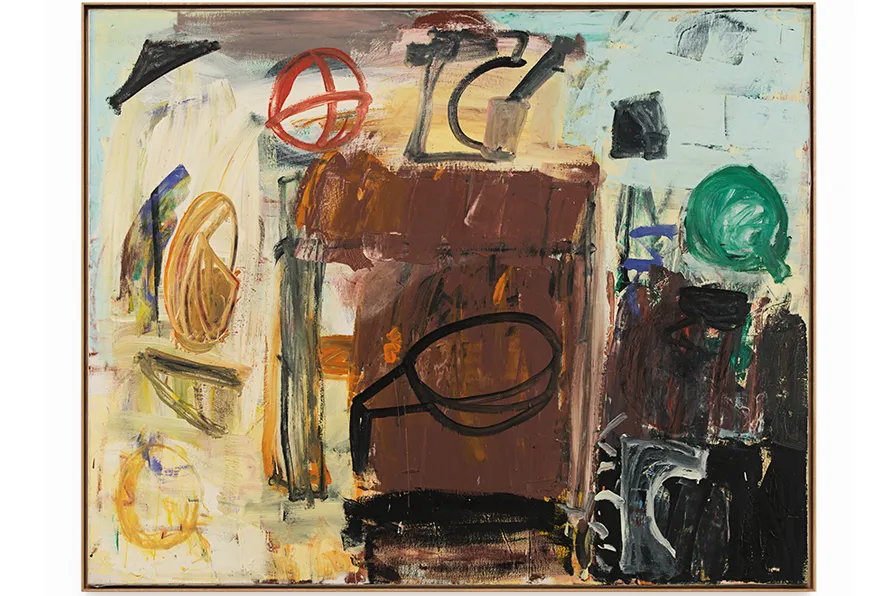
MIRANDA RICHMOND relishes the gloriously liberated art of Roy Oxlade, and traces his method back to the thinking of David Bomberg, his acknowledged teacher

KATAYOUN SHAHANDEH surveys Iran’s cultural heritage and explains what has been damaged and what could be lost