WILL STONE samples the 20th anniversary atmosphere of this eclectic end-of-season indie festival


 Latest editorial
WOMAD 2026
GEORGE FOGARTY reflects on the politics expressed at this year’s festival where contradictions abound, but the music kept it real
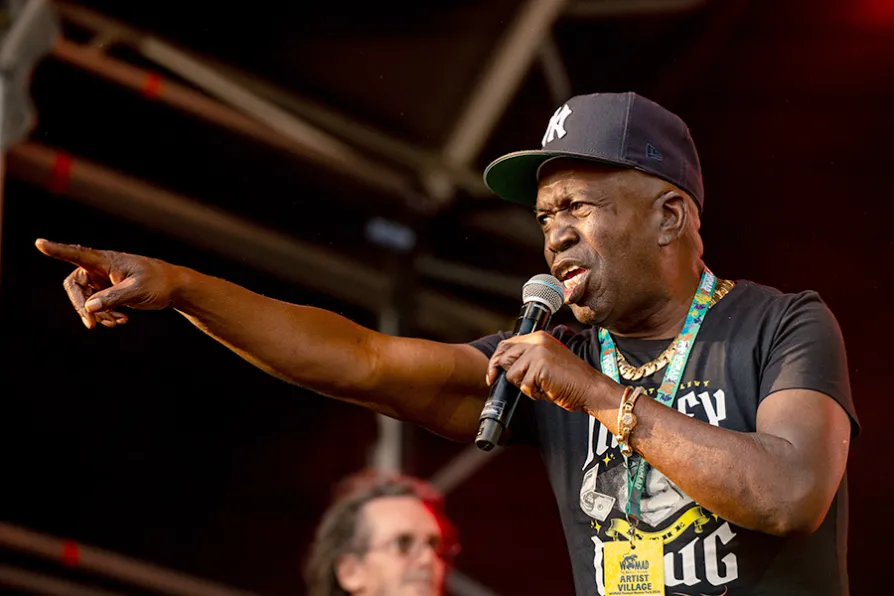 KEEPING IT REAL: Reggae legend Barrington Levy at WOMAD [Pic: @garryjonesphotography]

Comics are not just superheroes and spandex – it can be public art, telling public stories, suggests HARRIET EARLE
The bard serenades the Diggers of Wigan and their festive followers
ALEXEI SAYLE speaks to Angus Reid about a lifetime of protest, how to hone political art – and what to do now
ANDY HEDGECOCK, JAMES WALSH, LEO BOIX and MARIA DUARTE review Just An Illusion, Everybody Digs Bill Evans, Blue Film, Oasis: Don’t Look Back in Anger, and Runner
MARIA DUARTE recommends a nerve-wracking reconstruction of the 72 hours before the Normandy landings





WOMAD has changed over the years. Not only is it in a new location, but it seems to be much more inter-generational than previously. There have always been young people, of course, but the mass of deck chairs that used to sprawl out in front of the stages have now been replaced by a sea of bobbing heads and winding bodies comprising every age from newborn to retiree.
It has always been a great place for widening musical horizons, but this is now more evident than ever, as teenagers get a taste of the musicians who inspired their elders while octogenarians are introduced to the latest subgenres of electronic dance music.
One of the most respected elders performing this year is Barrington Levy. His 1985 hit Here I Come remains one of the most widely recognised dancehall reggae tracks of all time, and arguably played a role in the birth of jungle music when its iconic chorus was sampled by Rebel MC’s Tribal Base in 1991.
His incredible versatility is on full display today, with echoes of Sam Cooke in tracks like Too Experienced, nestling in among the more traditional reggae melodies and ragga toasting. It is refreshing that despite many decades-old hits, some of his greatest work is the newest, such as his 2025 track A Fi Yuh, which reminds his listeners that “what is for you on this Earth, no man can take it.”
Yet he is not happy about the direction of much modern music, explaining that “Where the music business is going now, the lyrical content sucks,” adding that “I feel sorry for the younger generation, because music is supposed to be positive.”
Hopefully, then, he stuck around to hear Greentea Peng’s set, which is about as far from the banal and chauvinistic output that Levy was critiquing as it is possible to imagine. Sonically this is, like reggae, bunnin’ music par excellence: ultra-cool, jazzed-up spacy hiphop, picking up where the likes of Tricky, Portishead and Lauryn Hill left off.
Image
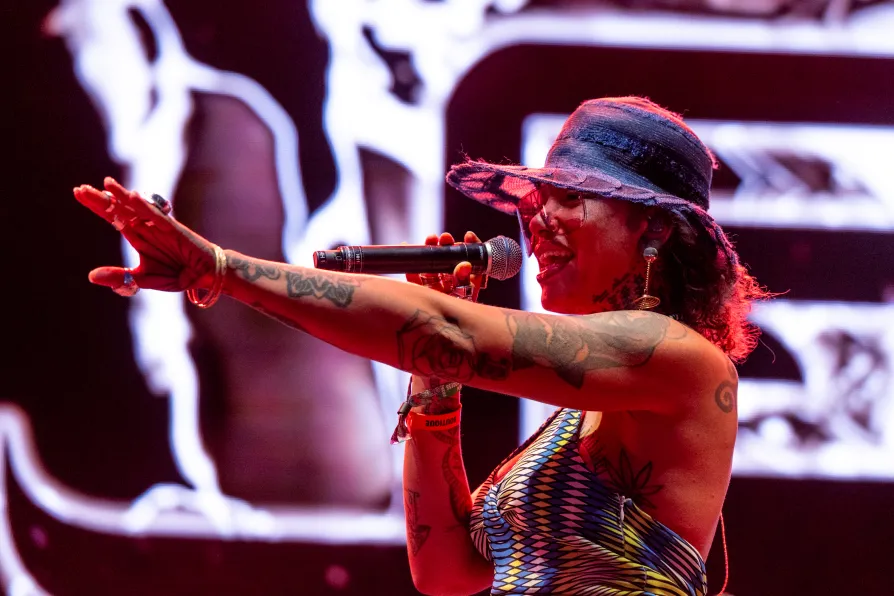
Lyrically, she is reflective and vulnerable in places, yet oozing a quiet self-respect and confidence that is infectious, and always with a loving affinity for the strugglers of her generation. “This is for the youth who can’t be silenced” she says of her first track Make Noise, while dedicating a later number Helicopters to those in “Palestine, Lebanon, Congo, Sudan, Iran and Yemen, suffering under the boot of Babylon — as we all are, in our own way.”
It is not an uncommon sentiment: indeed, there are more keffiyahs here than I’ve ever seen in one place outside of a demo. Several Palestinian and Lebanese artists perform, their proud embrace of a profound and evolving musical heritage in the face of genocide both inspiring and deeply poignant — and an act of resistance in itself.
Of particular note was Zenith, who set up on one of the festival paths to “busk for Palestine,” rapping impassioned renditions of some of the great resistance tracks by MCs such as Lowkey, as well as his own compositions. “Horrible images swimming in my head/ How do heartless murderers sleep in their bed?” he asks.
It is, to my mind, a question as much for us comfortable festivalgoers, enjoying lifestyles subsidised by the mechanics of genocidal imperialism, as it is to the Israeli generals to whom it is more overtly directed. What makes it all the more moving is that Zenith is himself a child, of Palestinian origin, and just seven years old.
There are also several political discussions in the World of Words tent, curated by the Byline Times, focused mostly on hot liberal topics like “political divisions,” AI and the far right. Nothing, however, on Palestine, Iran, Ukraine, Sudan or indeed any aspect of the slide to world war we are living through, perhaps reflecting the liberal uneasiness around such topics, or maybe a nervousness about these issues being “divisive.”
Instead, the biggest draw of the tent was a session with Zack Polanski — whose view of politics appears depressingly narrow. Politics, for him, seems to be defined purely as professional electoral politics, or at least engagement with state institutions. For the rest of us, the slogan on his T-shirt “Vote Hope” pretty much sums it up — give your X to the Greens and hope for the best.
As for “hope in action” he gave as an inspiring example the recent creation of an all-party parliamentary group on fuel poverty by Green MP Hannah Spencer. This is hope as delusion, an attempt to shore up parliamentary cretinism at a time it is being exposed as never before. If Zack Polanski did not exist, the ruling class would have had to invent him. Or Andy Burnham. Unfortunately for Zack, it seems like they don’t really need both.
Contradictions abound. But the musicians are keeping it real.

Similar stories
Chris Searle speaks to US pianist RAN BLAKE
New releases from Old Spot, Chris Marksberry, and Clementine Lovell
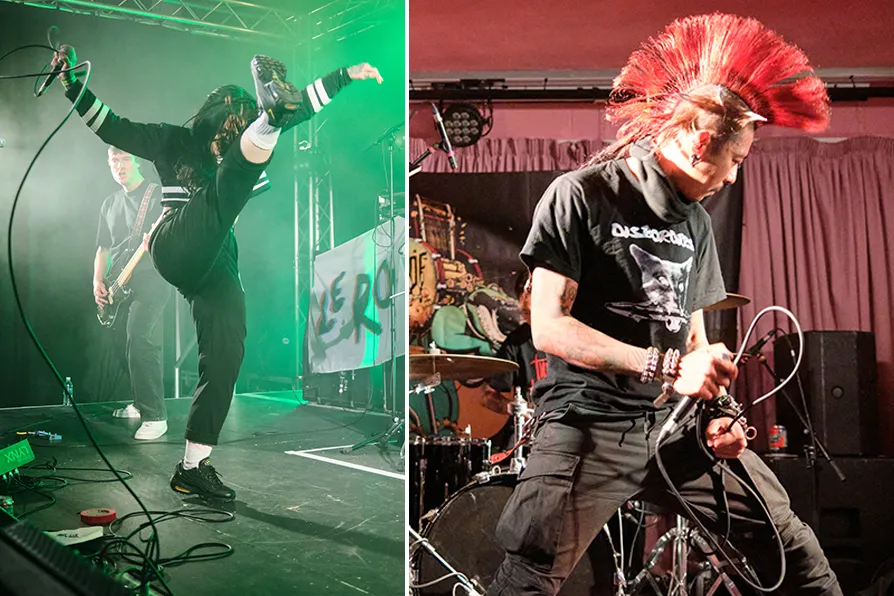
BEN COWLES samples the many sonic and social therapies of Manchester Punk Festival 2026, and is ready again to smash capitalism
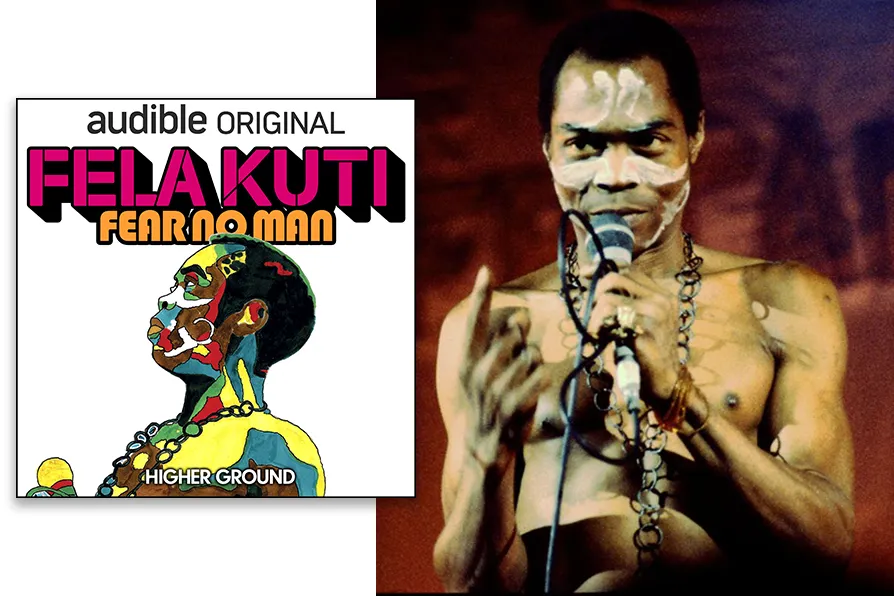
TONY BURKE recommends a new podcast about the legenary Nigerian musician and political activist FELA KUTI