ROB WARZYNIAK wades knee deep through a pile of ‘dead canaries’ of Trumpist policies which exacerbated the horrors of US capitalism domestically


 Latest editorial

Trump’s Latin America offensive: A new era of US imperialism
FRANCISCO DOMINGUEZ introduces the background to a conference on defending Latin America’s sovereignty
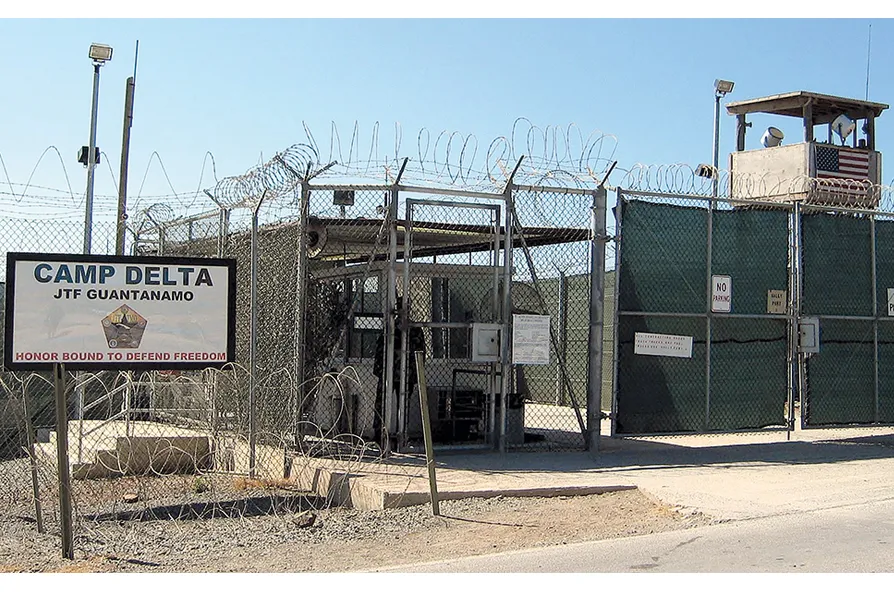 SHAPE OF THINGS TO COME: Gate to Camp Delta, the infamous detention centre at the US military base Guantanamo Bay at the southern-most tip of Cuba / pic: Kathleen T Rhem/CC
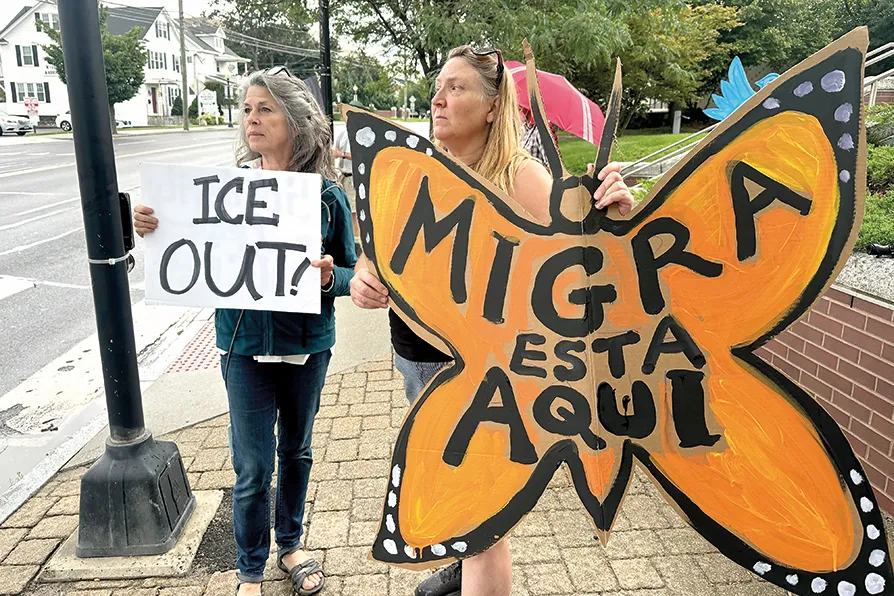
Without evidence or Nato consultations Berlin’s answer to the Leipzig incident is a rupture of relations. SEVIM DAGDELEN examines why
The glacier collapse in Nepal is yet another warning that a warming planet is making Himalayan disasters more frequent and destructive – but the countries facing the greatest risks are often those least responsible, says LI YANG
Nick Blair is set to benefit from a hugely lucrative contract to ‘virtually’ train the British army for its next war. Like father, like son, writes SOLOMON HUGHES
Even when tragedy strikes, Western media cannot resist the opportunity to turn it into a sordid propaganda opportunity, as the Nepal-China border tragedy shows, writes CARLOS MARTINEZ
Trade unions should be at the heart of the anti-racist push for reparations for the historic legacy and continuing impact of slavery, writes ROGER McKENZIE





SINCE Donald Trump’s inauguration in January 2025, his administration has markedly intensified its imperial aggression towards its southern neighbours, reviving and escalating the campaign first pursued during his initial term in power (2016–20).
This offensive rests upon several interrelated pillars. Foremost among them is economic coercion, wielded through crippling sanctions, including punitive tariffs, against a select group of Latin American countries notably including Cuba, Venezuela and Nicaragua.
Brazil was hit with a 50 per cent levy on its exports to the US and duties ranging between 10 and 12.5 per cent were applied to 18 other regional economies.
Parallel to this economic pressure runs a pattern of flagrant interference in the domestic affairs of sovereign states, particularly during electoral cycles, with Argentina, Ecuador and Colombia standing as the most egregious cases.
The administration has also imposed sanctions on members of Brazil’s Supreme Court and their families, following the court’s sentencing of Jair Bolsonaro to 27 years in prison for his role in an attempted coup in 2022 intended to subvert the transition of power to newly elected president Luiz Inacio Lula da Silva.
Mexico has been subjected to a triad of threats: punitive tariffs, potential military deployment and even direct strikes on its soil against drug cartels designated by Washington as terrorist organisations, threats similarly extended to Brazil.
Additionally, the White House has menaced the flow of remittances — approximately $60 billion ($5.57bn in July 2026 alone) — sent by Mexican nationals to their families by imposing a 1 per cent federal excise tax, and has compelled Panama to withdraw from China’s Belt and Road Initiative under the threat of military seizure of the Panama Canal.
In Ecuador, US forces have conducted joint military operations against cartels in collaboration with the country’s armed forces.
The most belligerent US military actions, however, have been reserved for Venezuela and Cuba. In January 2026, Trump ordered special forces to launch an armed assault on Venezuela, resulting in the bombing of four cities, the deaths of more than 100 civilians, and the annihilation of President Nicolas Maduro’s entire presidential guard, including 32 of its Cuban members.
The operation culminated in the abduction of both the president and the First Lady, Cilia Flores. This brazen act has positioned the US to mount further military strikes at will, a possibility that both Marco Rubio and the president have repeatedly and explicitly threatened.
Against Cuba, the administration has imposed an exceptionally stringent naval blockade, preventing the island from receiving a single drop of oil for over six months. The resultant havoc among the civilian population has been devastating: mortality rates among the most vulnerable have risen sharply, and hospitals, deprived of electricity, have been forced to suspend surgical procedures.
Widespread food shortages and power outages lasting upwards of 20 hours at a stretch have engendered acute hunger, widespread suffering, and a mounting death toll. These privations appear deliberate, designed to foment civilian unrest that might, in turn, justify a “military solution” to what Washington terms the “Cuban problem.”
Since 2021, and particularly following the election of Daniel Noboa as president of Ecuador, Latin America has witnessed the ascent of a cohort of presidents not merely sympathetic to the US, but openly aligned with Trump himself.
These include Javier Milei in Argentina, Noboa (re-elected) in Ecuador, Santiago Pena in Paraguay (all three in 2023); Nayib Bukele, re-elected in El Salvador (2024) and, in 2026, Rodrigo Paz in Bolivia, Jose Antonio Kast in Chile, Laura Fernandez in Costa Rica, Nasry Asfura in Honduras, and most recently Abelardo de la Espriella in Colombia.
Many of these nations had previously been governed by progressive administrations; their current rightward trajectory thus represents a substantial realignment in the continental balance of power, one that Trump has vigorously endorsed by lending his explicit support to every far-right candidate in the region since his return to office.
Emboldened by this political shift, Trump convened a summit of the Shield of the Americas — a coalition of regional partners pledged to intensify the fight against drug cartels and organised crime.
Thirteen heads of state attended, including the presidents of Argentina, Bolivia, Chile, Costa Rica, the Dominican Republic, Ecuador, El Salvador, Honduras, Panama, and Paraguay, alongside the prime ministers of Guyana, Trinidad and Tobago, and Jamaica.
Trump articulated the coalition’s purpose with unmistakable clarity: “a commitment to using lethal military force to destroy cartels and their terrorist networks.” In practice, this doctrine portends the expansion of US military forces across the region, participating actively in joint “counter-terrorist” operations with domestic armed forces.
Concurrent with these developments, the Trump administration is accelerating the proliferation of US military installations throughout Latin America at a remarkable pace.
Bases or so-called “facilities” now exist in most countries of the region and the Caribbean. This expansion is consistent with the National Security Strategy issued by the White House, which proclaims the imposition of a Trump Corollary to the Monroe Doctrine.
The Corollary envisions a hemisphere free from hostile foreign incursion or ownership of strategic assets — effectively denying Latin American nations the sovereign right to trade with or accept investment from “non-hemispheric competitors,” chief among them China.
Any such engagement, the doctrine implies, may be forestalled by military means. This constitutes a grave escalation, one that seeks to abolish the national sovereignty of every state in Latin America and the Caribbean, reducing the region to a recolonised “backyard.”
More alarmingly still, this project enjoys the enthusiastic complicity of Latin American oligarchies, who perceive US military might as a bulwark against the inevitable democratic challenges and popular opposition to their own reactionary agendas.
These very issues will form the subject of a panel discussion at the annual conference of the Peace and Justice Project (PJP), to be held on September 19-20 2026 at the Blizard Building, Queen Mary University of London (4 Newark Street, London E1 2AT). The session, entitled “How to Defend the Sovereignty of Latin America?” is scheduled for Saturday September 19 2026, and will be chaired by Claudia Turbet-Delorf. Speakers will include Oscar Eduardo Guardiola Rivera, a representative of the Cuban embassy, Dr Francisco Dominguez, and Nardi Suxo of Bolivia.

Similar stories
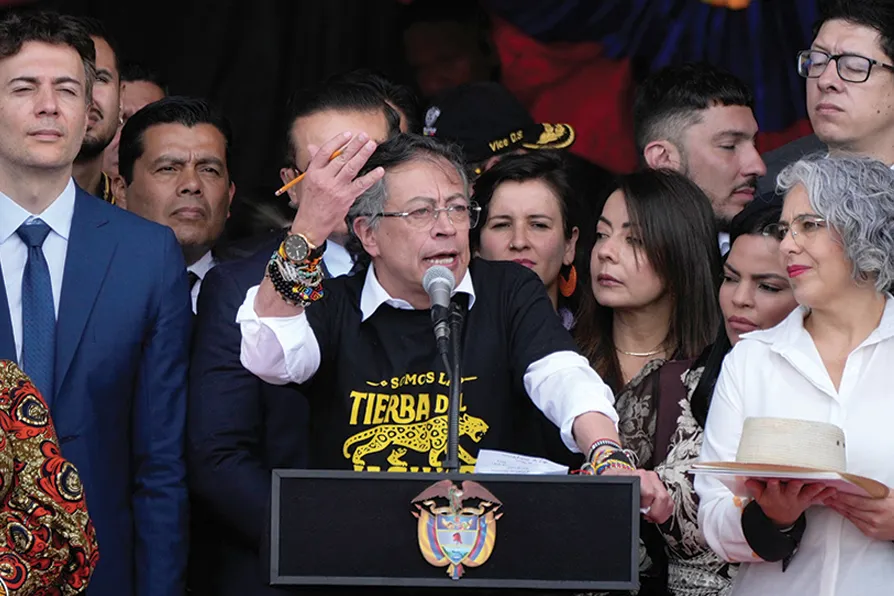
Latin America is being swept by a series of right-wing electoral victories. But behind that shift to the right lies less of an ideological conversion than anger, fear, insecurity, and a deep crisis of democracy, asserts MARC VANDEPITTE
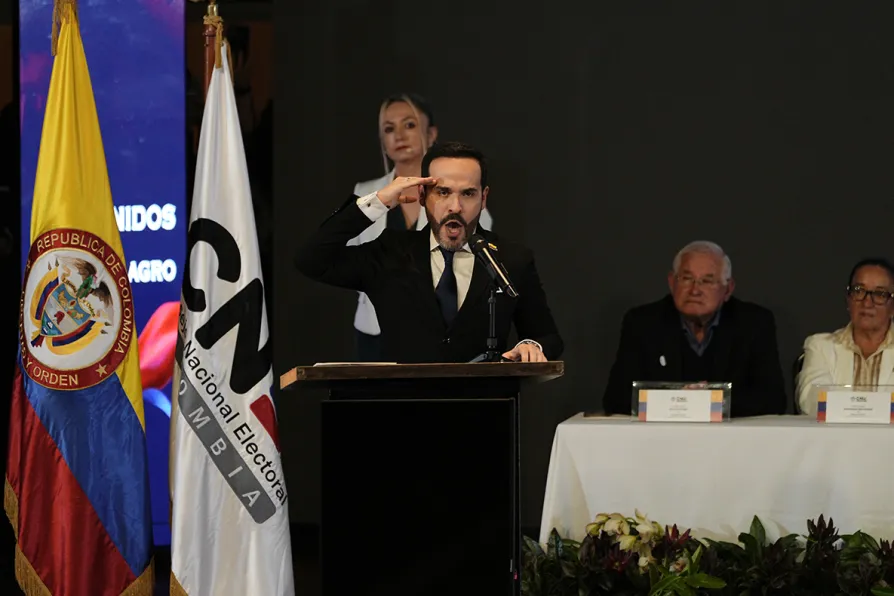
ENRIQUE SANTIAGO ROMERO says the Colombian far-right’s election victory is deeply suspect — and the United States has its fingerprints all over it
International solidarity can ensure that Trump and his machine cannot prevail without a level of political and economic cost that he will not want to pay, argues CLAUDIA WEBBE
LEE BROWN highlights the latest attempts to undo progressive reforms instated during the presidency of Rafael Correa