TUC president and POA leader STEVE GILLAN speaks to Ben Chacko on the eve of Congress 2026


 Latest editorial
Laura Doel: ‘Welsh unions can’t take their eye off the ball’
The new TUC Cymru general secretary speaks to Morning Star Wales reporter David Nicholson about her trade union background and ambitions for the movement
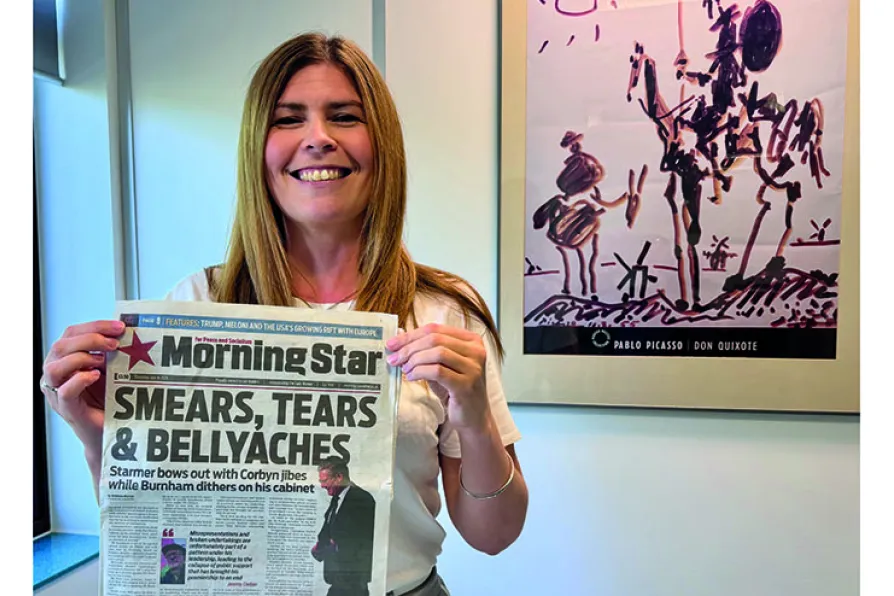 Great Star-t: TUC Cymru general secretary Laura Doel

DOUG NICHOLLS welcomes a turning point at this year’s Congress, where many motions call for a co-ordinated plan to revive British industry, a perspective outlined in his new book
HOPE VIRGO of campaign Dump the Scales warns MPs voting today they should be alert to the threat legalised assisted death poses to people with eating disorders
The Together Alliance is hosting two summits, North and South, to build power and plan action against the scourge of racism peddled by the right. DANIEL KEBEDE urges mass participation
The drift toward militarisation in Europe is not inevitable, left-wing and peace movements can preserve sovereignty and prevent war, says DÁIRE HUGHES MP
Whatever differences exist among international sympathisers of the Bolivarian revolution about its current trajectory, they should unite against the imperialist power that is the source of an enforced retreat, argues ROGER D HARRIS
Trade unions need to step up and force a turn in the policies of the labour movement to effectively confront the far-right threat, argues NICK WRIGHT





NEWLY appointed TUC Cymru general secretary Laura Doel is also the Welsh trade union movement’s shortest serving president, stepping down six weeks after being elected into the role at the biennial Congress in May.
I asked why Doel wanted the job as she was already a high-profile national secretary for head teachers’ union NAHT Cymru for the past seven years.
She said she was the first person from NAHT to take up the union’s seat on the general council, so always had a close working relationship with TUC Cymru.
“I was elected to be TUC Cymru president, which was such a huge honour, although I might be the person who’s held the seat for the shortest time before being officially appointed as general secretary.”
Doel was born and brought up in Aberbeeg, in Blaenau Gwent, leaving school at 16 but studying journalism in further education. After college she got on a journalism apprenticeship scheme through what was then the Celtic newspapers, now part of the Reach empire.
“My first job was at the Merthyr Express as a trainee reporter where I did all sorts. You name it, I did it, including death knocks.
“I did a feature called Valley’s Lives and I spoke to some amazing people. One of the key people I remember talking to was Bill King from Merthyr Tydfil, who was a retired NUM activist.
“I spoke to him all afternoon, tales of industrial action, fighting for the miners, the struggles, him growing up in that community, what he’d done, and all the intricacies of the trade union movement.
“When he died Bill’s funeral was a massive event, [he was] really well respected, a member of the trade union movement, and just a great advocate for social justice.”
We spoke about why and when the Welsh media stopped doing those sorts of reports on trade unions and of working-class life.
Doel said there is a huge lack of investment in journalism, and bemoaned the absence of anybody recording what everyday life in Wales is like at the moment.
“I loved talking to people and that kind of instilled that sense of social justice, and the importance of people’s voices and workers’ rights.”
We spoke about her family and Doel told me her dad worked for ICI, which was unionised and that he was a shop steward for the TGWU.
“My grandfather worked in a colliery and was a member of the NUM. There’s been generations of my families that were miners, steel workers and local government workers and all were union members.”
Doel said her mum and dad were proud of her and still live in the same house that she grew up in.
I asked what they thought of her as TUC Cymru general secretary and she told me they said “we always knew she was chopsy.”
We spoke about what made her move from journalism into the trade union movement and she explained the difficulty of having a baby, and long shifts as a deputy news editor on a daily paper printed three times a day.
Doel moved into local government where she was recruited into Unison on her first day and became the union’s women’s officer on her third day.
“It was the best thing that I did, because that led to a job with Unison, and I worked in schools and hospitals.
“Again, that was brilliant because it really spoke to my love of people and going out and talking to them about their issues and how we could help and the importance and significance of being part of something positive like a union.”
As a very media-savvy union official I asked Doel if she had plans to tackle the media to try and get it on board with the trade union movement and get it doing a bit more reportage of what’s going on in Wales.
“That was definitely part of my pitch for this role. We need to make sure that we use every tool available to us to hold government and employers to account, and, for me, the essential part of that resource is the Welsh media.
“We need to be able to demonstrate that what happens in the union movement isn’t something that’s an aside from what goes on in everyday life, it is an intrinsic part of our society.”
I asked Doel about her view of TUC Cymru — where she thinks it should be going and what it should be doing?
“I’m lucky to be coming in at a really challenging time with a new government — the first time that we’ve had a government in Wales that isn’t Labour.
“And we’ve got some significant challenges particularly around the public sector in terms of pay and chronic underinvestment ,and the knock-on impact that that has on service delivery, and the local economy.
“This was my pitch for this job, that TUC Cymru is the voice of working people, but I think there is more that we can do in terms of also being the delivery partner for change.
“We’ve got to try our hand with the new government which is talking a lot about jobs, the Welsh economy, and what we can do as a nation and we can be the driving force behind that.
“And this is why the principles of social partnership are so important.
“We cannot take our eye off the ball — that we are here first and foremost to speak for working people and that has got to be around things like investing in the workforce, looking for better, highly skilled jobs.
“First Minister Rhun ap Iorwerth spoke at our Congress in May and that was his first public engagement, and he talked about the importance of working with the trade union movement and I take him at his word.”

Similar stories
Wales reporter DAVID NICHOLSON looks at the political scene as budget rows take centre-stage and Welsh Labour gains a new leader
David Nicholson spoke to BETH WINTER about her bid to become a Senedd member as an independent running on a community grassroots campaign
In the second of a series of interviews with leaders of progressive parties in Wales ahead of the May 7 Senedd election David Nicholson talks to Welsh Green Party leader ANTHONY SLAUGHTER
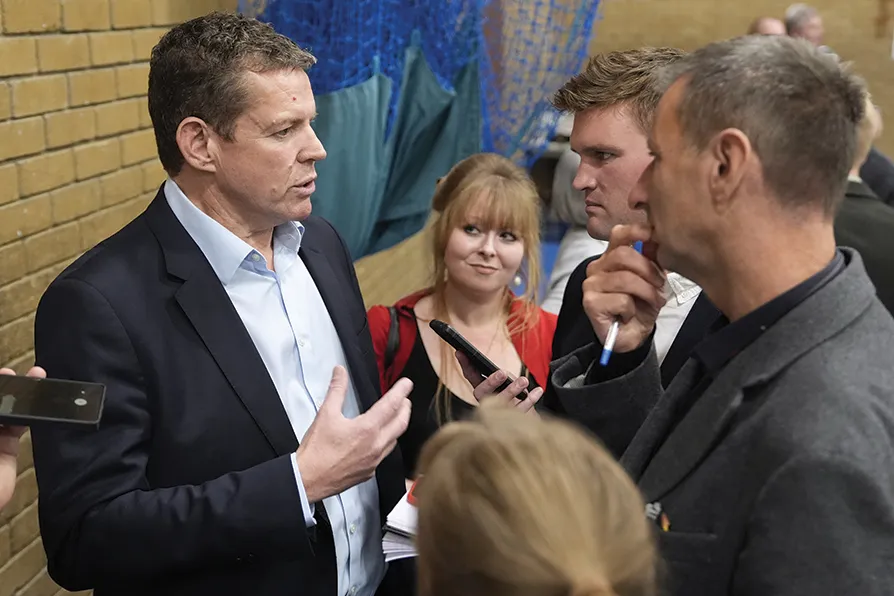
In the first of a series of interviews with leaders of progressive parties in Wales ahead of the May 7 Senedd election DAVID NICHOLSON talks to Plaid Cymru leader Rhun ap Iorwerth