WILL STONE samples the 20th anniversary atmosphere of this eclectic end-of-season indie festival


 Latest editorial
I am a camera
ALAN MORRISON explores, and recommends, a remarkable collection of poems that explore war photography with the moral responsibility of a documentary film-maker

Comics are not just superheroes and spandex – it can be public art, telling public stories, suggests HARRIET EARLE
The bard serenades the Diggers of Wigan and their festive followers
ALEXEI SAYLE speaks to Angus Reid about a lifetime of protest, how to hone political art – and what to do now
ANDY HEDGECOCK, JAMES WALSH, LEO BOIX and MARIA DUARTE review Just An Illusion, Everybody Digs Bill Evans, Blue Film, Oasis: Don’t Look Back in Anger, and Runner
MARIA DUARTE recommends a nerve-wracking reconstruction of the 72 hours before the Normandy landings





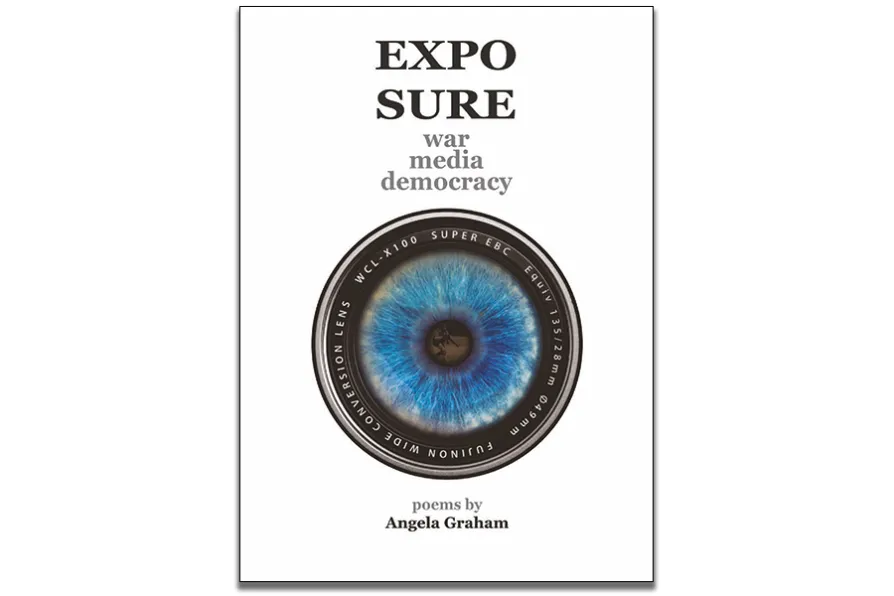
EXPOSURE – War Media Democracy
Angela Graham, Culture and Democracy Press, £14
IN Exposure, a collection of photo poems unaccompanied by the photos that prompted them, Angela Graham brings her experiences as a Catholic growing up in Ulster during The Troubles, and background in documentary and film, to bear on her responses to the current theatres of brutality in Ukraine and Gaza.
The title Exposure has several meanings: the light exposure of the camera, the exposure to the real life scene by the photographer, and the exposure of the viewer to the photographed image. The collection is divided into two books, Soldiers and Civilians, covering the conflict in Ukraine and the genocide in Gaza, and Citizens and Politicians, focused on “conflict in civil society.”
In the opening poem, Photograph of a Dead Russian Soldier, Graham describes a frozen soldier like an ice sculpture: “Rotting inside his uniform…/ the snow,/ has lain on him so intimately/ he is possessed entire;/ his right arm flung out on frozen linen/ in his last abandon.// His up-turned wrist, his naked palm… mimic life/ but his fingers have scooped deep in a font of snow/ as though he’ll rise and bless himself, thumb a swift cross”.
Graham concludes: “From all of this I can’t wring any meaning” — and yet her poem does.
In Both Photographs Graham describes childhood winters as if visiting Narnia: “find/ the inside of my bedroom window slicked with ice, opaque’d./ …stand close up to scrutinise that alien terrain,/ its glistening battlements and outposts…/ In the aftermath of snow, the air is numb”. Snow — and its “ministrations” — feature heavily in the Ukrainian section.
In Your Worst Fear Graham’s method is more one of origami: “pasted on the tarmac,/ a handbill of the thinnest paper/ — his flattened uniform and helmet —/ — a pop-up that doesn’t understand it’s dead”. Then comes something of a credo: “War is a generalist/ so be particular,/ re-compose him in a poem”. It is for the poet to particularise the generalised dead. Graham does this in an imagistic way not dissimilar to second world war poet Keith Douglas, though with less detachment.
The harrowing A Matter of Degree describes a woman’s body found in Bucha “prone on a blanket, on backyard clay./ A short fur jacket pulled up to her head/ conceals her face — her hair spread wide/ like a dreaming debutante’s”. Then the forensics: “a gloved young man focused on unfolding/ a green/ pink chevroned cover for a bed”.
Humanity tested in extremis is at the collection’s core: in an eye clinic Graham thinks of “Zaporizhzhia, Rafah, Sa’ana, Omdurman,/ wherever people brace day after day… // … no bread, no medicine, no milk, no mercy”.
In the short title poem, Graham writes “a photograph is a theatre”, and she includes the Greek etymology of “theatre” meaning “a place … to see, to observe”, a vantage point, which enables witnesses “to feel/ as a stranger felt,/ to be/ beyond ourselves”. The theatre motif resurfaces in the Gaza section: “We rush the wounded to the blasted hospital/ a theatre, anaesthetists.// …we’re performing/ so the children will believe that here were streets/ with flower sellers, pavement cafés”.
Point of View is packed with sense impressions: “the dense stench of rubbish/ acrid burning rubber, a heavy veil of gone-rogue chemicals;/ the heat in shadeless avenues of rubble,/ the hot torpor in the waiting-pens”. In I Imagine I Am Noor’s Mother there is the heartbreaking image: “I’ll cut a small slit in her shroud/ and slip it in/ – her school certificate./ Allah will understand”. Graham asks: “Will I drown in such catastrophic images?”
Opening Hell confronts the apocalyptic Trump-Netanyahu partnership: “They think they’ve set the time and date/ for Satan to unlock Hell’s gate/ but the Devil doesn’t have to wait/ on their permission./ He is himself a head of state/ – it’s his decision”. Graham’s use of rhyme, as if an attempt to restrain the said marauders, results in a Blakean couplet: “And Hell – it’s not some place apart./ Its gates are in the human heart”. The Sontag-quoting Let The Atrocious Images Haunt Us continues in this existentialist vein: “No image/ will change the world./ We do that/ or not”.
Graham’s Catholicism informs much of her imagery: “He genuflects to her/ (his right leg stiff and wounded).// …the low lens brings us all/ to our knees/ – Magi at an emptied crib”. In Dialogue the photographer “invites/ collusion – cruel, compassionate, joyful”, the “gaze” of the camera is “never neutral;/ like a kiss from Christ or Judas”.
Traumatic memories of the Troubles are stoked by Loyalists burning effigies of refugees in 2025: “Next day I’d see the ashes on the pitted asphalt at our terrace-end:/ We didn’t burn you – this time …// As a Catholic in the Sixties, I could see that a desire/ too terrible to name…/ was enacted through … fire,/ …even made respectably desirable/ and this year, on the bonfire at Moygashel…// to solve a problem the traditional way/ through flames… with the neighbours cheering// …our hatred/ flares because we care so much”.
They Came for the Journalists comments on censorship: “Don’t tell them/ that the journalists’ words/ are harboured in our synapses,/ messaging, processing and imprinting/ that issues in everything we do”.
The close up of a human eye as organ of sight, witness, recording and memory, window of the soul (as cited in one of the poems), and symbol of all these, peering through a circular camera lens, adorns the front cover of this remarkable book which leaves as permanent an impression as any photograph.

Similar stories
ALAN MORRISON welcomes a new collection from the most imaginative and committed ecopoet of our time
From post-human revolution in Puerto Rico to trans poetics and queer mythmaking, these three books that imagine new ways of being together
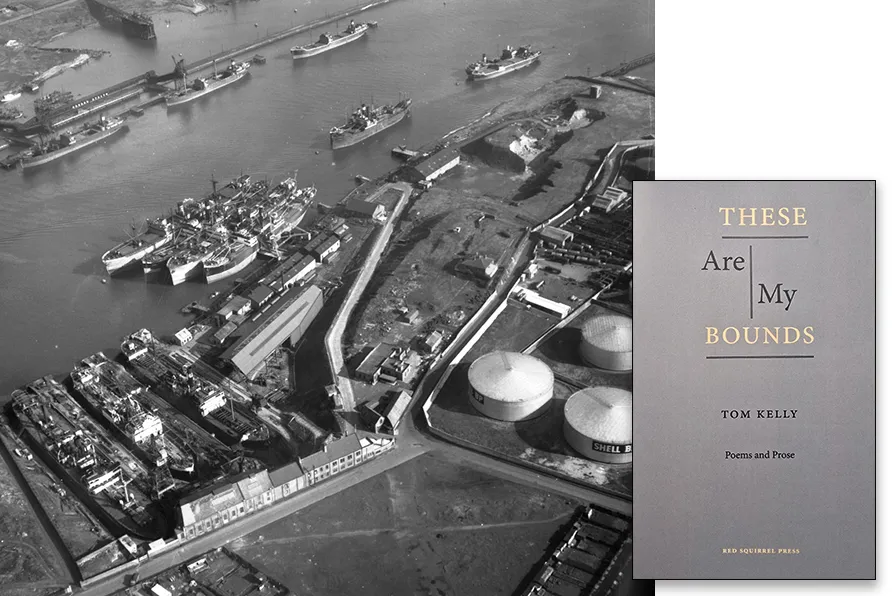
ALAN MORRISON recommends a consummate, heart-warming collection about a working-class upbringing in the industrial north-east
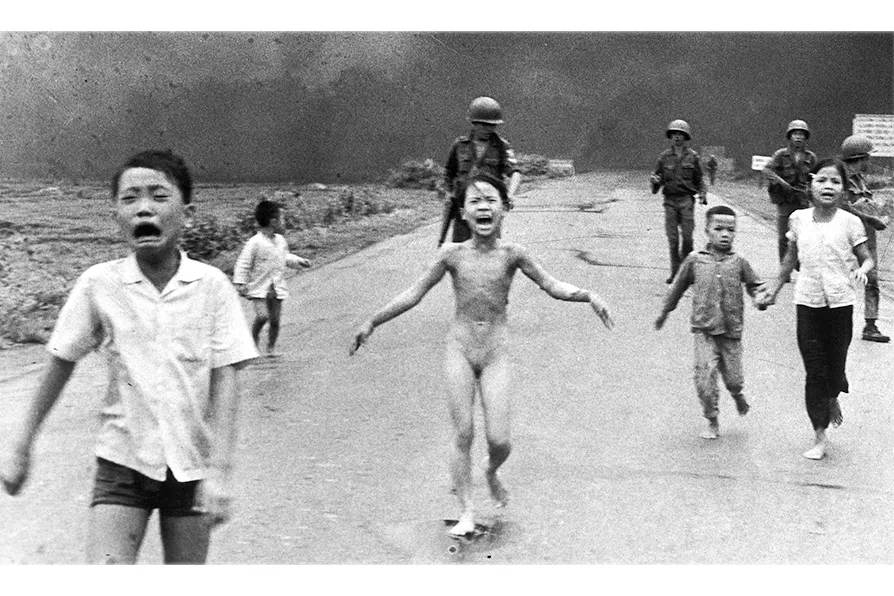
If true, the photo’s history is a damning indictment of the systematic exploitation of non-Western journalists by Western media organisations – a pattern that persists today, posit KATE CANTRELL and ALISON BEDFORD