WILL STONE samples the 20th anniversary atmosphere of this eclectic end-of-season indie festival


 Latest editorial
Fascist roots of the disastrous Irish Brigade
JIM JUMP introduces two new publications that examine both sides of the Irish participation in the Spanish civil war
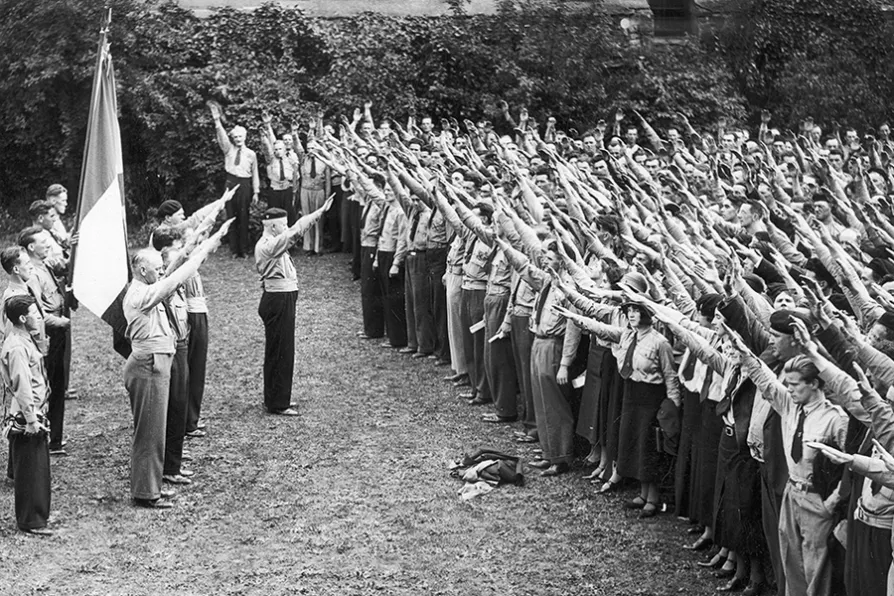 Fascist leader Eoin O'Duffy with activists of the Blue Shirt Movement, between 1933 and August 1934 [Pic: Public Domain]

Comics are not just superheroes and spandex – it can be public art, telling public stories, suggests HARRIET EARLE
The bard serenades the Diggers of Wigan and their festive followers
ALEXEI SAYLE speaks to Angus Reid about a lifetime of protest, how to hone political art – and what to do now
ANDY HEDGECOCK, JAMES WALSH, LEO BOIX and MARIA DUARTE review Just An Illusion, Everybody Digs Bill Evans, Blue Film, Oasis: Don’t Look Back in Anger, and Runner
MARIA DUARTE recommends a nerve-wracking reconstruction of the 72 hours before the Normandy landings





Blueshirts and Blackshirts: Fascism in Ireland North & South
Brian Hanley, IBCC, £5+P&P
A Time for Heroes – International Brigade Commemoration Committee: 21 Years of Action
Ciaran Crossey and Lynda Walker, IBCC, £7+P&Pds
IRELAND has the dubious distinction of being the only country that sent more volunteers to fight on the side of Franco’s military rebels than for the elected government of the Spanish Republic.
Over 700 men left Ireland for Franco’s Spain between December 1936 and February 1937. Cheering Dublin crowds saw off the first group on the start of their journey to Spain. Priests blessed them and handed out rosary beads and prayer books. The second contingent left from Galway, boarding a German ship flying the swastika flag. There were bands on the quayside and the singing of Faith Of Our Fathers.
What a contrast with the 250 Irish who joined the International Brigades. Nearly 70 of them died in Spain, while the pro-Franco Irish Brigade’s only casualties were sustained in an accidental clash with fellow rebel forces. They returned home in disarray in June 1937, though were still given a civic reception at Dublin’s Mansion House.
It soon became clear that the venture led by Irish Blueshirt Eoin O’Duffy had been a disaster, one that pushed him into alcoholism and terminal sickness. The brigade’s main sponsor, the Irish Christian Front (ICF), similarly faded in influence, with its leader becoming mired in corruption allegations.
O’Duffy emerged from Ireland’s surprisingly vibrant fascist culture, which is vividly described in Brian Hanley’s Blueshirts And Blackshirts. Filling 30 pages, this is the illustrated text of a talk he gave in 2025 in Belfast at the annual lecture organised by the local International Brigade Commemoration Committee (IBCC).
Between 1933-34 what became commonly known as the Blueshirts began as the Army Comrades Association, made up of veterans of the Irish Free State Army who backed the 1921 treaty with Britain. Many of them, including Garda police chief O’Duffy, feared that the incoming anti-treaty Fianna Fail government under Eamon de Valera would seek revenge. Indeed, O’Duffy was soon sacked by the new prime minister.
The Blueshirts claimed 100,000 members at their height and by the end of 1933 had merged with two other parties to form Fine Gael, with O’Duffy as its president. Renaming themselves the National Guard and then the Young Ireland Association, the Blueshirts adopted the right-arm fascist salute and actively engaged in street violence, facing off against Fianna Fail and IRA supporters as well as left-wing opponents.
After failure at the ballot box, the Blueshirt movement split into warring factions and O’Duffy formed the National Corporate Party. The outbreak of the Spanish civil war in 1936 gave him the opportunity to stage a comeback.
A wave of pro-Franco enthusiasm swept through Catholic Ireland. The ICF was immediately launched with the aim of providing aid to the Spanish rebels. Mass rallies followed in Dublin, Cork and Waterford, where tens of thousands of supporters heard lurid accounts of the murder, crucifixion and rape of Spanish priests and nuns, which were blamed on “a gang of murderous Jews in Moscow.”
O’Duffy announced his intention to lead a fighting force to Spain. Senior church figures and politicians gave their support and within weeks he claimed there were 7,000 men who wanted to join the “crusade.”
Given the hostile political environment faced by those who sided with the Spanish Republic, their courage and commitment is all the more remarkable. They came from both sides of the border, Catholic and Protestant, and from the Irish diaspora in Britain, North America and Australia. “With fascism re-emerging again in the Ireland of today, we should take inspiration from their struggle,” writes Hanley.
Preserving the inspiration of the International Brigades for today’s challenges describes perfectly the work of the Belfast-based IBCC. Its activism and achievements are catalogued in the 148 pages of A Time For Heroes.
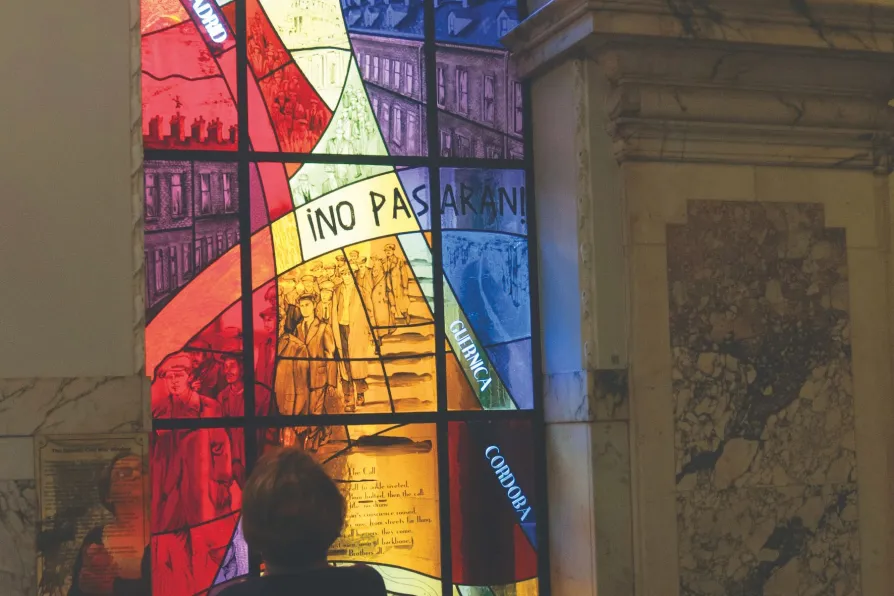
The IBCC can claim credit for two iconic International Brigade memorials in Belfast — a stained-glass window in City Hall and a bust of a volunteer in Writer’s Square. They were also the driving force behind the placing of the memorial plaques to volunteers in the Falls Road and the Shankill Road Libraries common cause of anti-fascism.
A Time For Heroes includes biographical notes on more than 50 International Brigaders from the Belfast area. Reports of the annual lecture series — of which Brian Hanley’s was one — are a highlight, along with a description of the phenomenally successful IBMT annual general meeting hosted by the IBCC last year.
The book concludes on a sombre note by acknowledging that the 21 years since the creation of the IBCC have seen “wars, genocide, poverty and inequality” continuing to grow. “The present situation shows that the battles of the Brigaders are still very much with us.”

Similar stories
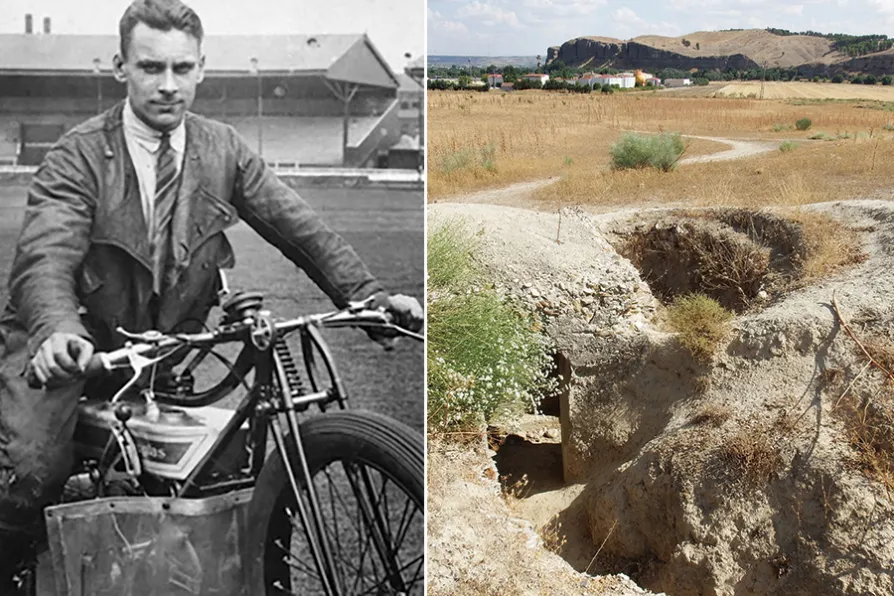
A champion motorcyclist, trade union organiser and communist, Clem Beckett went from Britain’s speedway tracks to the battlefields of Spain, where he gave his life resisting Franco’s forces at Jarama. GEOFF BOTTOMS pays tribute to this remarkable anti-fascist
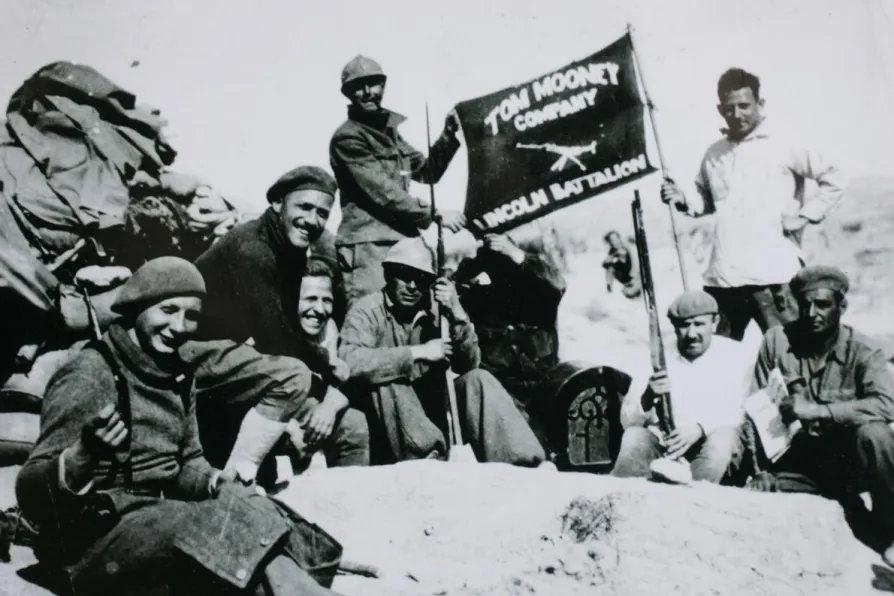
CJ ATKINS commemorates one of the most dramatic moments in working-class history
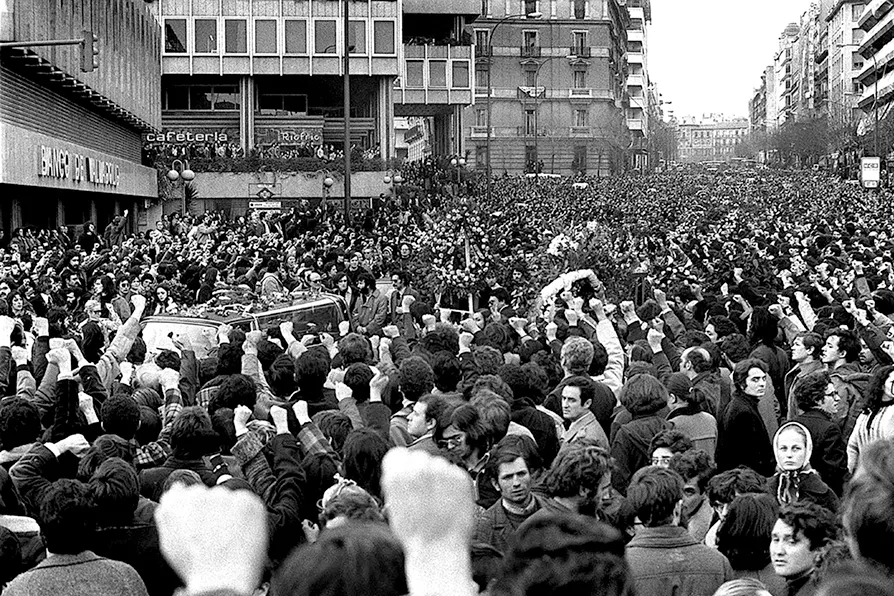
Spanish dictator Francisco Franco died 50 years ago today November 20. JIM JUMP looks back at his blood-soaked rule and toxic legacy on Spain today
JIM JUMP looks forward to the International Brigade Memorial Trust AGM taking place in Belfast later this week where the spirit of solidarity will be rekindled