
ROB WARZYNIAK wades knee deep through a pile of ‘dead canaries’ of Trumpist policies which exacerbated the horrors of US capitalism domestically


A key moment in the first cold war: Berlin August 13 1961
The Berlin border closure 65 years ago did not happen in isolation, and many Western accounts omit crucial context, explains KEITH BARLOW

 The Berlin Wall
[Edward Valachovic/Creative Commons]
The Berlin Wall
[Edward Valachovic/Creative Commons]
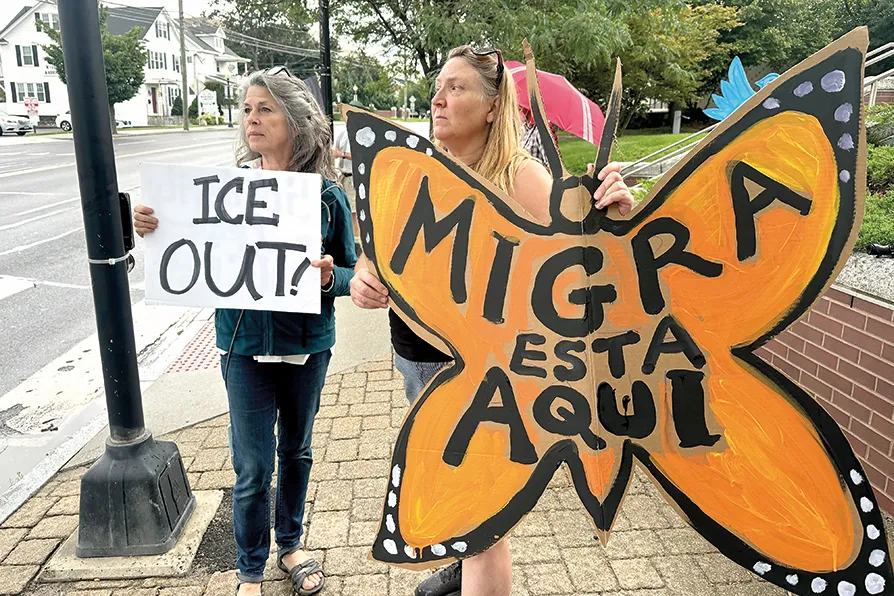
Without evidence or Nato consultations Berlin’s answer to the Leipzig incident is a rupture of relations. SEVIM DAGDELEN examines why
FRANCISCO DOMINGUEZ introduces the background to a conference on defending Latin America’s sovereignty
The glacier collapse in Nepal is yet another warning that a warming planet is making Himalayan disasters more frequent and destructive – but the countries facing the greatest risks are often those least responsible, says LI YANG
Nick Blair is set to benefit from a hugely lucrative contract to ‘virtually’ train the British army for its next war. Like father, like son, writes SOLOMON HUGHES
Even when tragedy strikes, Western media cannot resist the opportunity to turn it into a sordid propaganda opportunity, as the Nepal-China border tragedy shows, writes CARLOS MARTINEZ
Trade unions should be at the heart of the anti-racist push for reparations for the historic legacy and continuing impact of slavery, writes ROGER McKENZIE





SIXTY-FIVE years ago today, Thursday August 13 1961, the world witnessed a key moment in the unfolding of the first cold war.
This was the closing of the previously open border within Berlin, the then capital of the German Democratic Republic and the zones then occupied by US, French and British military forces.
Today the 1961 closing of the Berlin border is being used, among many other elements of propaganda, to justify a new cold war and a massive rearmament programme directed against Russia and less publicly against China. In Europe it is led by a very right-wing German government and, globally, by the United States.
It is therefore important for us to remember the wider context of the closing of the border in 1961. We should also note the actions of those on the left in Germany who today commemorate those who died in 1961 defending that border.
The previous year, May 1 1960, had seen the exposure of active US plans for the nuclear bombing of the USSR. A US pilot, Gary Powers, was captured and confessed to taking aerial photographs for the nuclear targeting of Soviet cities. A few months later, in October 1960, the US moved against Cuba with its first embargo.
On January 3 1961 an often forgotten event occurred in US politics. President Dwight Eisenhower, in his outgoing speech as president, warned the world, in an act of considerable moral courage, about the dangers posed by what he described as the US “military industrial complex.”
His words were soon vindicated. On April 17 1961 the CIA launched its invasion force against Cuba at the “Bay of Pigs.”
A month later the US deployed long-range nuclear-capable missiles in Turkey and Italy. In response the USSR sought a summit meeting in June 1961 to discuss a way forward to nuclear detente. It failed — and provocations on Berlin’s open border began. Fearing that the crisis in Berlin could lead to another war, the leadership of the German Democratic Republic under Walter Ulbricht ordered the closure of the country’s previously open borders.
Today the Western media once more uses August 13 1961 to sensationalise the deaths which happened at the border as part of the West’s ongoing strategy of criminalising the GDR. Every death at the border was a death too many. However, the Western media only refers to those who sought to flee the country. No mention is made of 27 GDR citizens acting as border guards who were killed during the course of their service then, and later, in defending their country. No action has been taken against those who killed them.
In the negotiations leading to the unification of the two German states in 1990, and against the background of the propaganda campaign against the GDR, it appears that Mikhail Gorbachev had apparently disregarded the fact that West German leaders had already planned to bring charges against GDR political and military leaders as well as the border guards.
To bring charges against these, but not those who killed GDR border guards, was at best a matter of double standards. Legally the two German states were equal under international law and both admitted to membership of the United Nations at the same time in September 1973.
We should also remember correspondingly that, despite being borders between two diametrically opposed political systems at the height of the cold war, for as long as the GDR existed war did not break out in Europe.
This is the background to today’s commemoration in Germany of the GDR citizens who were killed, as border guards, defending their country’s integrity in 1961.
Their names have been recovered by former members of the National People’s Army, of the GDR police and border troops of the GDR, members of the Sonnenberg branch of the Left Party in Chemnitz.
Their names were Gerhard Hofer, Fritz Otto, Siegfried Apportien, Herbert Liebs, Werner Schmidt, Hein Janello, Manfred Portwich, Ulrich Krohn, Helmut Just, Waldemar Estel, Jorgen Schmidtchen, Manfred Weiss, Peter Gohring, Reinhold Huhn, Rudi Arnstadt, Siegfried Widera, Egon Schultz, Rolf Henninger, Lutz Meier, Klaus-Peter Seidel, Jurgen Lange, Ulrich Steinhauer, Klaus-Peter Braun, Eberhard Knospe, Uwe Dittmann, Rudolf Spranger, Horst Hnidyk.

Similar stories
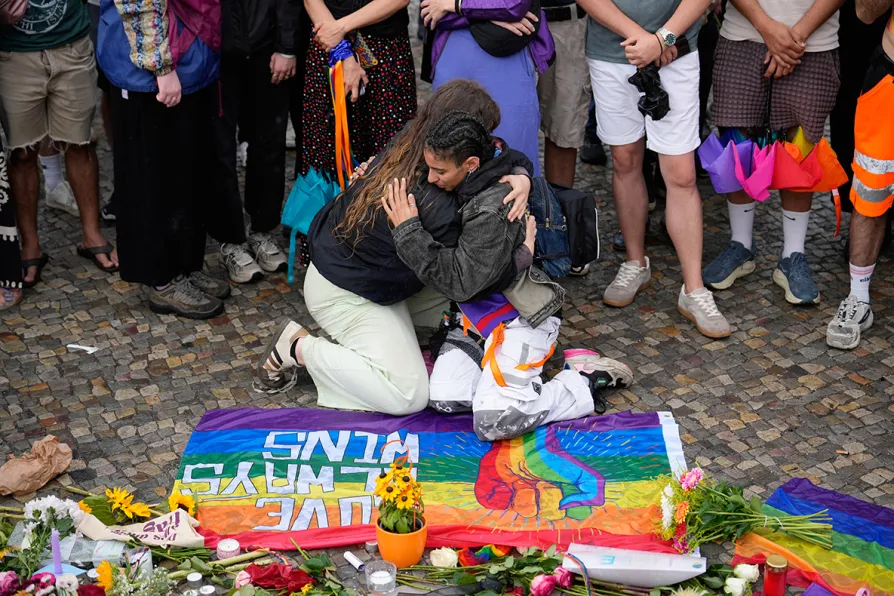
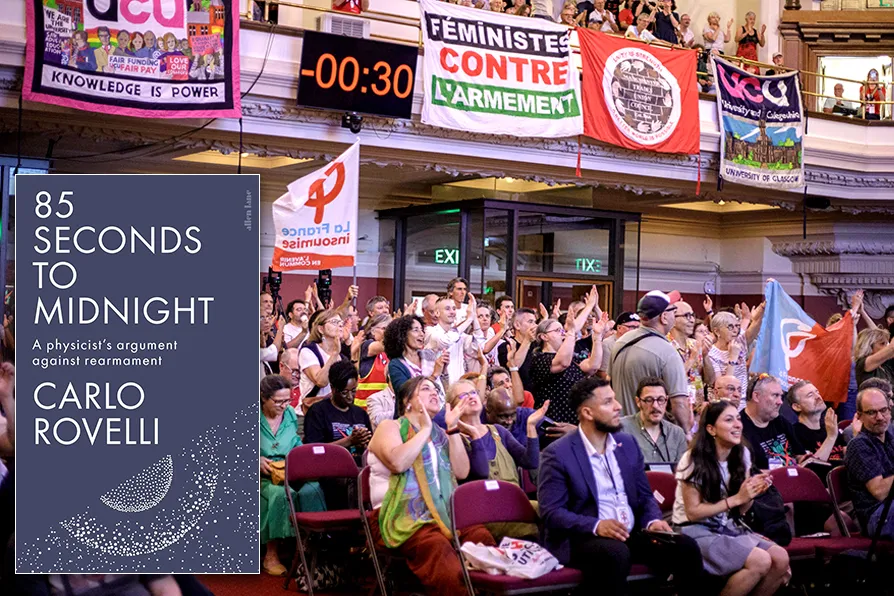
JENNIE WALSH reviews an urgent political intervention by physicist Carlo Rovelli at a time of escalating militarisation and war
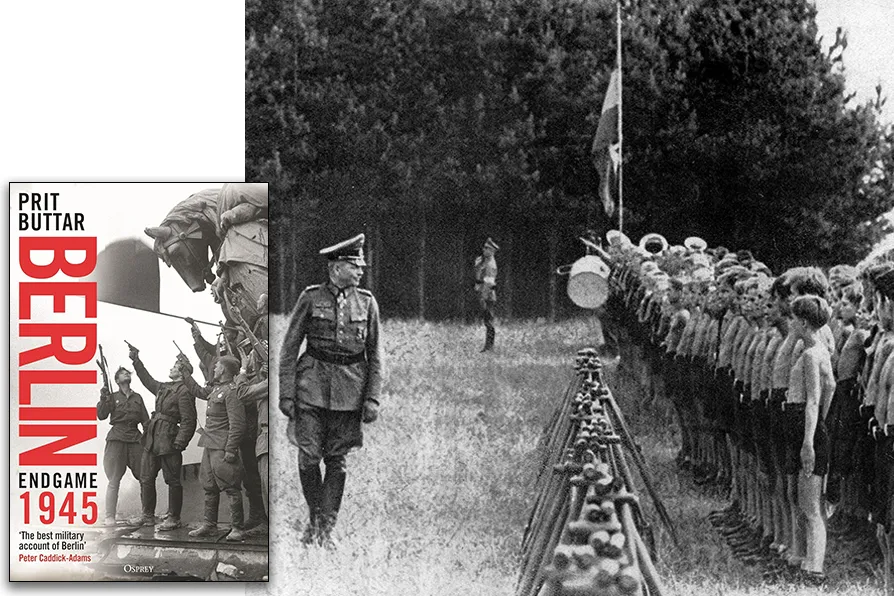
WILL PODMORE admires an account of the liberation of Berlin that overthrows the conventional US army-inspired account
Hundreds in Berlin gathered on January 15 to honour the US-born socialist who made East Germany his home. Florentine Morales Sandoval reports