JAMES WALSH is moved by a provocative and original take on the relationship between ecology and architecture, and a plea to work with, not against, the materials and minerals of our world


 Latest editorial

‘What’s the point of singing words if your listeners can’t hear or understand them?’
Chris Searle speaks to jazz vocalist NORMA WINSTONE
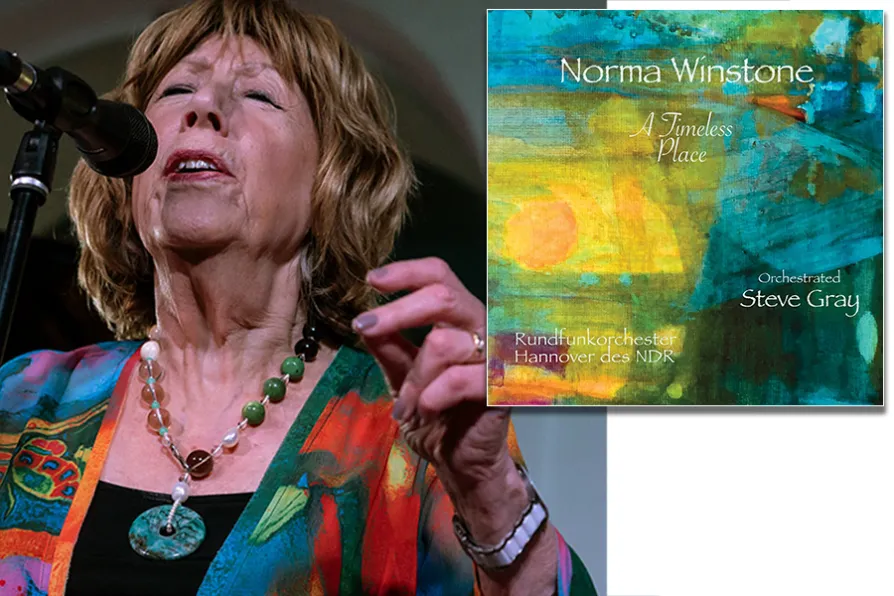 Norma Winstone [Pic: Hreinn Gudlaugsson/CC]

An immersive, participatory display by a queer Australian Aboriginal performer, and a rebellious unravelling of traditional Scottish dance
EWAN CAMERON witnesses a political farce that lacks a clear message
EWAN CAMERON picks out two fascinating music shows, fusing the Korean, and the Celtic, with the modern
BENJAMIN POTHIER suggests that Palaeolithic cave paintings in Spain point to the ceremonial use of hallucinogenic flora
The bard confirms that the right has a humour bypass, and replays the English Revolution on period instruments





THE unique vocal qualities of Norma Winstone are all thriving in this 1990 album A Timeless Place now released for the first time. There is the effortless swing, the perfect London diction, the rises and falls like sea waves in the flow of soft consonantal and vowel sounds, the closest of empathy with her fellow musicians, the deep meaning she forges from the lyrics she sings and writes and the wordless notes she creates.
The girl born in Bow who went to a rival school to mine in Dagenham, sings with such east London undulating beauty on this album, that it seems uncanny that it was recorded alongside German musicians in Hanover.
When she sings Gershwin’s I Loves You Porgy, there is no affected US accent, no falsity, just real, London sincere words, and when she moves next to the Brazilian rhythms of Ivan Lins’ Life In The Modern World, her swirling voice, united with the NDR Orchestra and arranger and pianist Steve Gray, is simply pure and profound.
I ask Winstone about her east London childhood, how did it create her voice? Born in Bromley-by-Bow Hospital in 1941, she grew up in the Devons Road neighbourhood. Her father was an ex-Desert Rat infantryman who served for four years in north Africa and India, returning to labouring and painting machinery when he was demobbed.
Her mum kept house and became a cleaner, and the family was rehoused in Dagenham in time for Winstone’s secondary education, passing her 11-plus interview for Dagenham County High, where one of the sixth-formers was Dudley Moore, who played piano in assemblies and became her first inspiration, as well as her first crush!
“At home we had no record player, only the radio, but our whole family loved music, especially Frank Sinatra. My dad played piano and he and my mum would get cheap tickets for Covent Garden. Then I heard Lena Horne singing The Lady is a Tramp on Two-way Family Favourites when I was about 10, and Ella Fitzgerald’s Every Time We Say Goodbye, and scatting on Air Mail Special and Flying Home. I loved it! All my early inspiration came from what I heard on the radio.
“As a young singer, like all of us, I copied the Americans, but it began to change for me when I sang with trumpeter Ian Carr and pianist Michael Garrick at the Regency Club in Stoke Newington. I didn’t know it then, but it was owned by the Krays. Mike gave me some songs of his, I learned them and sang them, but then I suddenly started singing wordlessly, along with saxophone and trumpet. He loved it and invited me to become a third horn in his band. I loved blending my voice with the horns as if it were another instrument. I knew then that my voice should become naked sound, and I became so busy doing it, I didn’t have time to think!
“I still loved singing the lyrics of standards, but I felt I had to get away from them. I loved Miles Davis’ improvising on Kind of Blue and also Dave Brubeck’s saxophonist Paul Desmond. I was absolutely floored by his solos and started transcribing them. So my influences were American to begin with, but I was a London singer and just wanted to sound real. When I first started playing with the great Canadian trumpeter Kenny Wheeler (who lived in Leytonstone, east London), I loved singing next to him. I’m sure I was thinking subconsciously, ‘I must make my voice become another sound, to sound like Kenny’.”
The Timeless Place album was recorded a month after Wheeler’s great ECM double album, Music for Large and Small Ensembles’ on which Winstone is the vocalist.
“So that album must have had a big impact on A Timeless Place, and Kenny’s song Sea Lady is on both albums.”
I always hear a lucid London edge to Winstone’s singing voice, and as she sings I also hear the sounds of a storyteller, whatever she sings.
“Yes, I tell stories in my singing, but I don’t like them to be too obvious, they must always have a spirit of mystery.”
Then it’s a part of the art of the listener to take the implicit in her songs, to enter and complete them and make them explicit. It is a part of the profundity of her musical artistry, expressed in all the songs she sings, with lyrics or wordless.
And what about her diction, for the sheer crystalline clarity of her voice, like the sounds of Bow and Dagenham, is still a message of their streets and people.
“What’s the point of singing words,” she tells me, “if your listeners can’t hear or understand them? I learned that from Sinatra and Ella when I was a girl. Always finish your words: make them clear so that the stories in your songs can be finished and understood by those who listen.”
As a lifelong English teacher, I couldn’t agree with her more! Just hear the evidence of that on tracks like Strayhorn’s A Flower is a Lovesome Thing or Lerner’s Too Late Now. And come and hear her octogenarian beauty this coming November at her London Jazz Festival concert at King’s Place. Her voice stays with you always.
Norma Winstone will play Cadogan Hall on November 18. Tickets: efglondonjazzfestival.org.uk. A Timeless Place is released by Enodoc Records.

Similar stories
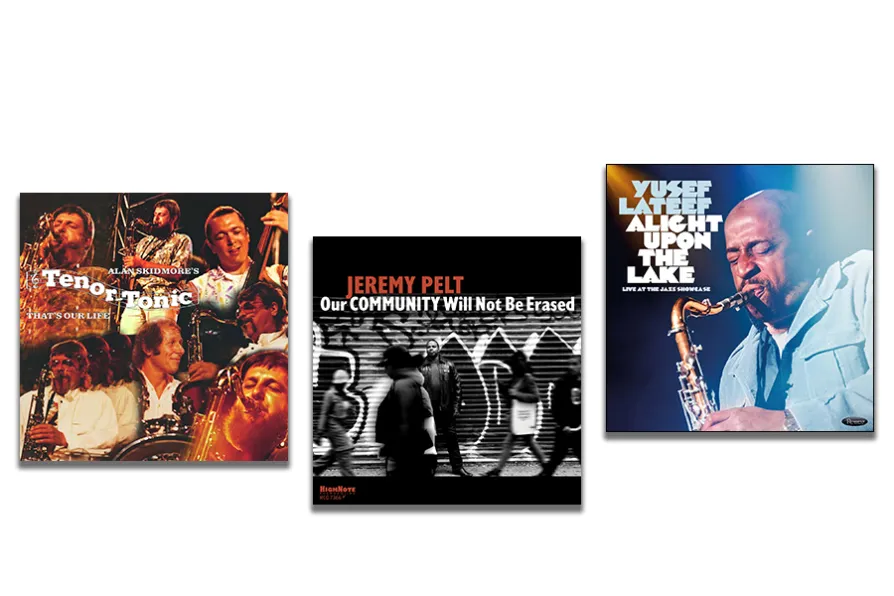
CHRIS SEARLE waxes lyrical over Alan Skidmore’s tenor-tonic, Jeremy Pelt, and the Yusef Lateef Quartet
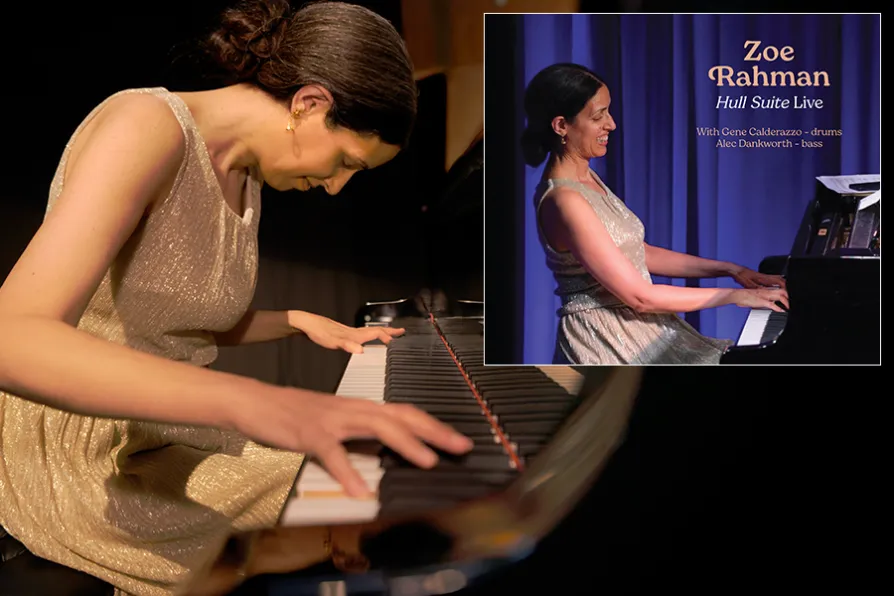
Chris Searle speaks to British pianist ZOE RAHMAN
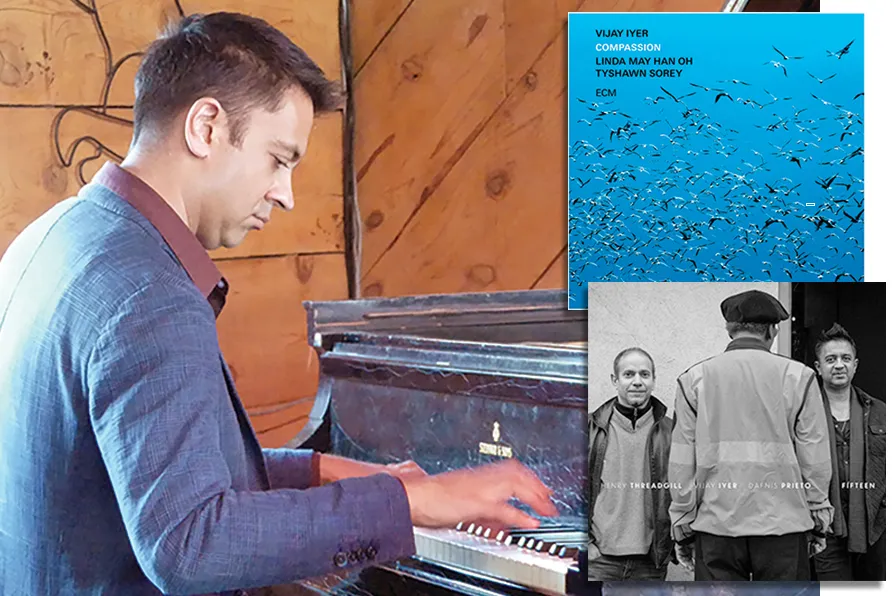
CHRIS SEARLE urges you to listen to two new albums by the US Indian pianist VIJAY IYER

As part of the 2025 London Jazz Festival Rich Mix offered intriguing sessions titled 'Persian Jazz,' CHRIS SEARLE was there