
The UK Prime Minister may have the regal touch in northern England, but he’s been wrong-footed on the constitutional challenges posed by the Celtic Alliance of first ministers from Scotland, Wales and Northern Ireland, argues KENNY MacASKILL

Red threads still connect us to the Calton Weavers
Glasgow will remember the martyrs of the 1787 strike this weekend in speech and song, their spirit is sorely needed today, writes JIM LISTER

NEIRLAY ANDRADE, a member of the Communist Party of Venezuela’s political committee, outlines her party’s position on the crisis facing the country
A look at Taylor Wimpey’s accounts shows why Labour’s market-led housing strategy won’t deliver more, cheaper homes, as promised, says SOLOMON HUGHES
DAVID HORSLEY remembers the remarkable life and death of US black revolutionary George Jackson, whose politically passionate prison letters were published as Soledad Brother
Cuban trade union federation CTC leader OSNAY MIGUEL COLINA speaks to Ben Chacko about life and work under a crippling US siege
A part of the British empire’s network of slavery, today the Caribbean island of Nevis faces a new form of exploitation in the form of crypto-colonialism, CLAUDIA WEBBE writes
Challenges from the unscrupulous misuse of AI to steal actors’ voice and physical likenesses is being met with a firm union response, writes LYNDA ROOKE





“IF IT wasn’t for the weavers…” (Lyrics from a traditional Scottish folk song)
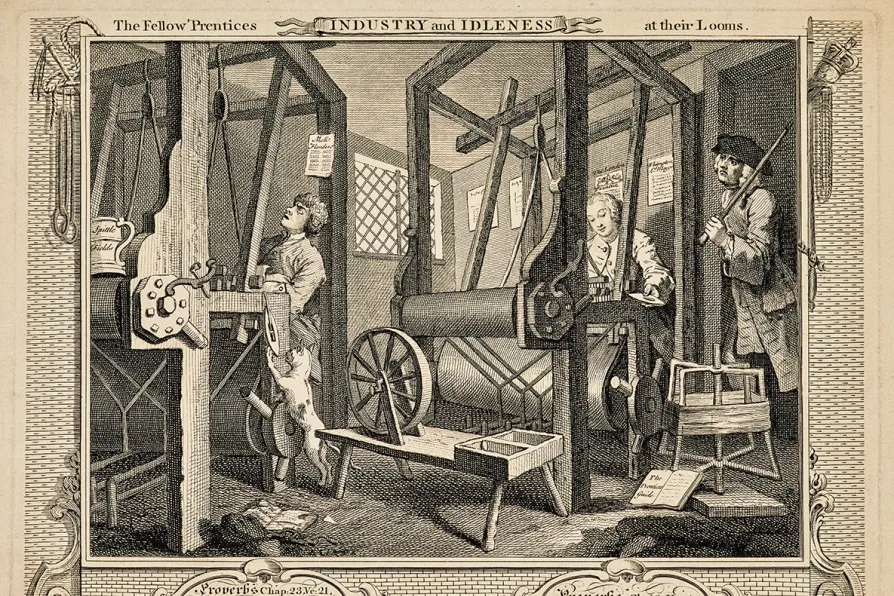
Across these islands it can be hard work to trace our working-class history and, like other cities, Glasgow is littered with monuments to slavers, rogues and thieves.
Meanwhile, Glasgow’s first working-class martyrs and organisers of one of the first-ever strikes in Britain, the Calton Weavers, lie buried literally and metaphorically in a forgotten corner of the old East End of the city in what was once a thriving neighbourhood. Passers-by are largely unaware that in the old, locked and decaying Calton Burial Ground are three of the six murdered weavers,
The Calton Weavers Commemoration Committee was established to keep their memories alive. On August 30 it will hold a rally and concert to remember their sacrifice.
On September 3 1787, the 39th regiment of Foot, led by Lieutenant Colonel William Kellet was sent to quell a peaceful protest assembly of 6,000 weavers, their families and supporters at the nearby Wellgate, then on the outskirts of the city.
Glasgow’s physical expansion was commencing at pace. This was fuelled by the Glasgow’s merchants’ ill-gotten gains based on the produce of slaves, mostly sugar, tobacco and cotton.
Not only was this physical expansion threatening to swallow up the Calton district but cheap cotton was undermining the weaving community’s livelihood.
The literate and numerate weavers were inspired by the emerging radical thinkers and organisations of the time, and the weavers themselves contributed to this ferment.
Weavers would purchase broadsheets and pamphlets finding inspiration not only to protect their livelihoods but also to build a fairer and freer society. Organise they did, threatening the authority of their masters, with six weavers paying the ultimate price, many more injured.
One of the main organisers, James Granger was arrested, imprisoned, whipped through the streets of Edinburgh and then banished. although this would not be the last that was heard from Granger. Kellet was then rewarded with the Freedom of the City of Glasgow. However, rather than quell the rebellion it ignited a spark of radicalism across weaving and other communities.
Remembrance of resistance
Despite the best efforts of the people that run the city of Glasgow to erase this history, the Calton Weavers Commemoration Committee was formed three-and-a-half years ago, following conversations among a broad range of trade union members, local residents and family descendants, interested in preserving this essential part of our history, and not simply to remember but to revive the spirit of the Calton Weavers.
Four principal objectives were agreed:
- Raise funds for new signage outside the Calton Burial Ground and, if possible, install a monument at the entrance
- Organise an annual event to commemorate the massacre and reach as wide an audience as possible
- Demand the revocation of the Freedom of the City of Glasgow granted to Kellet and locate the burial places of the three other murdered weavers
- Promote the weavers’ legacy through various media, spawning song writing, poetry and a textile collage made by students at the nearby St Roch’s Secondary School.
On the evening of this year’s commemoration, Glasgow band The Tenementals will launch their single Broken Stones, inspired by the disgraceful neglect of the Calton Weavers’ headstones and a cry to recognise their commitment.
This year’s commemoration is held on Sunday August 30 will be held in the Burial Ground and will honour the late Elspeth King, author of The Strike of the Calton Weavers.
Elspeth was formerly director of Glasgow’s People’s Palace museum. In 1987 Elspeth and her colleagues produced a city-wide programme to celebrate the 200th anniversary of the Calton Weavers and Elspeth wrote the definitive text.
Persecuted by Glasgow City Council (the then council leader referred to Elspeth as “a witch”) Elspeth went on to have a glorious career as museum director outwith Glasgow.
Elspeth joined us for our inaugural event in 2023 and remained a great friend and inspiration.
The commemoration will also include a few words of tribute, the laying of wreaths to commemorate the Calton Weavers with music from composer, folk legend and Whistlebinkies founder Eddie McGuire and friends. Joining us for a second year is the wonderful Unite Kinneil Band (a former colliery band) and, for the first time, local group, Calton Singing for Fun.
Funds raised at the event will be a great boost towards our target of having the monument in place in time for May Day 2027.
For further information visit calton-weavers.org.

Similar stories

Our priority must be to defend hard-won protections while linking equality law to trade union power and wider social transformation, says MARY DAVIS, on behalf of the Women’s Liberation Alliance

ALMA EGAN suggests four days out that bring the region’s history of protest to life

Emergency phone alerts could help Britain respond to rising wildfire risk, but Australia’s experience suggests they work best as part of a broader strategy, write ELLIOT CONVERY-FISHER and KATE PARKINS
by Henry Fowler, General Strike 100 project co-ordinator