


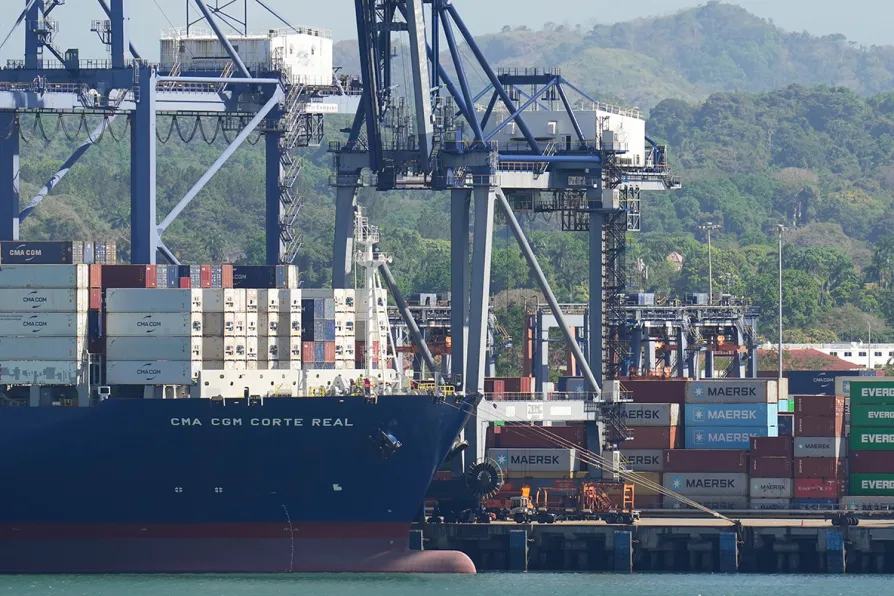
 Cranes load a cargo ship at Panama Canal's Port of Balboa, managed by CK Hutchison Holdings, in Panama City, January 30, 2026






THE operator of the Panama Canal told shipping firms that it intends to cut the number of vessels passing through the key waterway due to low rainfall caused by the El Nino weather system.
The Panama Canal Authority (ACP) said that from September 15, only 32 vessels a day will be able to pass through the waterway compared to 36 currently.
El Nino, a pattern of periodical sea surface warming, affects weather systems globally. This year is expected to be particularly strong, with its effects made more intense by climate change.
The ACP said the cut in numbers was being implemented to preserve service reliability and safeguard water resources for human consumption.
The company added that despite the arrival of the rainy season in Central America and some water-saving measures already being put in place in the canal, additional action was needed “to support the long-term sustainability of transit operations.”
Around 14,000 ships per year use the artificial waterway, which operates 24 hours a day, 365 days a year.
As well as being a crucial route for global trade, the canal is also a key source of income for Panama, bringing in about $3 billion (around £2.2bn) a year.



The future does not have to be climate chaos and social breakdown. MARC VANDEPITTE looks at the alternatives offered by the Global Justice Report, co-authored by Thomas Piketty

Extreme heat is now one of the defining public health challenges of a warming world, explains Prof IAN WILLIAMS