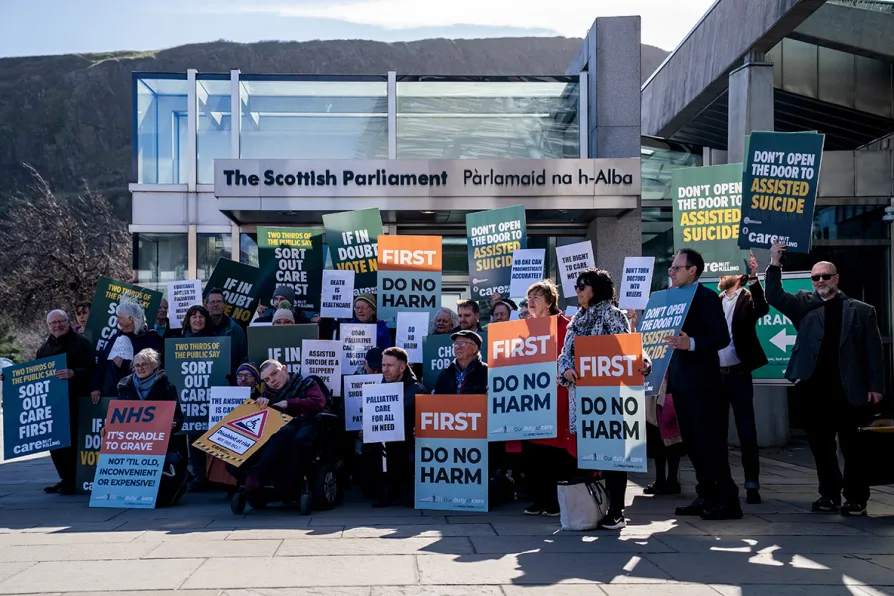
 Protesters take part in a rally organised by Care Not Killing, to oppose the Assisted Dying Bill outside the Scottish Parliament in Edinburgh, March 17, 2026






MPS must vote down the assisted dying Bill when it returns to Parliament next month, new disability rights group Assist Us To Live said today.
Campaigners including actor Liz Carr and comedian Rosie Jones demanded lawmakers oppose it until “disabled and terminally ill people have as much support to live as this Bill would provide for us to die.”
The Terminally Ill Adults Bill is due back in the House of Commons on September 11.
The letter was signed by Baroness Campbell, who lives with spinal muscular atrophy, alongside a number of academics, who said the proposed legislation should be blocked.
“The only safe way to reduce suffering at the end of life is to reform the social and palliative care systems before any move is made towards a programme of assisted suicide,” they said.
PM Andy Burnham said last month that funding for palliative care needs to be fixed before consideration can be given to legalising assisted dying.

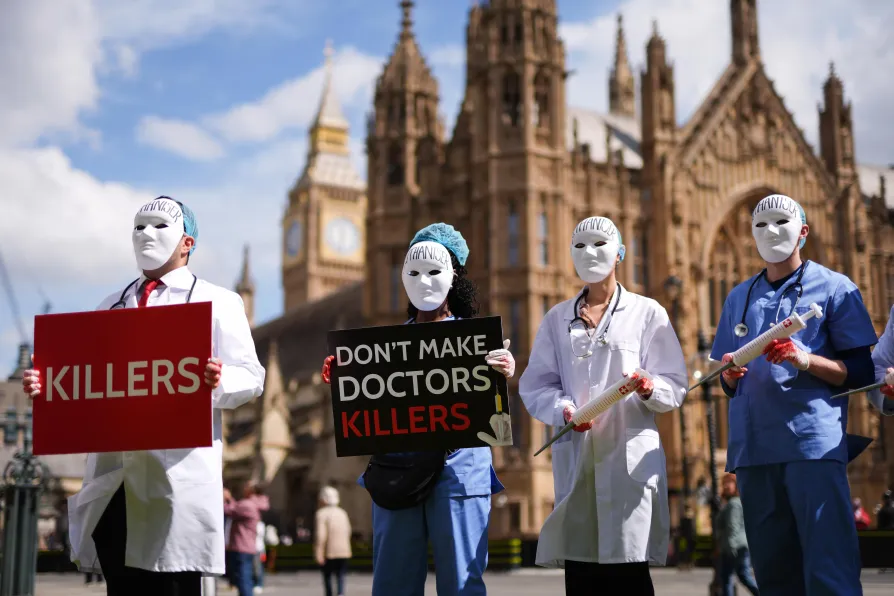
Evidence to peers from medical leaders, patient safety officials and the children’s commissioner has intensified fears that the Bill’s safeguards are inadequate, writes ADAM JAMES POLLOCK