

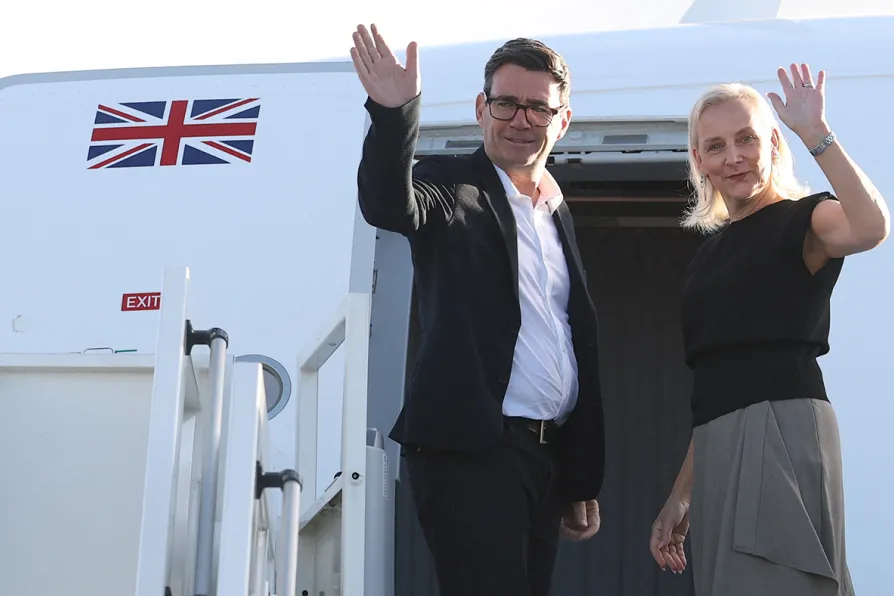
 Prime Minister Andy Burnham and his wife Marie-France Van Heel board a plane at Stansted Airport, for the United States, ahead of attending the 81st United Nations General Assembly (UNGA) in New York City, September 21, 2026
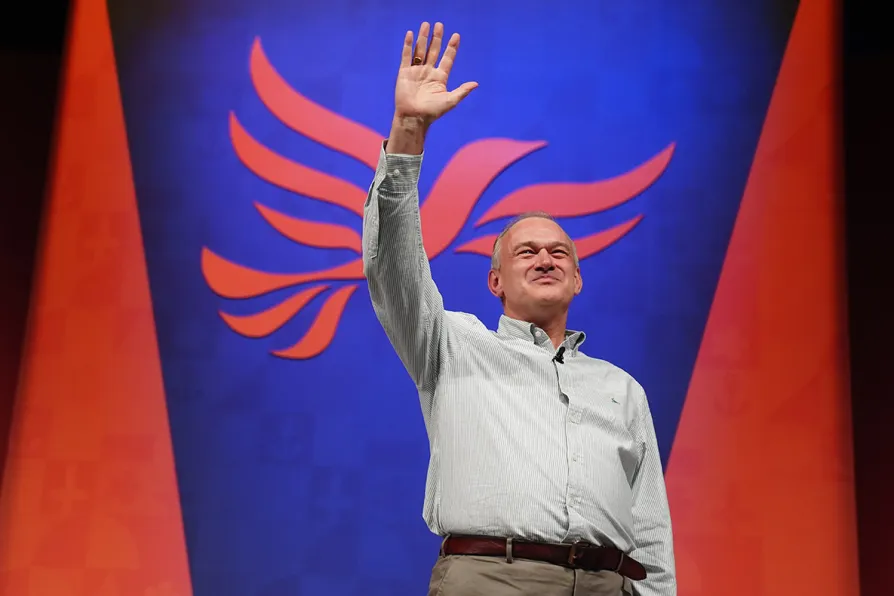





ANDY BURNHAM will meet Donald Trump on Tuesday at a point when both the US people and the British people face a cost-of-living crisis that is directly connected to the foreign policy agendas of both governments.
Trump’s adventures in west Asia are the proximate cause of a spike in fossil fuels prices. To a certain extent the US is insulated from this, partly because oil prices are denominated in dollars which allows the US a subsidy at the expense of the rest of us and partly because it possesses prodigious amounts of fracked gas which allows US manufacturers to fuel their enterprises at rates considerably below that available to, in particular Germany, which since the Nato-sanctioned sabotage of the fuel pipeline from Russia, is compelled to pay for expensive imported US gas.
Britain is complicit in the war with Iran, and now Yemen’s Houthis, because we allow US military aircraft to fly from what are laughably known as RAF bases in East Anglia and elsewhere.
In addition, it is clear that British intelligence is in lockstep with the many branches of the US military and intelligence empire.
Petrol is now at a long-time high but diesel — upon which most commercial traffic relies — is nearing £2 a litre.
This feeds directly into shop and supermarket prices and will be reflected in forthcoming set of inflation figures.
The link between foreign policy and domestic policy questions has never been more clear. It is a factor that is conditioning European politics. Both the electoral victories of the AfD in Germany and the left-wing win in the Berlin election reflect a developing anti-war swing in opinion.
But Britain, no less than Germany, is in economic trouble — the burden of which is falling on working people — and this can be tackled only by treating domestic and foreign politics as one.
While it is clear that the drive to war with Russia is partly driven by the arms companies presently enjoying a massive boost to their profits, this phenomenon is a reflection of Britain, and the European Union’s supine relationship with Trump’s regime.
Where Europe contracted to subsidise the Ukraine regime’s military machine with massive arms transfers it did so by guaranteeing to buy much of this stuff from the US. Trump may be a chump but he is fighting a war to the last Ukrainian paid for by European citizens.
It was Boris Johnson, as Britain’s PM who jetted to Kiev to kill the last peace deal — one which would have left Ukraine’s sovereignty intact with the Donbass enjoying the status something like Scotland and Wales.
This is not on the table and majority opinion in Ukraine is decisively in favour of a negotiated settlement.
Burnham can line up with the Ukrainian majority and sensible opinion throughout our continent or he can tie Britain’s European policy to the EU and Nato sponsored escalation of a war that cannot be won.
Changing Labour government policy is, above all, a task for the mass movement and the trade unions.
It is important that the link between the cost-of-living crisis and the preparations for war is made clear to working people and the best people to get this across are our trade unions who speak directly to their members and should speak directly to the Labour leadership.
Labour MPs know that their relection chances hang on an improvement in the pay and conditions of millions and the sooner they act to change policy the better.
And those union leaders who think a war will guarantee their members’ jobs should look at the wider picture and understand what a post-war scenario might be for working people the world over.

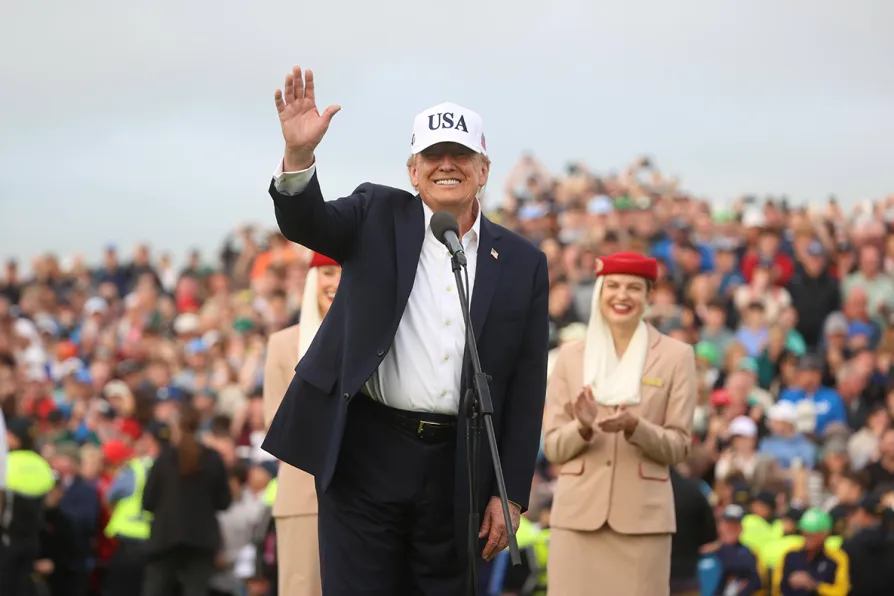
Prime Minister should ‘end support for Trump’s war and climate vandalism,’ Stop Trump Coalition says

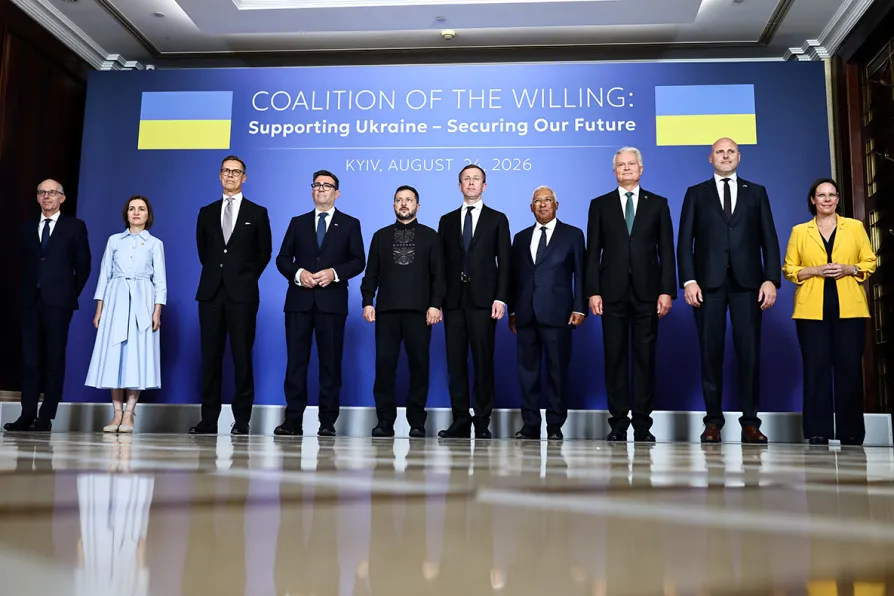
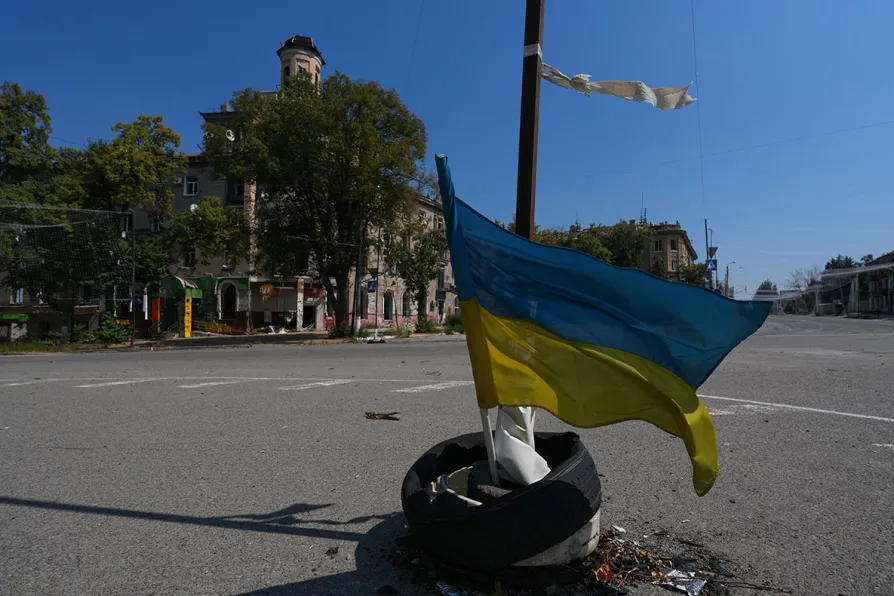
Andy Burnham offers unconditional support for Zelensky but no solutions to the underlying conflict between the Nato/EU bloc and Russia, says NICK WRIGHT