
ROB WARZYNIAK wades knee deep through a pile of ‘dead canaries’ of Trumpist policies which exacerbated the horrors of US capitalism domestically


Employment Rights Bill fails to deliver for young and precarious workers
Labour’s watered-down legislation won’t protect us from unfair dismissal or ban some zero-hours contracts until 2027 — leaving millions of young people vulnerable to the populist right’s appeal, warns TUC young workers chair FRASER MCGUIRE
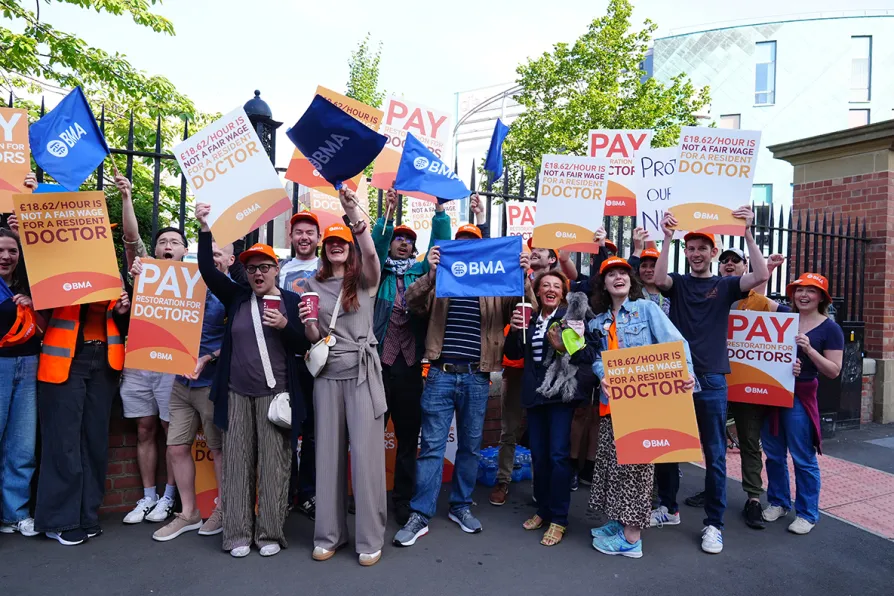
 NHS resident doctors protest outside Royal Victoria Infirmary in Newcastle, as resident doctors in England, formerly referred to as junior doctors, begin a five-day strike after talks with the Government collapsed over pay, July 25, 2025

Without evidence or Nato consultations Berlin’s answer to the Leipzig incident is a rupture of relations. SEVIM DAGDELEN examines why
FRANCISCO DOMINGUEZ introduces the background to a conference on defending Latin America’s sovereignty
The glacier collapse in Nepal is yet another warning that a warming planet is making Himalayan disasters more frequent and destructive – but the countries facing the greatest risks are often those least responsible, says LI YANG
Nick Blair is set to benefit from a hugely lucrative contract to ‘virtually’ train the British army for its next war. Like father, like son, writes SOLOMON HUGHES
Even when tragedy strikes, Western media cannot resist the opportunity to turn it into a sordid propaganda opportunity, as the Nepal-China border tragedy shows, writes CARLOS MARTINEZ
Trade unions should be at the heart of the anti-racist push for reparations for the historic legacy and continuing impact of slavery, writes ROGER McKENZIE





LABOUR’S Employment Rights Bill is expected to become law this October, once it passes through the final stages of the House of Lords and receives Royal Assent. For the past year and a half, many prominent figures in the trade union movement have lauded the Bill as the “biggest upgrade to workers’ rights in a generation.”
This may be true; however, once the track record of the governments in the last four decades is considered, the bar for progressive employment rights legislation could not be any lower.
A single shift spent in precarious conditions, on minimum wage, in a sector with low union density, like social care or hospitality, would likely be enough to change the mind of even the most optimistic union leaders.
It is deeply concerning that some of the positive changes that survived the watering down of the Employment Rights Bill are not expected to come into force until 2027.
The measures proceeding at this glacial pace include the introduction of protection from unfair dismissal from day one, protections from blacklisting, and the new laws banning some zero-hours contracts (ZHCs).
Coming into effect more than halfway into Labour’s first term in government in 15 years, this will leave millions of people, predominantly young and in insecure work, without crucial employment protections for at least another 16 months.
One major area of weakness in the Bill is the failure to fully tackle precarious employment models — such as ZHCs — and the scourge of the gig economy, false classification of self-employment for exploited workers, and the widespread use of agency labour.
Young workers make up over half of the hospitality sector, and workers aged 16-24 make up less than 4 per cent of total trade union members. It’s clear that a generation of young workers is being forced into undignified and precarious working conditions, alongside an existential decline in engagement with trade unions, and Labour’s Employment Rights Bill barely scratches the surface.
Despite the low level of education on employment rights, 76 per cent of young workers would choose secure hours if offered them, a damning indictment of the government’s failure to commit to the banning of all ZHCs.
The growth of precarious and transient forms of employment, much of which has occurred in the vacuum left by the outsourcing and fragmentation of British industry, has helped to create a generation of workers who are alienated at work and disillusioned in their communities.
Many of these young workers, legitimately angered and frustrated by a system that makes them feel powerless, are ripe targets for Nigel Farage and Reform UK. Anyone who spends time in their local community will have felt this, whether at work, the pub, the football, or the gym.
When Reform is consistently ahead in national polls, having won control of 10 councils in the May local elections, the government takes a political risk by choosing not to eliminate insecure employment models.
The power needed to beat the far right exists in the hands of organised workers, who can stem the tide of alienated young working-class people drifting to Reform through the demonstration of class power that comes with the flexing of the industrial muscle of organised labour.
Alongside the decades-long assault on communities, through deindustrialisation, privatisation, and austerity, the organisations most able to preserve and develop industrial and community power have been shackled by countless restrictions.
The Labour government can help resist the appeal of the populist right by removing all the shackles on the trade unions, not just the ones most recently applied.
The government must move further and faster on workers’ rights, and unions must be on the front lines of these demands.
The Institute of Employment Rights, Campaign for Trade Union Freedom, and Strike Map are calling for trade unionists to demand a second Employment Rights Bill, that goes further in repealing anti-union laws and ending all restrictions on industrial action, full compliance with international labour standards, a full ban on ZHCs, a single worker status and a statutory right to collective bargaining for all. Add your name to the calls for a second Employment Rights Bill at www.bit.ly/ERBill25.
We must also recognise that those who place all hope in top-down, legislative changes from the state, while neglecting the development of organising strategies for the industrial landscape of the 21st century, are making a severe mistake.
The recent victory of young workers at Village Hotel in Glasgow, who took strike action this August and won a 10 per cent pay increase backdated to April 2024, and an end to ZHCs, shows that three weeks of industrial action is more effective at securing an end to insecure working conditions than three years of a Labour government.
Rebuilding density across all sectors, especially the most precarious and unorganised, is a crucial step for trade unions. This must take place alongside the renewal of effective strategies for building workplace power and workplace-adjacent community organising, and relearning tactics like the mass picket.
With the possibility of a Reform government on the horizon, workers and trade unionists must prove successful in these tasks to safeguard the future of the movement and ensure resilience against the many threats we face.

Similar stories
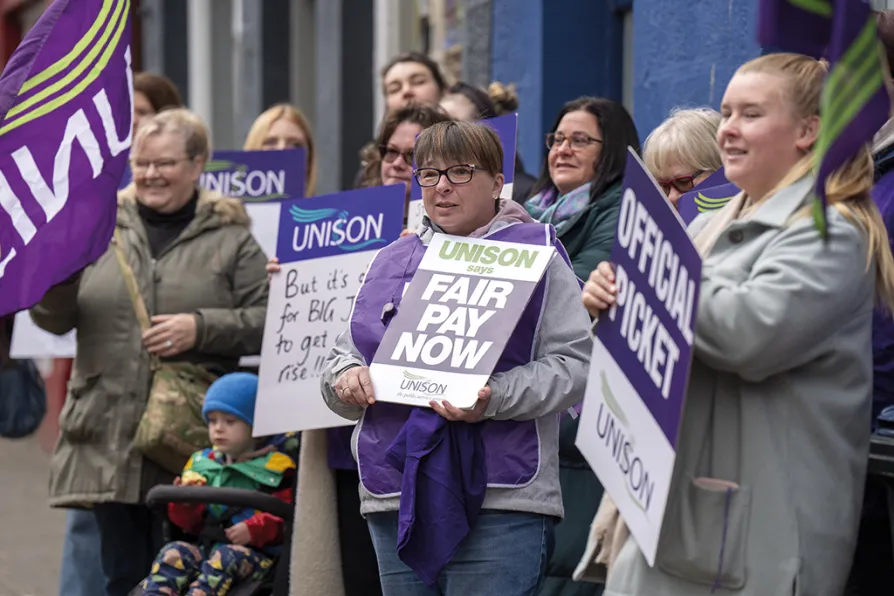
As Unison launches its Year of Women Workers, ANNIE COGAN-THOMAS argues that stronger organisation and collective bargaining are essential to winning equality
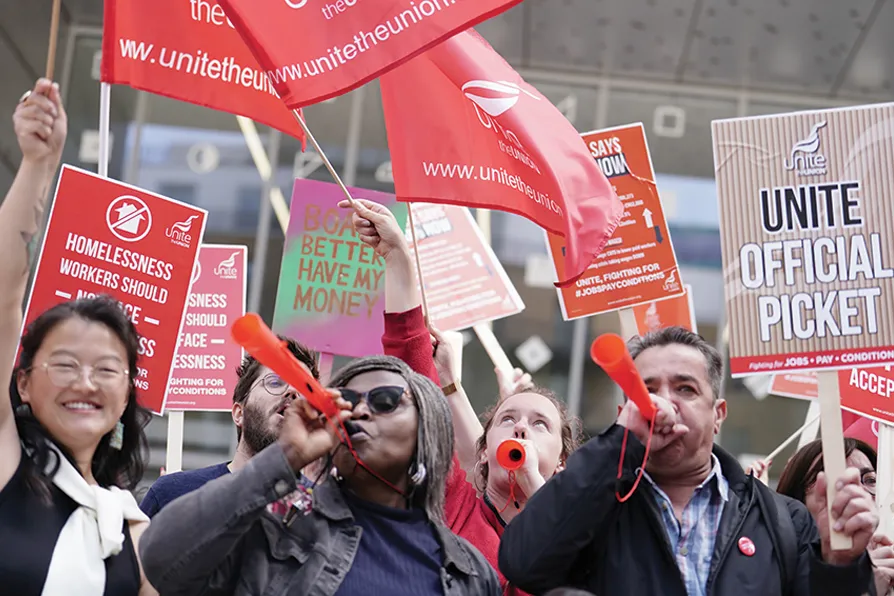
The unions are unhappy with the Employment Rights Act 2025 and with good reason. KEITH EWING and Lord JOHN HENDY KC take a close look at why the Bill promised more than it delivered

Investing the £75 billion slated for defence spending on a green new deal, healthcare and education would create jobs and help communities far more than weapons spending, argues UCU general secretary JO GRADY

Artists should not be consigned to a life of precarious working – they deserve dignity and proper workers’ rights, argues ZITA HOLBOURNE