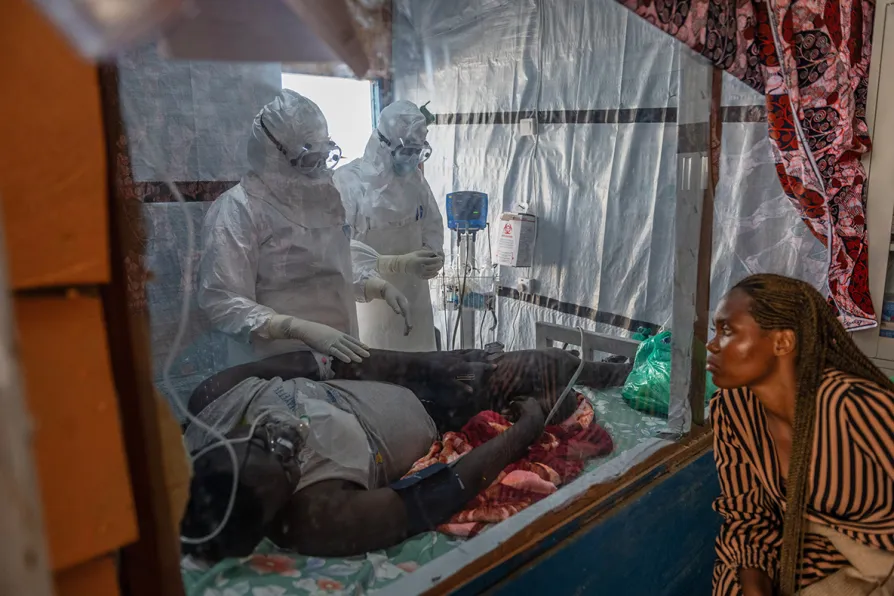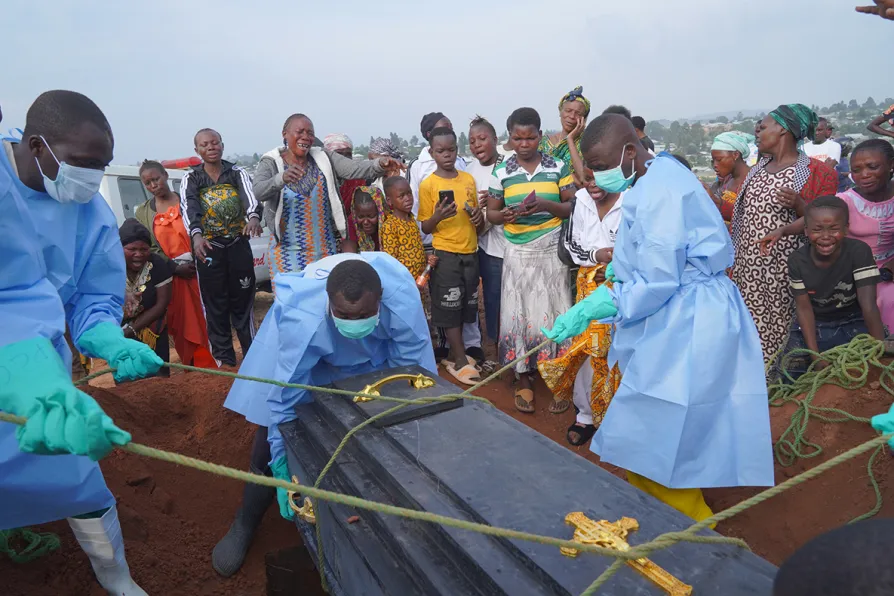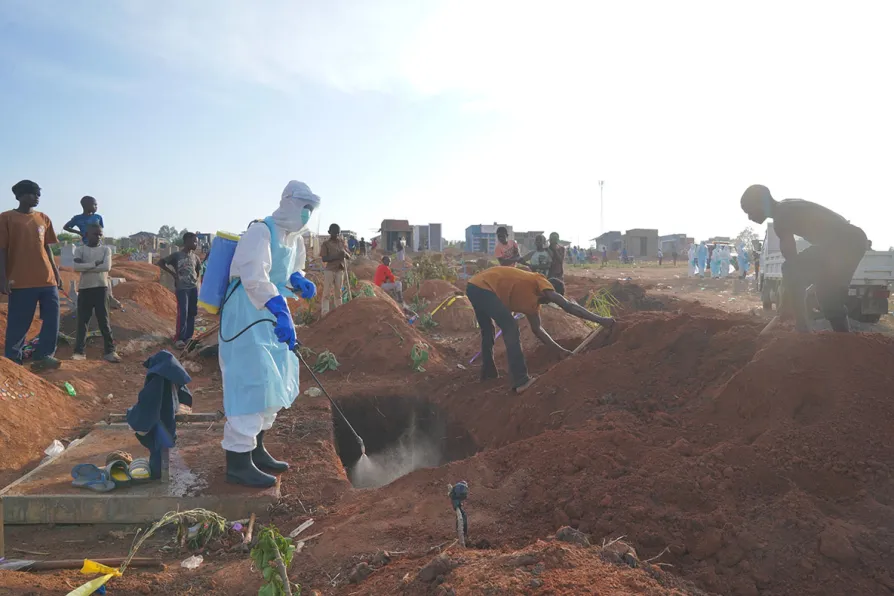
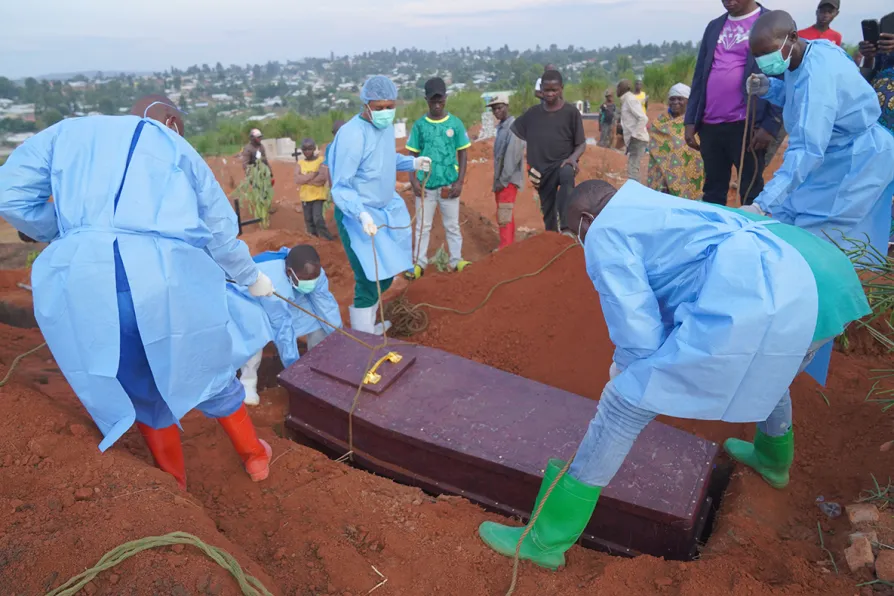
 A health worker sprays disinfectant in a freshly dug grave for the body of Jacques Lobo Dhena, who died of Ebola, in Bunia, Ituri province, eastern DR Congo, August 12, 2026





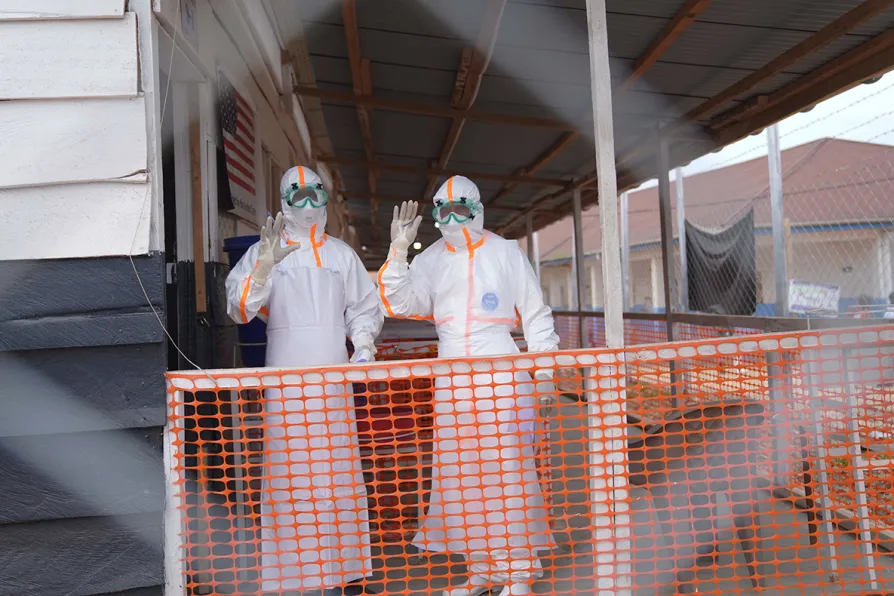
THE current outbreak of Ebola in the Democratic Republic of Congo (DRC) is heading towards becoming the deadliest ever, the World Health Organisation (WHO) said on Wednesday.
The director-general of the WHO, Dr Tedros Adhanom Ghebreyesus, told reporters that the current outbreak could “eclipse” the death toll of the 2014 to 2016 occurrence, which killed at least 11,000 people.
The outbreak this year has seen at least 4,300 cases and caused more than 2,000 deaths since it was declared on May 15.
The WHO said on Wednesday it hoped to reverse the spread of the disease but warned that this meant bringing transmission under control, not ending the outbreak entirely.
“We are chasing the virus; the virus is ahead of us,” WHO Africa director Dr Mohamed Janabi said at a news conference in the city of Bunia, near the centre of the outbreak.
The 2026 outbreak is caused by the rare Bundibugyo species of Ebola, which has previously caused only two known outbreaks — in 2007 and 2012.
There is no approved vaccine or recognised drugs capable of treating this species of the already rare and deadly viral disease.
Symptoms of the disease are similar to the flu or malaria, including fever, headache and tiredness, which can begin suddenly.
As the disease progresses, vomiting and diarrhoea can develop, leading to organ failure.
The virus spreads from one person to another by contact with infected bodily fluids such as blood or vomit.
The symptoms of the disease led to early misdiagnosis of this new strain of Ebola.
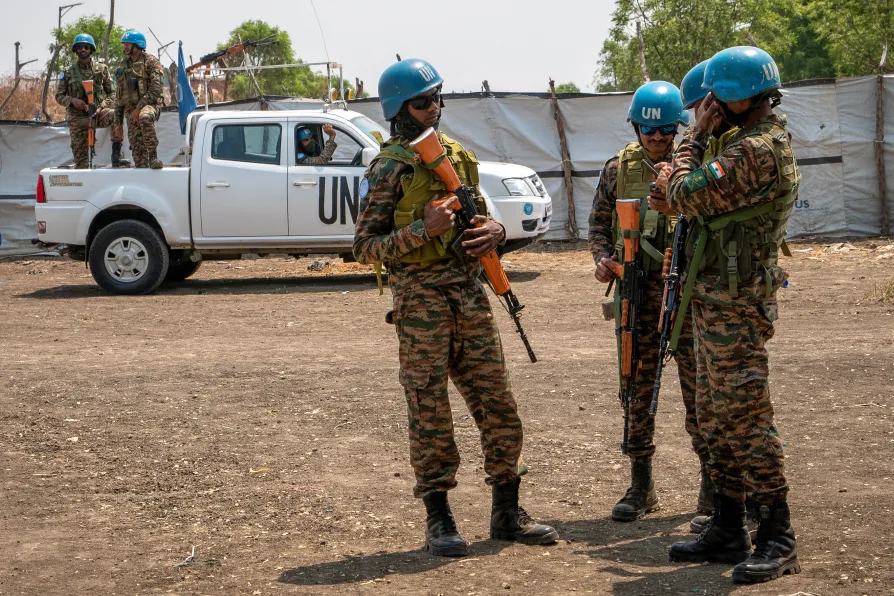
Ongoing regional instability near the location of the outbreak, in the east of the DR Congo, has added to challenges in controlling the spread of the disease.
As a result, health workers are only reaching about 30 per cent of cases, according to Dr Janabi.

As thousands die in the eastern DRC, a global health emergency is being starved of funds, says S KRISHNASWAMY