
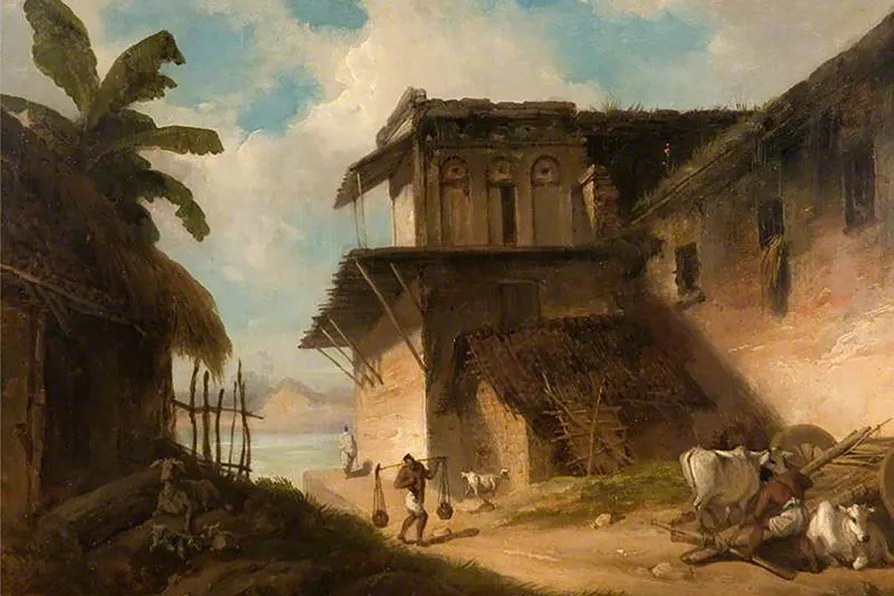
APURBA CHATTERJEE explains how British artists in India used the “picturesque” to reshape colonial landscapes and celebrate imperial power


Better conversations about God
MARTIN HALL welcomes a plea for greater compassion between believer and non-believer via the framework of philosophical enquiry
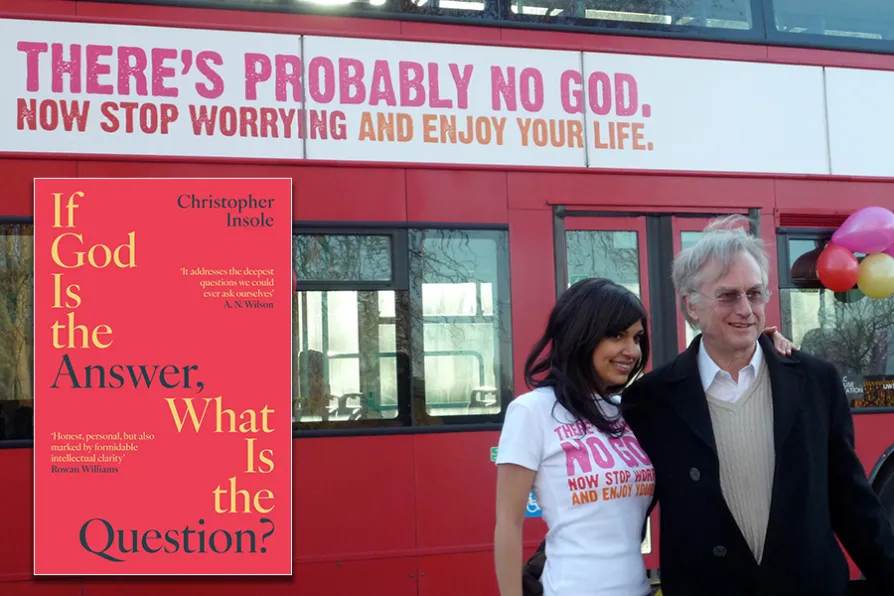
 ANTAGONISTS: Atheist Bus Campaign creator Ariane Sherine and Richard Dawkins at its launch in London, 2009 [Pic: Zoe Margolis/CC]
PAUL DONOVAN welcomes a revival of Reginald Rose’s classic play that reminds us of the fundamental need for trials with juries
SIMON PARSONS applauds an exceptional performance of Wesker’s little-known play, by the same actor for whom it was written 45 years ago
ANDY HEDGECOCK and MARIA DUARTE review Late Fame, The Death of Robin Hood, Leviticus, and Gail Daughtry and the Celebrity Sex Pass
ANGUS REID recommends a uniquely accomplished documentary collage that contemplates our relation to the natural world
GORDON PARSONS enjoys Kant’s ‘mind-boggling’ theory of human reality: that we create the reality we experience





If God is the Answer, What is the Question?
Christopher Insole, Oneworld, £10.99
IT is unusual for a book about God to begin with an argument for less argument. That’s because faith, belief, principle et cetera, are all strongly associated with dogma; and in general, are none the worse for it.
But Christopher Insole makes it clear he’s not trying to change anyone’s mind; indeed, he thinks it a pointless task.
The extent to which the reader will get on with this book will, to a large degree, depend on how liberal they are, politically and theologically. The author is interested in the psychology, tenor and discursive meaning of religious debate, not its relationship to truth, though he does make it clear early on that he is religious, though of what stripe is only revealed towards the book’s end.
A great example of his approach is his discussion of his former tutor Richard Swinburne’s belief that God exists in time, where he posits a principal reason for this view (an unorthodox one, should the reader not realise) being a year he spent ill in bed as a child.
Insole wants to have better conversations about God. He wants to work towards achieving “greater self-knowledge, or knowledge, compassion and empathy for each other” when discussing the topic. This is not, by way of example, the case made by Denys Turner that most atheists nowadays don’t really know what it is that they don’t believe and have, effectively, failed at atheism which entails a conversation about what classical theism is, what atheism really means, and so on.
Instead, this is a plea for greater compassion between believer and non-believer via the framework of philosophical enquiry.
Having begun with what may seem to be a critique of, or at least a lack of faith in (pun intended) the author’s aims, I do want to say something about the book’s strengths. For one, he deals with complex theological and philosophical ideas and sources (Anselm and Kant, among others) in a way that will not put off those with no training in either field; for another, the book is intensely personal, and much of its best sections concern his own family history, and in particular his father’s (and his, as we eventually discover, though I’d guessed it from his influences and general view) Catholicism.
Moreover, as an academic, it is pleasing to see how comfortable he is bringing feeling and emotion into play as a method of analysis; or more accurately, response.
To return to the lack of dogma in his position discussed above, after briefly discussing the idea that religious belief is stupid with reference to Richard Dawkins, Alice Roberts, Ricky Gervais and others, he talks about forms of talk about God that are not Abrahamic: the Stoic; the Spinozan and the Kantian (Kant was a Christian of sorts, but a highly unorthodox one).
He then moves on to giving us a wider range of views of atheism than the type evinced by Dawkins or Christopher Hitchens (memorably satirised via the portmanteau of “Hitchkins” by Terry Eagleton). Notably, he sketches the work of Akeel Bilgrami, an atheist and professor at Columbia, who in ethical terms wishes to substitute “value” for the “sacral,” while maintaining such concepts as an “enchanted” view of nature, which the reader might feel is a case of having one’s disbelieving cake and eating it. That being said, this section achieved what any book ought to try and do; make this reader want to read more by the author under discussion.
Back to the personal: the description of how he briefly lost his faith after his father’s sudden death, along with the attendant discussion of his father’s lifelong friendship with the poet and critic, Jeremy Hooker, who died soon after, is intensely moving. I must confess to being around the same age as the author, so perhaps this is my version of bringing in a personal perspective on a theological or philosophical matter.
Finally, the book made me want to meet Insole so I could (respectfully) argue with him. Given his aim, that may or may not be taken as a compliment, though it is meant as one.

Similar stories
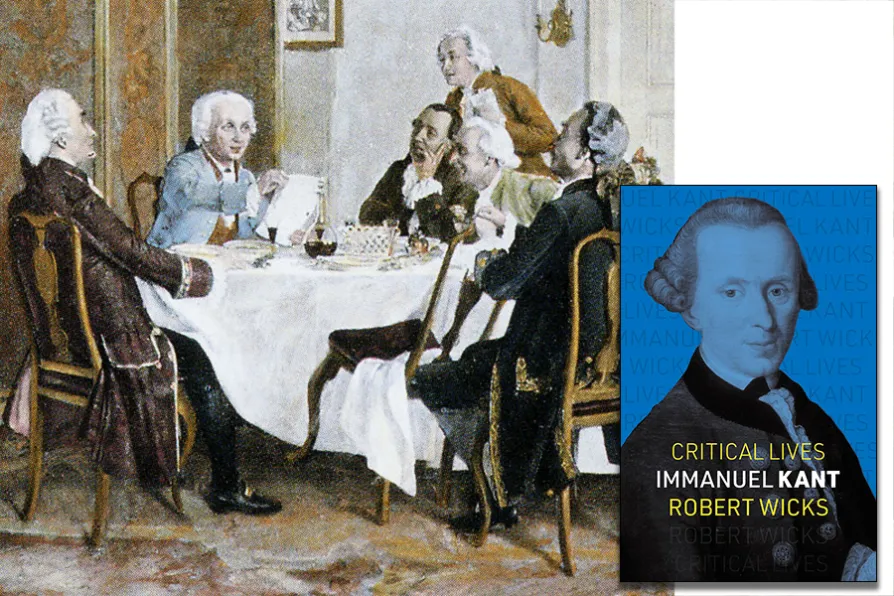
GORDON PARSONS enjoys Kant’s ‘mind-boggling’ theory of human reality: that we create the reality we experience
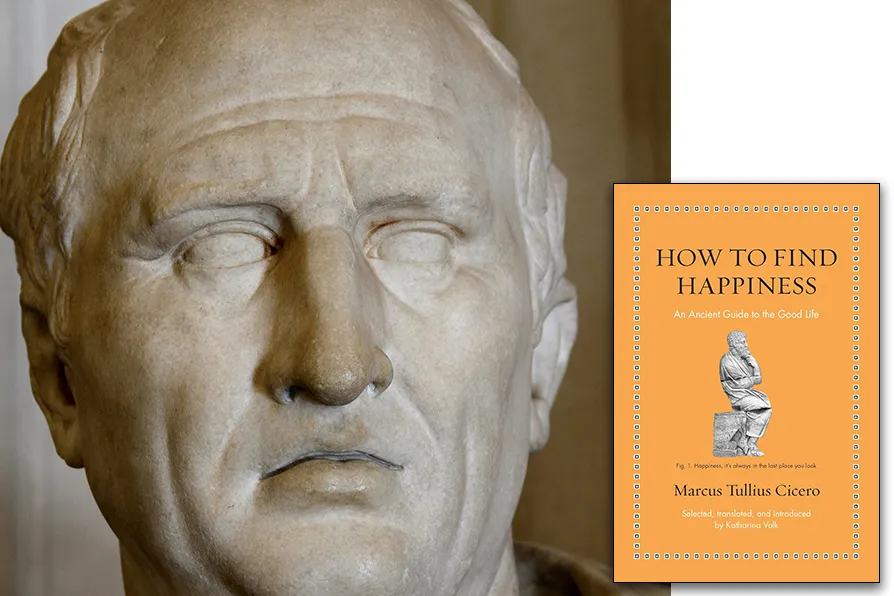
MARTIN HALL examines the way the Roman orator took on different schools of philosophy

In search of political understanding, MATTHEW HAWKINS welcomes a critique of anti-semitism as codified by the Israeli state
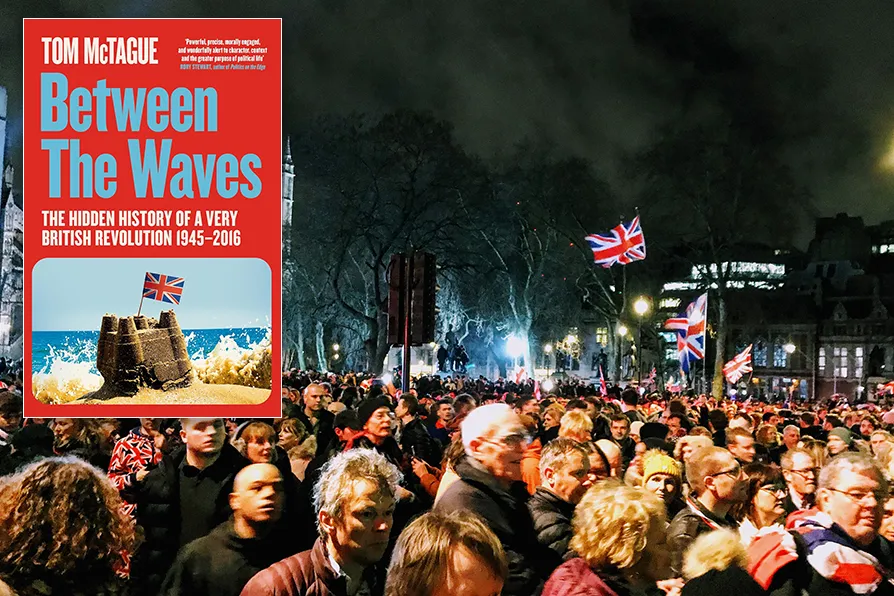
MARTIN HALL welcomes a study of Britain’s relationship with the EU that sheds light on the way euroscepticism moved from the margins to the centre