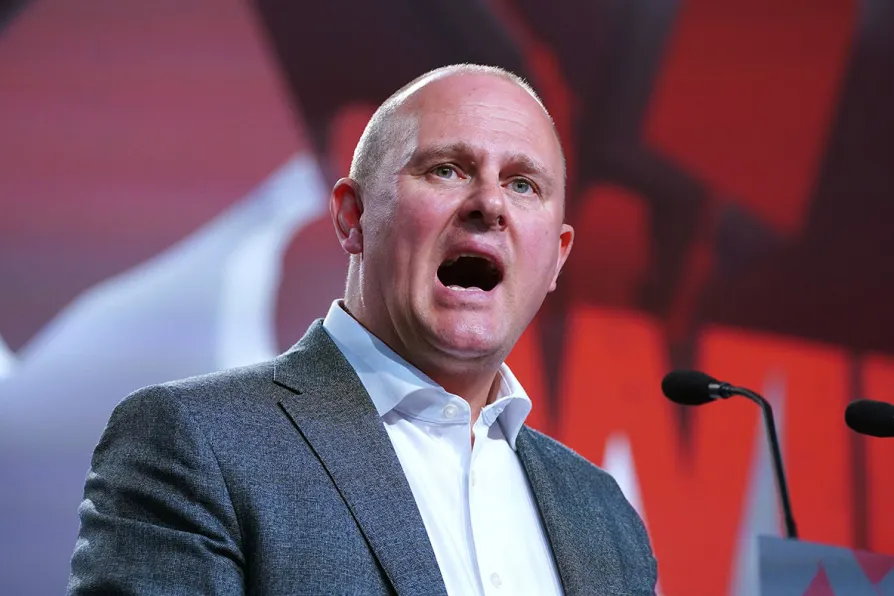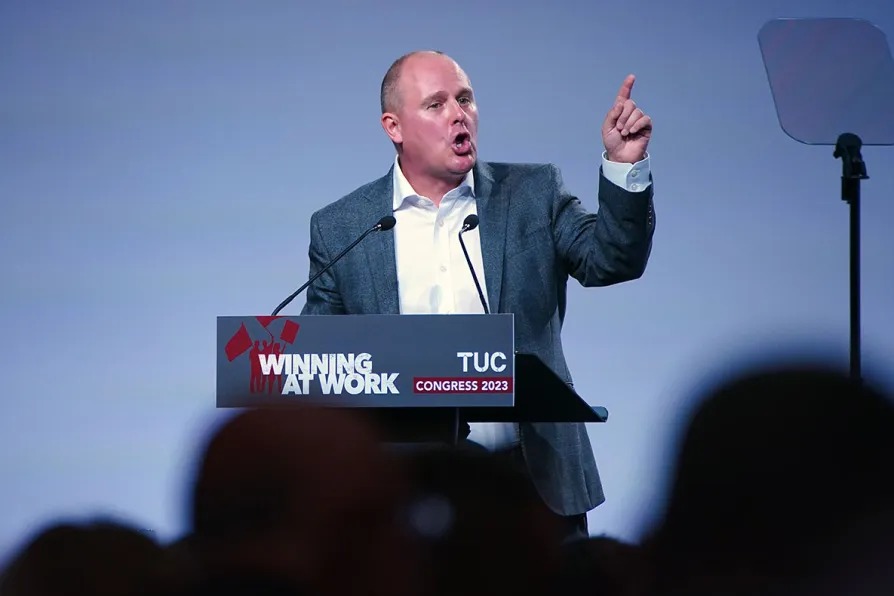
 Paul Nowak, general secretary of the TUC, September 11, 2023






UNIONS have slammed scaremongering over the costs to businesses of ending exploitative zero-hours contracts under the Employment Rights Act.
The TUC argued the estimated costs — which vary widely from £350 million to £2.9 billion — rely on assumptions that businesses would continue to cancel shifts at short or no notice, a practice the legislation aims to stop.
The union federation added that the predictions also ignore the “actual” cost to workers of not having guaranteed working hours.
TUC general secretary Paul Nowak said: “Let’s call out attempts to water down these rights for what they are: blatant scaremongering — and it needs to stop.
“We are talking about low-paid precarious workers who don’t know how much they’ll be earning from week to week or the hours they’ll be working.
“The government’s own analysis shows that one in three face a typical financial hit of £3,000 a year because of this constant insecurity. That’s a huge cost for workers and their families.
“But it’s not just workers that lose out because of insecurity — it’s our economy at large too.
“The Employment Rights Act would deliver a £10bn boost to the economy through improved staff wellbeing, greater productivity and better living standards, boosting demand.”
GMB national secretary Charlotte Brumpton-Childs added: “Zero-hours contracts are an archaic, Victorian stain on Britain’s working practices.
“Not only that, they are deeply unpopular with the British public.
“Of course businesses are going to grumble about better employment rights — they always do, from the minimum wage to giving workers the weekend off.
“Ministers need to keep their eyes on the prize and outlaw cruel zero-hours contracts that only benefit bosses.”
A ban on zero-hours contracts was included in Labour’s manifesto and a government consultation on whether to apply the policy to anyone working 48 hours a week closes on Monday. Ministers’ preference is for the threshold to be between eight and 20 hours.
But the Institute for Public Policy Research think tank said that workers should be given a guaranteed 30 hours of work under the proposed ban.
Its analysis suggests employees without fixed hours working 20-30 hours a week were 73 per cent more likely to fall behind on bills.
The research also argues the policy can be implemented without raising unemployment.