ROB WARZYNIAK recalls the emblematic 1906 book, The Jungle, in its analysis of the crisis presently engulfing the US Food and Drug Administration


 Latest editorial

‘Trump underestimates Cuba’s revolutionary will. We are sovereign and defiant’
Cuban ambassador to Britain ISMARA VARGAS WALTER speaks to Morning Star editor Ben Chacko about the desperate situation caused by the US siege and the growing risk of war
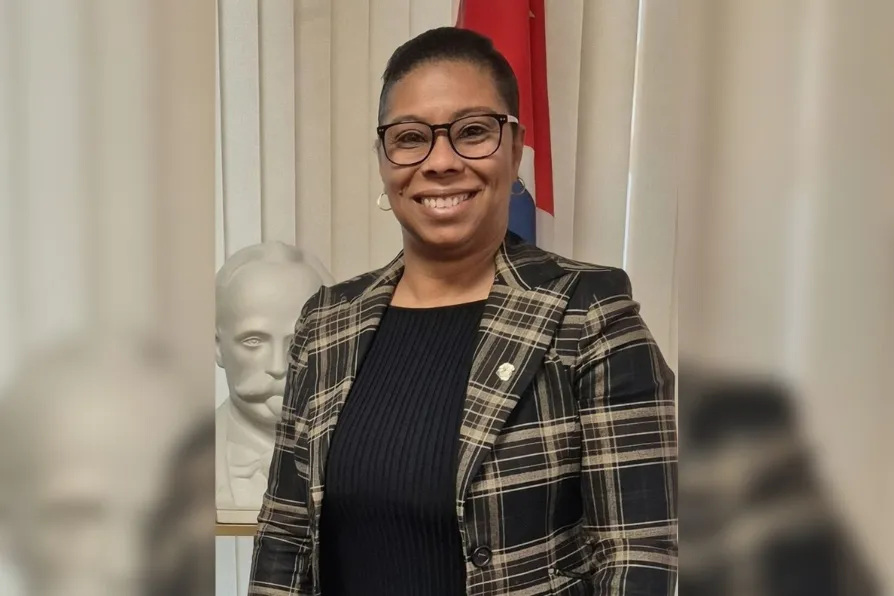 Ismara Vargas Walter
Welsh wanderings showcase fiery destruction, alternative water ways and revive memories of a local mining legend, writes MARK SEDDON
As thousands die in the eastern DRC, a global health emergency is being starved of funds, says S KRISHNASWAMY
MAT COWARD explains how in the 17th century a row over whether to kneel at communion became a battle over religion, class and royal power
Renewed illusions in social democratic reformism are sprouting as a result of Andy Burnham’s rhetoric, but material conditions are already intruding into the debate, argues NICK WRIGHT
Andy Burnham could learn a few lessons from a previous Labour government in the pre-privatisation era on how to tackle water shortages, writes KEITH FLETT





Why has the United States levelled charges against Raul Castro? What is the reaction in Cuba?
THIS accusation is fraudulent. It has no legal, political or moral basis whatsoever. The revolutionary government has condemned it in the strongest terms, stating that the United States lacks the legitimacy or jurisdiction to take action against the leader of the Cuban Revolution. This despicable act of political provocation favours a tiny but powerful group that does not represent the US population, nor even Cubans living there. However, thanks to the corrupt nature of the US political system, this group wields disproportionate influence over the government.
The accusation is based on the shooting down of two aircraft that violated Cuban airspace in 1996 — an incident for which the United States is fully responsible. Between 1994 and 1996, Cuba filed more than 25 formal complaints with the State Department, the FAA and the ICAO, and sent direct messages to the US president. On January 15 1996, Cuba issued a public warning. The US ignored them all. On the day of the incident, US control centres were aware of the flights. Cuba acted in legitimate self-defence, protected by Article 51 of the UN Charter, the 1944 Chicago Convention on Civil Aviation, and the incontrovertible principle of air sovereignty.
It is highly cynical that this accusation comes from a government that has killed almost 200 people and destroyed 57 vessels in international waters based on alleged drug links that were never proven in court. These acts qualify as extrajudicial executions under international law and as murders under US law. The Cuban people stand united. Any attempt to exploit this pretext against Cuba will be met with fierce resistance.
Do Cubans fear the US will try to repeat its kidnap of Venezuela’s president with a similar operation against Cuba? If they did, would this mean war?
The United States’ obscure practice of using criminal indictments to justify military action against sovereign states is well-documented. They seized President Maduro using a DOJ indictment, which was a criminal act of aggression demonstrating contempt for the UN Charter and the most basic principles of international law. They are now creating a similar legal framework against Cuba.
The Cuban people reaffirm their unwavering commitment to defending their homeland and the socialist revolution. Our revolutionary unity is unbreakable. The War of the Entire People doctrine was developed precisely to ensure that any aggressor would pay an unacceptable price. President Diaz-Canel has made it clear that any military assault on Cuban soil would lead to a bloodbath with incalculable consequences.
Does the failure of the US war on Iran mean Trump is likely to attack Cuba very soon? Why is the United States currently aggressive on so many fronts?
Trump has repeatedly stated that “Cuba is next.” Those are his own words. This administration is waging simultaneous campaigns of aggression against Venezuela, Iran and Cuba as part of a cohesive doctrine of imperial domination — a desperate attempt to reassert a unipolar world order that has already been rendered obsolete by history. They see Cuba as an easy target: economically fragile, politically isolated and militarily outdated. However, they have miscalculated our people’s revolutionary will: we are sovereign and defiant, and have resisted for almost seven decades.
The mainstream media has actively promoted the idea that military aggression against Cuba is inevitable — a narrative that normalises what would be a crime against humanity and international law. At the same time, the US is running a high-intensity misinformation campaign to blame Cuba for a crisis that is entirely of Washington’s own making. The Cuban people see through it. Every honest observer must do the same.
What is the impact on daily life in Cuba of the current siege imposed by the United States on energy imports?
The United States is preventing the fuel necessary for electricity, food production, public transport, sanitation and the movement of goods from reaching Cuba. In short, it is the fuel required for life. As our Energy Minister has stated, we have no fuel, no diesel and no reserves. The national grid has collapsed completely on multiple occasions. Blackouts last 20 to 22 hours a day. Hospitals operate in darkness. Over 100,000 patients, including 11,000 children, are awaiting delayed surgeries. The infant mortality rate has doubled.
The US claims that its actions are intended to punish the Cuban government, but who is really being punished when an entire nation is deprived of its means of subsistence? In a cold and calculated manner, the US government is holding the Cuban people hostage. Three independent UN human rights experts have labelled this unlawful energy starvation. The United States has only permitted fuel to enter Cuba for the private sector, a tiny fraction of what is needed nationally. In five months, only one tanker has arrived on Cuban shores, bringing much-needed oil, whereas in normal circumstances, our country needs eight each month.
Is it also causing hunger?
Without diesel, tractors cannot plough, irrigation systems cannot pump water, and crops cannot be harvested and distributed to the population. Cuba’s historic rationing system, one of the proudest social achievements of the Revolution, has buckled under this genocidal blockade. Rations now last 10 days instead of a month. Families cook with charcoal. Many people only eat once a day. The UN World Food Programme has raised the alarm about child malnutrition. The United Nations has launched an emergency appeal for £70 million. This is not a failure of socialism — it is a deliberate crime of imperialism.
Are any countries helping Cuba to withstand the pressure or delivering energy or food aid?
International solidarity is demonstrating that Washington’s pretension to control the world has its limits. In March, Russia delivered 730,000 barrels of crude, and Moscow has confirmed that this assistance will continue. Meanwhile, China and Vietnam have provided millions of pounds in direct aid, thousands of tonnes of rice, and support for solar infrastructure. Mexico has sent naval vessels carrying tonnes of grain, milk and medicine. Other countries have supported our people through UN mechanisms. While we are grateful, I believe that the world could do more in solidarity with the Cuban people and demand an unconditional end to this genocidal blockade.
Marco Rubio calls a diplomatic solution “unlikely.” What talks are underway and can they stave off an attack?
Foreign Minister Rodriguez Parrilla has named Rubio a mouthpiece for corrupt and vindictive interests in South Florida, and described his £75m aid offer as precisely what it is: a cynical fable. A government that destroys an economy worth billions through an oil siege and the longest period of economic warfare in history, and then offers politicised handouts, is not providing humanitarian relief. It is attempting to exploit our people’s suffering as a weapon against the revolutionary leadership.
Cuba has demonstrated good faith by releasing thousands of prisoners and maintaining backchannel dialogue. However, Trump and Rubio have publicly stated that military options remain on the table. This administration has used negotiations as a smokescreen. Cuba insists that any genuine assistance must absolutely respect our sovereignty, with no political conditions whatsoever. Nevertheless, Cuba is ready for dialogue to resolve bilateral issues.
Is there anything the British people can do to stop an attack and breach the blockade?
The progressive movement in Britain has already demonstrated the tangible nature of solidarity. The remarkable success of the Cuba Vive medical and emergency food appeal, driven by the Cuba Solidarity Campaign, British trade unions and Morning Star readers, is testament to this. It shipped hundreds of thousands of pounds’ worth of food and life-saving medical supplies directly to hospitals in Cuba. In March, Jeremy Corbyn MP, Richard Burgon MP and over 600 delegates from 30 countries delivered medicines directly to Cuban hospitals. The all-party parliamentary group on Cuba, chaired by Steve Witherden MP, and its initiatives, such as Early Day Motion 2739, received 117 signatures — making it the most supported motion of 2026. The TUC and 25 union general secretaries stand with Cuba.
Those forces can now continue to call on the British government to condemn these Executive Orders against Cuba as illegal extraterritorial coercion and collective punishment. They should also enforce blocking statutes to protect British companies from US retaliation and expand direct or multilateral material aid to the Cuban people. Supporting initiatives like the Cuba Vive appeal proves that solidarity must be more than a declaration of sympathy; it must be a tangible, life-saving force capable of breaking the blockade.
