While international attention focuses on ceasefire frameworks, Israel is openly advancing plans for a permanent expansion of its control over Gaza, writes RAMZY BAROUD


 Latest editorial
Trump, the Papacy and the politics of degeneracy
By casting himself as Supreme Pontiff, Donald Trump summoned the ghosts of the church’s most depraved eras, says STEPHEN ARNELL
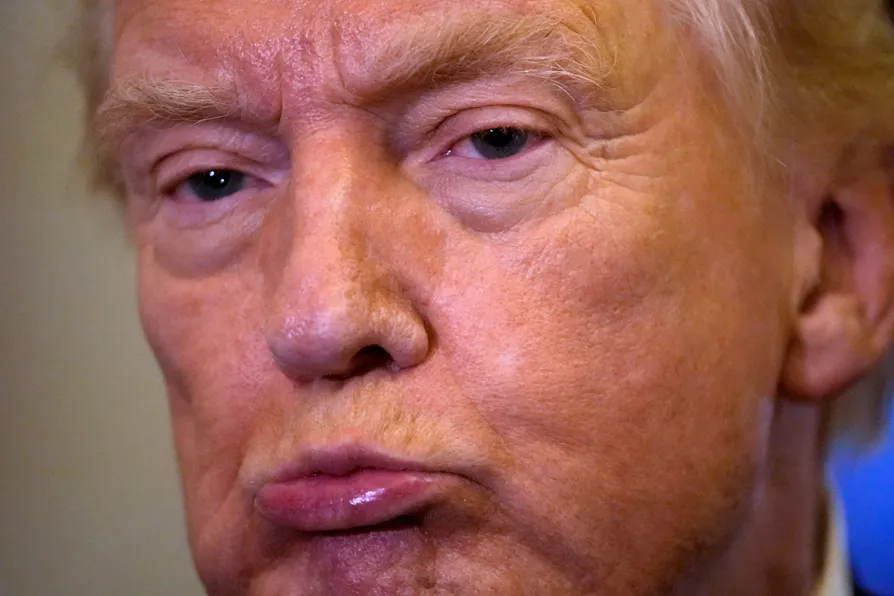 US President Donald Trump listens to a reporter's question as he flies aboard Air Force One, February 6, 2026

Researchers PAUL HOLDEN and JESSICA MURRAY are calling for whistleblowers and documentary records to uncover how Labour Together helped build the parliamentary majority that now dominates the Labour Party
Cuba continues to embody a vision of internationalism that imperialism has never forgiven, argues ZOLTAN ZIGEDY
PCS general secretary FRAN HEATHCOTE explains why opposing war is inseparable from defending jobs, wages and public services – and why readers should come to the London Peace Conference on Saturday June 20
As protests erupt over Henry Nowak’s murder, ANDREW MURRAY argues that anger is being exploited to advance a wider racist and anti-immigration agenda
CARLOS MARTINEZ explains the sound case for car manufacturing co-operation with China





AS DONALD TRUMP’S glee in shocking the world with his unhinged antics continues at pace, one incident still has the power to outrage; in May 2025, less than a week after he attended the late Pope Francis’s funeral, President Donald Trump posted an AI-generated image of himself as the Supreme Pontiff.
This understandably offended many Catholics and indeed non-Catholics; with Italian daily newspaper La Repubblica called Trump’s post “infantile,” accusing him of “pathological megalomania.”
No arguments there.
The Saeculum Obscurum, aka The Pornocracy and “Rule of the Harlots,” was a time in the first two-thirds of the 10th century when a corrupt family milked the Papacy, installing a regime of sexual licence, pay-offs and office-selling, benefiting the powerful Theophylacti house (Counts of Tusculum in Latium), their relatives and allies. The lovers of Theodora and Marozia, as well as the son and grandson of Marozia, ascended to the papacy during this period.
Pope Benedict IX was described by historian Norwood Young as “The Nero of the Tusculan Papacy.”
Pope Victor III (1086-87) said of him: “Leading a life so shameful, so foul, so execrable that he shuddered to describe it. He ruled like a captain of banditti, rather than a prelate. Adulteries, homicides perpetrated by his own hand, passed unnoticed, unrevenged; for the patrician of the city, Gregory, was the brother of the Pope; and another brother, Peter, an active partisan.”
In some ways the period was relatively progressive, as Theophylacti women Theodora and daughter Marozia held huge sway over the selection of the popes and general religious affairs in Rome through their various conspiracies, affairs and marriages.
Trump’s papal indulgence
Much like the current Trump administration, some would say, with its hiding-in-plain-sight corruption — including office-selling, family enrichment, influence peddling, sexual licence, graft and intimidation.
With the exception of female empowerment, as Trump’s “piggy,” “ugly” and “you never smile” comments regarding female journalists so aptly illustrate.
Stephen VI (896-897) exhumed and tried his dead predecessor Pope Formosus; akin to Trump’s attempts to crush the ailing former president Biden.
The corpse was pronounced guilty, stripped of sacred vestments, with the three blessing fingers of its right removed; it was dressed as peasant and buried; then dug up and chucked in the Tiber. All ordinations performed by Formosus were also nullified. Later in 897 Pope Stephen was imprisoned and strangled to death, by the enemies accumulated during both the trial and other activities.
Following the murder of Stephen VI, Formosus’s body was reinterred in St Peter’s Basilica. Any further trials of this nature against the dead were banned, but Theophylactic placeman Sergius III (904–911) reapproved the decisions against Formosus.
Pope Sergius also demanded the reordination of the bishops consecrated by Formosus, they in turn having conferred orders on many other priests. The validity of Formosus’s pontificate was later restored. The Catholic church belatedly recognised the condemnation of Formosus was far more to do with politics than piety as such.
Move over Borgias, here come the Trumps
Of course, the Trump family also bear comparison with to that later Papal Mafia, the notorious Borgias, who became prominent in ecclesiastical and political affairs during the 15th and 16th centuries, producing two popes: Pope Callixtus III (reigned 1455–58), and nephew Rodrigo Lanzol Borgia, Pope Alexander VI, (1492–1503).
The Borgias (most often during the reign of Alexander VI), were suspected of adultery, incest, simony, bribery, theft, election rigging and murder (typically by arsenic poisoning). But not (to our knowledge) bribing a porn star or palling around with Jeffrey Epstein.
Among other acts, the Borgias earned especial infamy for their “Banquet of Chestnuts” on October 31 1501, described thusly by Johann Burchard (1450-1506), the Protonotary Apostolic and Master of Ceremonies:
“On the evening of the last day of October, 1501, Cesare Borgia arranged a banquet in his chambers in the Vatican with ‘fifty honest prostitutes,’ called courtesans, who danced after dinner with the attendants and others who were present, at first in their garments, then naked. After dinner the candelabra with the burning candles were taken from the tables and placed on the floor, and chestnuts were strewn around, which the naked courtesans picked up, creeping on hands and knees between the chandeliers, while the Pope, Cesare, and his sister Lucrezia looked on. Finally, prizes were announced for those who could perform the act most often with the courtesans, such as tunics of silk, shoes, barrets, and other things.”
Last October Trump had his very own Halloween Gatsby party, where the president, his family, “friends,” sycophants and others enjoyed rubbing their vulgarity and wealth in the noses of the poor, opponents and frankly anyone possessing a vague social conscience.
No chestnuts, but Trump’s banquet included a three-course meal with filet of beef, pan-seared scallops, truffle dauphinoise, along with a “Trump chocolate cake.” And a hefty side order of grovelling for his supplicants.
Former British intelligence agent Christopher Steele’s alleged revelations regarding Trump’s activities in Soviet and post-Soviet Russia also bear comparison with the Borgia clan’s sexual predilections. Without, some would say, the style.
