DOUG NICHOLLS says the parasitic finance markets must be challenged or another British government could be toppled


 Latest editorial

Solidarity Fund is delivering for workers in struggle
By making it simpler to support workers in struggle, Strike Map’s new Solidarity Fund aims to strengthen strikes when they need it most, write ROBERT POOLE and HENRY FOWLER
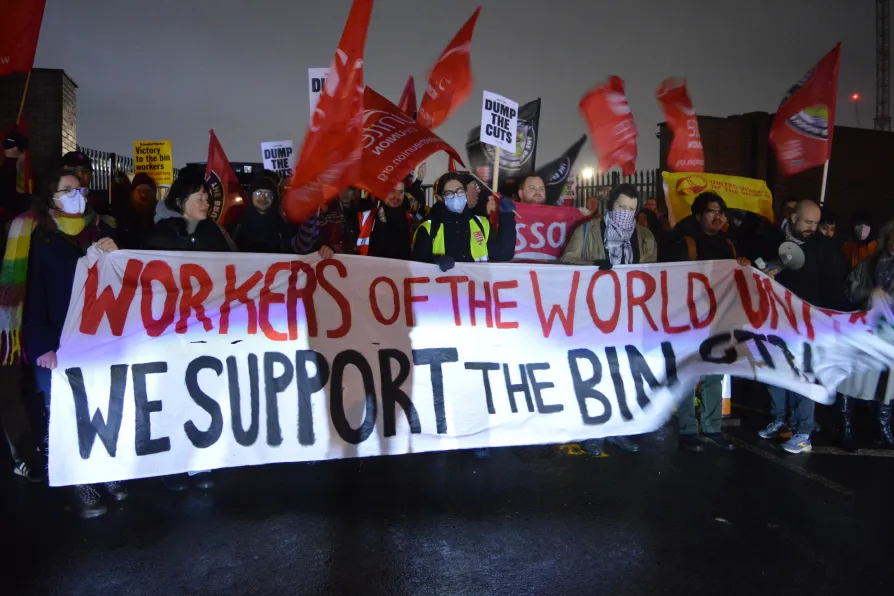 Photo: Henry Fowler, Strike Map
The late country singer’s Imagination Library has put hundreds of millions of books into children’s hands. We should build on that legacy by defending the libraries at the heart of our communities, says BRENDA AITCHISON
Deprivation is a fundamental factor in criminal behaviour that must be addressed but, KENNY MacASKILL argues, there needs to a major rethink in sentencing to tackle overcrowding
MML director MEIRIAN JUMP outlines the recently refreshed library’s busy autumn schedule that ranges from book sales, archival exploration, community work with online education and the ever popular site tours
Some thinkers and authors on the right are openly discussing the possibility that the historically successful party of the British ruling class may be exhausted
Class struggle is the motor of history but the direction and detail of change at any time and place is the outcome of many factors, suggests the Marx Memorial Library and Workers’ School
TONY BURKE surveys the shifting political landscape and the challenges Labour needs to address if it is to prevail in the 2028 federal elections





OUR Solidarity Fund has now been running for two months. In that time, we have raised more than £2,000 through over 30 individual donations, alongside the backing of Aslef, BFAWU, PCS and NASUWT.
Raising money for striking workers is nothing new for the trade union and labour movement. Financial solidarity has always been one of the foundations of our movement. Throughout Strike Map’s history, we have raised money through badge sales, fundraising gigs, merchandise, and even beer, to support workers engaged in long, bitter and difficult disputes.
Those efforts have been successful, but we repeatedly heard the same complaint: giving money to striking workers was often fragmented, confusing and unnecessarily difficult. We wanted to solve that problem.
Instead of asking supporters to navigate multiple crowdfunding platforms or arrange bank transfers, the Strike Map Solidarity Fund allows people to donate securely online by card in just a few clicks. Supporters can choose to back a specific dispute or trust Strike Map to direct their contribution to where it is needed most.
We chose May Day as the perfect moment to launch the fund and were proud to do so with the support of four national unions, named above.
In this very paper, our comrade and BFAWU general secretary, Sarah Woolley, summed up exactly why this matters: “At a time when crowdfunding platforms make it simple to donate instantly by card, strike solidarity funds remain fragmented and difficult to access, especially outside strong existing relationships between union branches. If we are serious about sustaining long-running strikes, we need a simpler, more accessible way to provide financial support.”
That is precisely why we launched the Solidarity Fund. It is not intended to replace the organising and solidarity that already exists between workers in struggle. Rather, it is another tool. one that makes supporting strikes easier, not just for politically active trade unionists, but for the wider public.
This week we have begun distributing the first round of funding to workers who need it most.
The first recipient is the University and College Union (UCU) branch at Goldsmiths, University of London. Their dispute sits at the forefront of the wider crisis engulfing higher education, with universities across the country pursuing mass redundancies, restructures and cuts as the sector continues to burn.
After months of unsuccessful negotiations, Goldsmiths management is pressing ahead with £20 million of cuts, following confirmation of an £8m shortfall in student recruitment income for 2025-26.
As the Goldsmiths UCU branch explains: “This would be the third round of mass cuts in five years. Every previous restructure was presented as the route to financial stability. Instead, staff and students have paid the price while management has continued costly external spending and repeated restructuring. Through Freedom of Information requests, our branch uncovered more than £14 million spent on consultants between 2019 and 2026, alongside at least £6.6 million on recruitment services since 2022. Much of this followed the failed Recovery Programme, which removed internal capacity only for management to spend millions attempting to replace it.”
After the university imposed 100 per cent pay deductions in response to action short of strike, UCU members are effectively “locked out” of their workplace and have been on indefinite strike since June 8 2026.
This dispute matters not only for Goldsmiths but for the future of higher education as a whole. That is why the Strike Map Solidarity Fund has contributed £300 to support these workers, and we encourage trade union branches across the movement to do the same.
We have also sent £300 to Unison members taking strike action at AQA. More than one million students sit AQA examinations each year. Despite the exam board generating annual revenues of over £200m, around 400 Unison members are fighting to restore pay after suffering a 10 per cent real-terms wage cut. The impact has been severe, with one in 10 workers now relying on foodbanks.
The strike followed an overwhelming democratic mandate: 77 per cent voted for strike action, while 92 per cent backed action short of strike, including working to rule.
We chose to support this dispute because pay restoration remains a powerful and clear demand.
After years of soaring inflation, rising living costs and stagnant wages, with further economic uncertainty on the horizon, winning back lost pay has become essential.
We have seen first-hand how clear demands around pay restoration can mobilise and organise workers. Since the global financial crisis, Britain has endured more than a decade of austerity and falling living standards. As the Trades Union Congress has described it, workers have experienced “the longest, deepest squeeze on real wages and disposable income since the 1820s.”
The combined effects of inflation, stagnant wages, Brexit and the Covid-19 pandemic have dramatically reduced workers’ purchasing power.
Pay restoration is therefore not simply about securing a better pay rise this year. It is about reversing years of decline. That may not happen overnight, but the British Medical Association’s resident doctors have demonstrated what sustained industrial action can achieve, winning pay increases worth more than 35 per cent on the road towards restoring the value of their pay since 2008.
The Solidarity Fund is still in its infancy, but the response over the last two months shows there is a real appetite for a simpler, more effective way to support workers in struggle.
We encourage more national unions, branches and individual trade unionists to support the fund and help us build the infrastructure our movement needs to sustain industrial action across every sector.
History teaches us that solidarity is our greatest weapon. Let’s make sure today’s workers are never left to fight alone.
Every contribution, no matter the size, is important. You can contribute to the Solidarity Fund today here: https://bit.ly/StrikeMapSolidarityFund.
Robert Poole and Henry Fowler are co-founders of Strike Map.
You can find out more about Strike Map here. Follow Strike Map on WhatsApp, Tik Tok, Instagram, Facebook, Bluesky, Twitter/X and Linkedin.

Similar stories
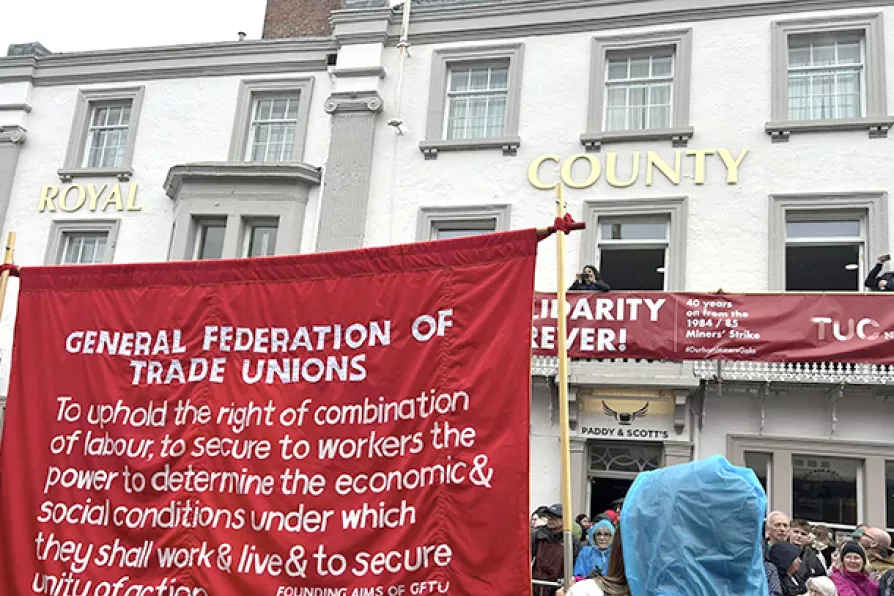
HENRY FOWLER outlines the GFTU’s new 2026-27 education programme and argues that investing in trade union education is essential to building worker power, developing leaders and strengthening collective action

Cuts are sweeping campuses as cash-strapped universities slash staff and politicians fail to act on a growing funding emergency. VINCE MILLS reports

JACK DAVIDSON explains the motivation behind the UCU strike action at the University of Sheffield
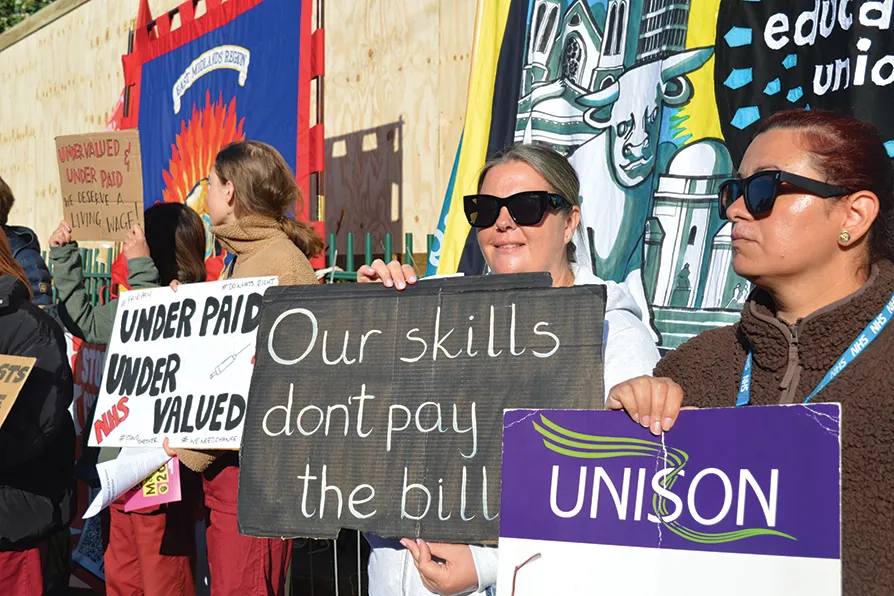
Solidarity is needed for the longest strike in NHS history, argues HENRY FOWLER of Strike Map