

 Latest editorial
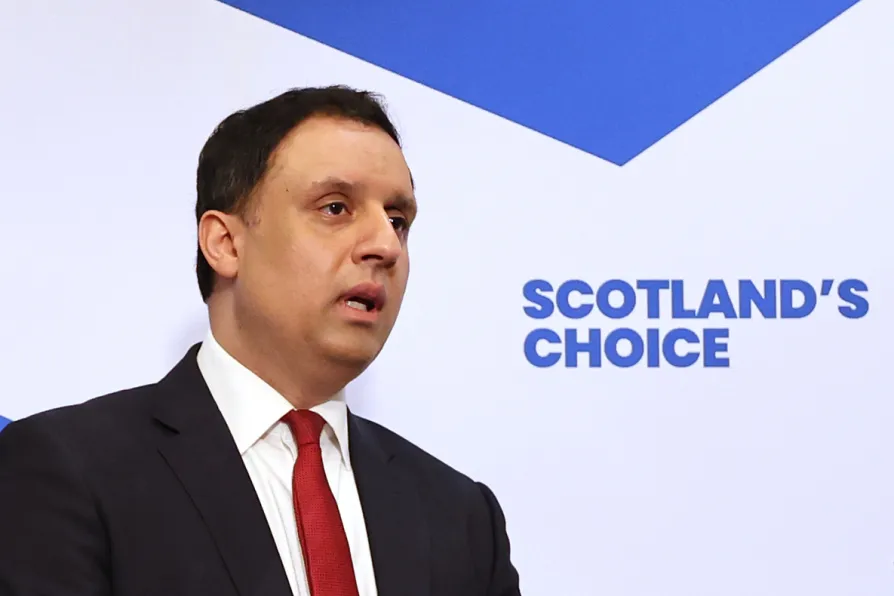 Scottish Labour leader Anas Sarwar speaking to the media during a press conference at Trades Hall, Glasgow, where he is calling on Sir Keir Starmer to resign as Prime Minister, February 9, 2026





SCOTTISH Labour leader Anas Sarwar had plenty of good reasons for trying to put clear water between himself and Prime Minister Keir Starmer.
His party is trailing badly in the polls in the run-up to the Scottish Parliament elections in May. It is possible that it will finish third, behind both the Scottish National Party and Reform UK.
This despite running against an SNP government in Edinburgh with a dismal record on almost every measure, and still with the air of sleaze hanging about it.
And it is despite Scottish Labour having made substantial gains in the general election of July 2024, the only part of the country in which the party genuinely advanced on votes and vote share, as well as seats won.
Sarwar is doubtless right to attribute his difficulties to the deadweight of the Labour government in London. Its numerous mis-steps, including repeated attacks on the poorest and most vulnerable, had already tanked its reputation throughout Britain even before the dramatic Epstein-Mandelson scandals.
Differentiating Scottish Labour from the broader party must therefore seem an electoral imperative to Sarwar, even if there is little evidence that his call for the Prime Minister to quit this week will make a difference when Scottish voters head to the polls.
However, his intervention on a drama-laden day at Westminster should not be taken at face value. Sarwar is a Blairite, committed not to the socialist policy agenda the government so desperately needs if it is to have any chance of survival, but to a full restoration of the New Labour agenda of lightly managed neoliberalism.
Sarwar represents 21st century Mandelsonism, that faction of the Labour Party anxious above all that when Starmer goes — and it is no longer a matter of if — he is succeeded by an unabashed heir to Blair.
It is therefore more than likely that his call for Starmer to resign was motivated by a desire to assist Health Secretary Wes Streeting, who is sure to be the Blairite candidate for Prime Minister in the leadership election sure to be held before long.
Indeed, Streeting and Sarwar are understood to have spoken at the weekend as the crisis started to break, and it is hard to believe that the Scottish leader did not advise the Cabinet member of his intentions, nor that the latter tried to dissuade him.
Streeting held back this week, even if his endorsement of the Prime Minister remaining in office arrived later and in more lukewarm terms than those of his coerced Cabinet colleagues.
But the menace remains. Doubtless Streeting has calculated that waiting until after May’s elections, anticipated to be disastrous for Labour and not just in Scotland, suits his ambitions better. Who wants to have to own a calamitous rebuke in their first weeks in office?
If the “soft left” around Angela Rayner and Ed Miliband appear to be the immediate beneficiaries of Starmer’s political near-death experience, the humiliation of Peter Mandelson and the overdue departure of the cynical factionalist Morgan McSwseeney, the danger of a full-scale New Labour restoration remains.
That would aggravate every single aspect of Britain’s crisis and throw the door wide open to a hard-right government after the next general election.
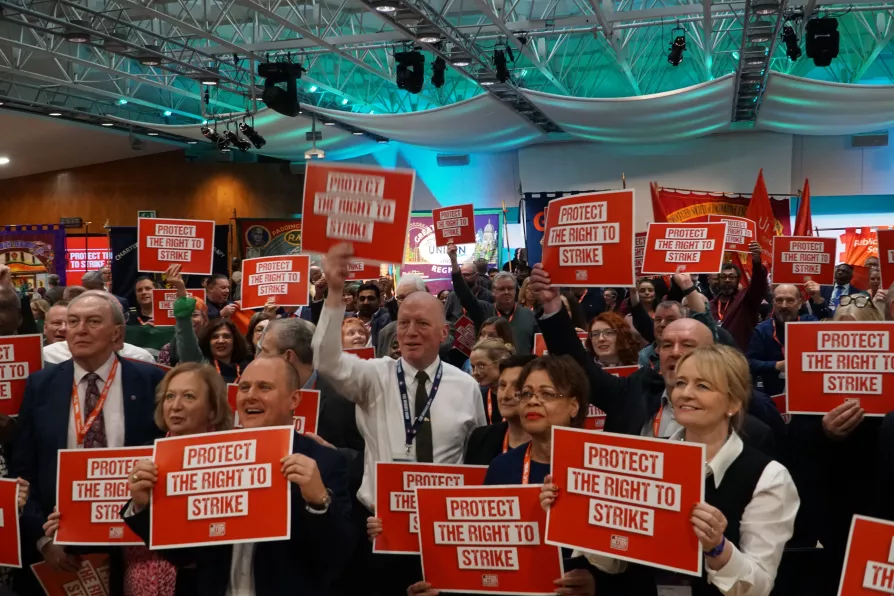
The resolution of the crisis cannot be left in the hands of the Parliamentary Labour Party alone. This is not a moment for passivity by organised labour.
The voice of the trade unions needs to be heard louder than it has been this week if the Blairite plotters are to be stopped. The radical break with austerity, City-first economics, Trump and neoimperialism which Britain needs will not deliver itself.
