RITA DI SANTO assesses the winners of the most politically charged festival to date


 Latest editorial
Rich pickings on YouTube
ANGUS REID considers the power of the podcast as a vehicle for consensus building in opposition to mainstream media narratives
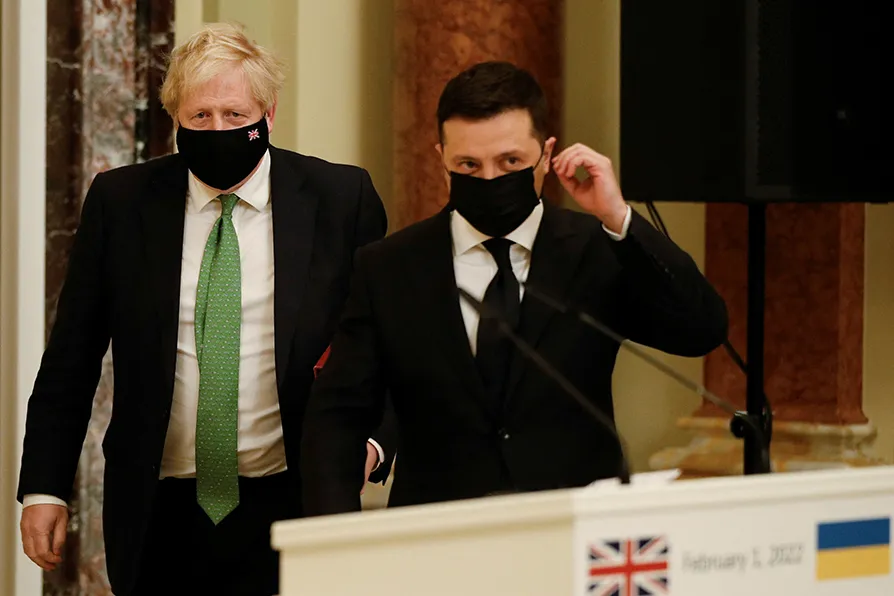 PEACE SABOTAGED: In a visit to Kyiv Boris Johnson puts pressure on Volodymyr Zelensky to abandon the peace deal agreed in Istanbul, February 2022
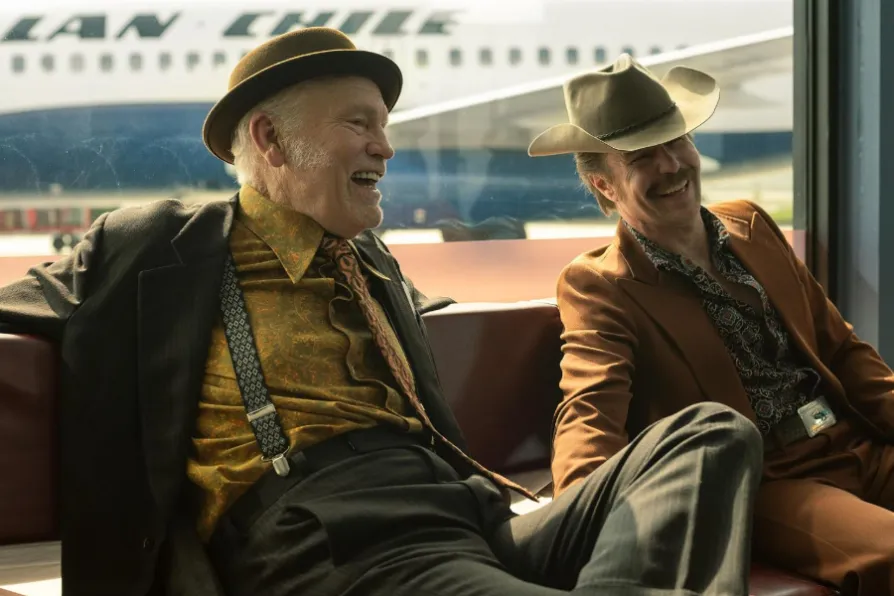
KATARZYNA KOSMALA introduces a retrospective by one of the most significant figures in contemporary US photography
MAYER WAKEFIELD is entertained but let down by an audacious production that, sadly, doesn't ring true
MARY CONWAY is disappointed by drama that, despite accomplished performances, cannot overcome an unfocused script
New releases from Sam Carter, Spell Songs and Les Thomas





OF interest to readers of The Morning Star who look beyond the mainstream for reasoned, informed debate will be the network of military analysts, economists, diplomats, journalists and academics who host, or are interviewed on a number of YouTube channels.
For commentary on the wider picture of geopolitics, of the Ukraine war, the Iran war, the Israeli genocide, or the evolving relationship between East and West there are a large number of regular podcasters such as Glenn Diesen’s Greater Eurasia podcast, Nima Alkorshid’s Dialogue Works, Mario Nawfal’s podcast, Brian Berletic’s The New Atlas, Daniel Davis’s Deep Dive, George Galloway’s Mother of All Talkshows … and so on and on.
This endlessly rolling online resource is not just a rabbit hole, it’s an entire warren. It’s a digital wormhole. A mediatic Pandora’s box.
You click on one, and the others crop up offering perspectives and commentary that you might find in this paper, but you rarely find in the mainstream. These discussions capitalise on the widespread distrust of western media, and particularly the current promotion of a war drive, hysterical Russophobia, and the absurd hiking — under US pressure — of arms budgets up to 5 per cent of GDP.
And as you watch you realise that this is in fact a community, who listen to and interview one another, and have a massive sustained following.
The star in terms of hits is Colonel Douglas MacGregor, a retired US colonel, avowed Republican and military historian who advised Trump’s secretary of defence in his first term. One interview, that I saw the day it was published, had already reached two million views.
From the left you have people like Pepe Escobar, the entertaining Brazilian investigative journalist, and Richard Woolf, the Marxist economist and teacher; and from the fringes are people like Bangkok-based former marine Brian Berletic for whom — and very persuasively — all US foreign policy can be traced to the Brooking Institute paper Which Path To Persia (2009); John Mearshemier, a US political scientist who examines, among other things, the influence of the Israel lobby over US successive presidencies; Mohammed Marandi, the earnest and softly spoken voice of Iranian policy; and Jiang Xueqin, professor of “Predictive History” among many others.
Yes, they are almost entirely white, opinionated, male, and frequently ex-US military. That says something about the medium.
But what is astonishing, given this broad array of backgrounds and specialisms, is the critical consensus that they represent as a group. They all oppose (and mock) mainstream media narratives. They all agree the Iran war is lost (and was hopeless from the start), the Ukraine war is lost (and was provoked by Nato), and the EU’s policy of Russophobic militarisation is economic, electoral and geopolitical suicide, and increasingly unpopular with the majority of EU citizens. Also that Israel is a genocidal state, a colonising anachronism in a post-colonial world. And, of course, that Trump is not an anomaly, but the symptom of an empire in decline.
The military analysts cite mysterious sources from which they quote classified information that never reaches the media: the true number of casualties in Ukraine, the quantities of weapon stockpiles, the relative war production capacities of the US, Russia, China and the EU.
The diplomatic analysts detect the inevitable construction of the Asian superpower via “new Silk Roads,” pipelines and trade routes that spread from Iran via Pakistan and Russia to China. The political analysts either demonise Israel, or point out that arming, and then blaming Israel is a long-standing US policy.
The economists point to the imperialist delusion that underlies war economies and the inevitable toll that such extraction of wealth takes on populations, along with the impact of China’s exponential growth on absolutely everything.
And they all talk to one another, picking up one another’s rhetoric. Marandi was the first to use the now ubiquitous phrase “The Epstein Class” as shorthand for Western political elites, for example. As soon as former British diplomat Alistair Crooke mentioned that Helium and fertiliser were major exports from the Gulf States alongside oil, they were all saying the same.
And collectively, they have a bigger daily viewership than most news outlets.
Clearly, this YouTube phenomenon answers the need for a realistic, consensual explanation of geopolitical trends that extends beyond academic study into the present moment and the likely future. This is scholarly rigour in full public view that offers a deconstruction of the Western elites and media narratives, and their cynical projection of never ending wars with all of its attendant hypocrisy, and it is surely significant that such views are now being represented in the mainstream by centrist commentators like Simon Jenkins in the Guardian.
The basis of this consensus is not revolutionary, even if it is disruptive: it is rather held together by traditional liberal values: trade, diplomacy and peaceful relations. Socialist sentiments are only occasionally present (it is, for example, amusing to see the right-wing Glenn Diesen’s discomfort at being reminded by Richard Woolf that governments are not autonomous but always under pressure from their populations) and there is almost no discussion ever about how an exploited working class should organise.
Also absent, and tellingly so, is any discussion of the need for a collective defence of Cuba.
And should you choose to follow the debate, visually it is very dull: these are talking heads in zoom meetings with just a few hints in the background — Diesen’s books, MacGregor’s Napoleon, Berletic’s off-stage roosters.
But it is, nevertheless, extraordinary evidence of the power of the podcast, not simply as a soapbox but as a collective vehicle for consensus building that aspires towards genuine political influence.
So is this medium subversion, as it would like to imagine, or simply a safety valve and the chance to vent oppositional views within the staus quo? The jury’s out, but the field offers us rich pickings.

Similar stories
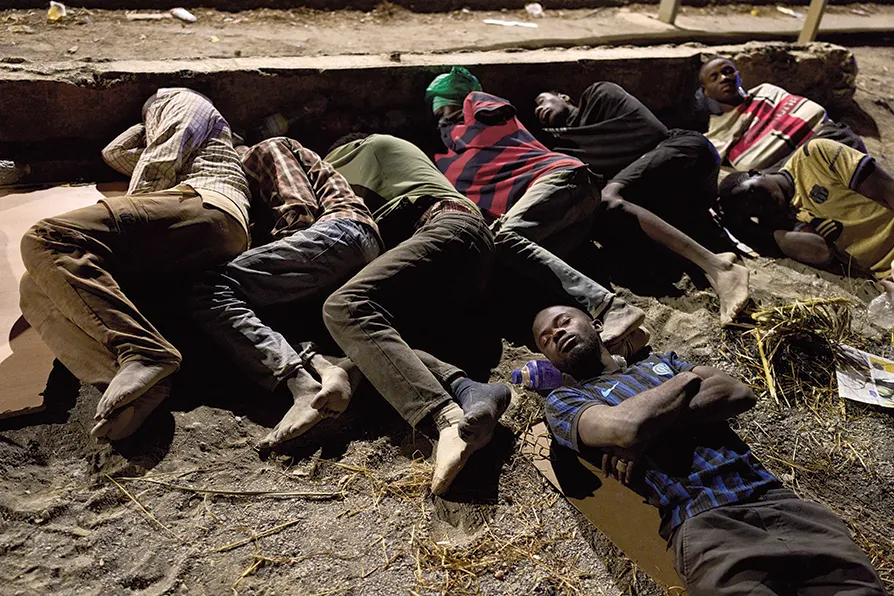
CARLOS MARTINEZ shows how EU, Israel and US shenanigans were used in an attempt to destabilise Spain’s mildly socialist government

BEN COWLES samples the many sonic and social therapies of Manchester Punk Festival 2026, and is ready again to smash capitalism
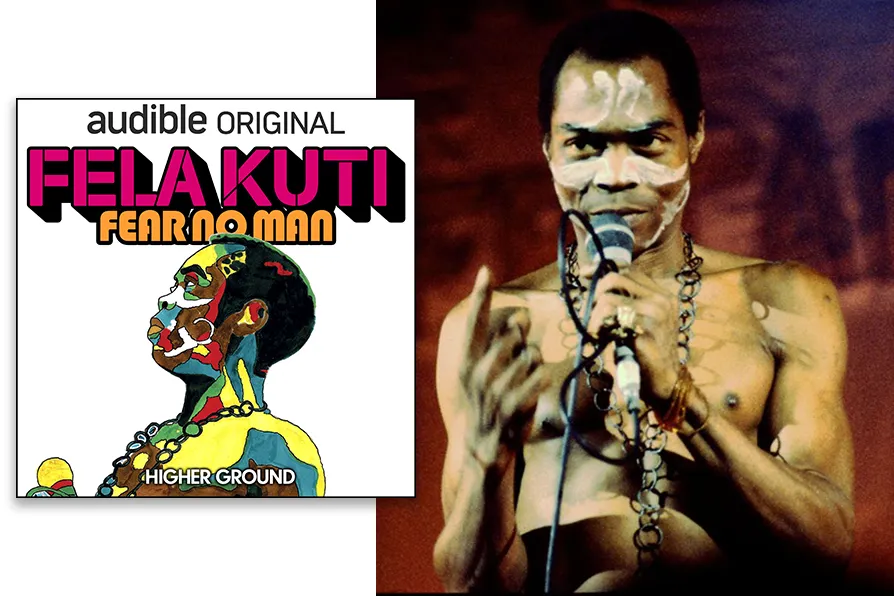
TONY BURKE recommends a new podcast about the legenary Nigerian musician and political activist FELA KUTI