TUC president and POA leader STEVE GILLAN speaks to Ben Chacko on the eve of Congress 2026


 Latest editorial
Rail reform must not come at workers’ expense
The nationalisation move to Great British Railways (GBR) must be about more than just changing the livery, writes MARYAM ESLAMDOUST
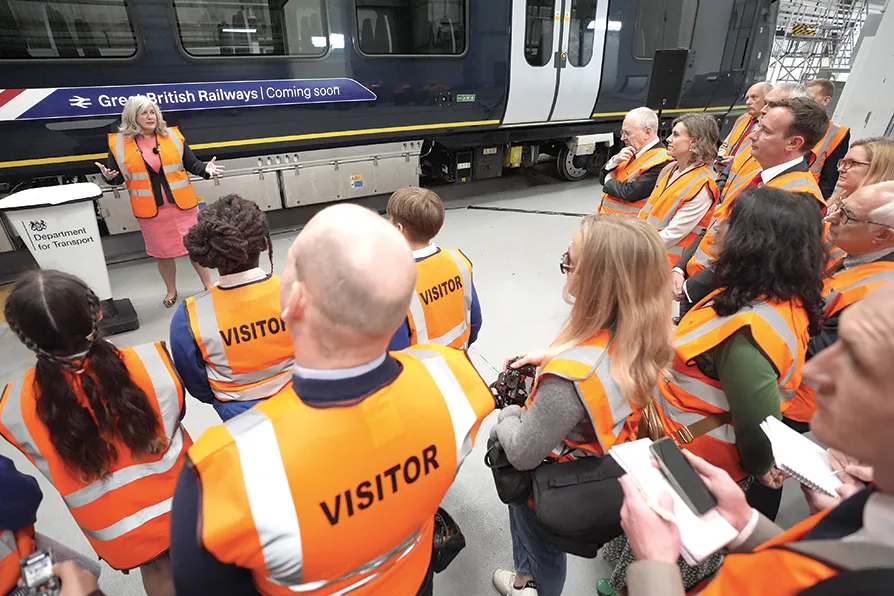 BEYOND RIBBON CUTTING: Transport Secretary Heidi Alexander inaugurates the Great British Railways branding in Bournemouth Traincare Depot in May 2025

As Cuba faces the most dangerous moment in its recent history, Britain must do more than condemn the US blockade at the United Nations, writes KEVIN COURTNEY, chair of the Cuba Solidarity Campaign
The Together Alliance is hosting two summits, North and South, to build power and plan action against the scourge of racism peddled by the right. DANIEL KEBEDE urges mass participation
Morning Star assistant business manager BERNADETTE KEAVENEY and international editor ROGER McKENZIE remember attending the 2001 TUC, suspended midweek after news of the World Trade Centre attacks
Whether it’s dented bike frames or broken ferries, MATT KERR wishes politicians had the same steely staying power of elite engineering instead of chasing disposable self-importance
The events of 9/11 reverberated across the United States and then the world. JOHN WIGHT remembers the eerie atmosphere that exposed racial divisions at the heart of Hollywood





TRADE unions exist for one reason above all else: to improve the lives of working people. That simple principle is guiding everything we do at the Transport Salaried Staffs Association (TSSA).
As general secretary, I am determined that our union remains laser-focused on the concerns of our members. That means fighting for safer workplaces, better pay, stronger rights and a transport industry that people are proud to work in.
That fight is the most important it has been in decades as the rail industry faces the biggest shake-up in a generation.
TSSA has campaigned for public ownership of transport for more than 30 years. The failed experiment of privatisation has cost passengers and taxpayers dearly while fragmenting the network.
But the move to Great British Railways (GBR) must be about more than changing the name on the door
We cannot be satisfied with simply transferring ownership without transforming the industry; the transition must protect jobs, improve terms and conditions, raise standards and deliver affordable fares, making rail safer, more reliable and more attractive to passengers.
If GBR is to succeed, it must put workers and passengers at its heart.
That has not been the approach to date. In laying the ground for GBR, so called “efficiencies” have seen 870 job losses at Network Rail, and thousands more taken out of the organisation through unfilled vacancies; further job losses through loss of contracts at infrastructure companies such as VolkerRail and Balfour Beatty CRSA; and job cuts at Southeastern as Network Rail and the train operating company merge functions.
We have also seen attacks on travel facilities, uncertainty over the future of pension protections, mixed messaging over trade union recognition agreements under the new structures, and, in one case, even derecognition of TSSA in the TUPE (Transfer of Undertakings – Protection of Employment) transfer from Network Rail to its wholly – and publicly – owned subsidiary, Platform4.
All this comes as the Department for Transport faces cuts to both its day-to-day and infrastructure budgets across the parliament.
This is no firm foundation for the future of GBR. What should be a rallying call to our members has turned into a source of worry about what is in store.
That has combined with a continued cost-of-living crisis that has put enormous pressure on households. Rising prices, stagnant wages and economic uncertainty squeeze family budgets, while conflict abroad sends fuel prices soaring (a conflict that we have been clear Britain should have no part in).
That is why TSSA has consistently called on government to provide meaningful support to working people facing rising costs, and opposed decisions such as the retention of the two-child benefit cap, cuts to winter fuel support, proposed changes to personal independence payments (PIP), and cuts across government departments to help fund increased defence spending.
We reject the idea that working people should be asked to pay the price for political choices that reduce welfare provision while increasing military expenditure. Our argument is simple: government should be investing in wages, welfare and public services, and judged on whether they improve the lives of working people.
When aspirations turn to anxiety, when people face economic uncertainty, and feel disrespected and undervalued, we see the growing appeal of the far right.
Recent attempts by far-right politicians to present themselves as friends of workers should fool nobody. Their record and their own statements tell a different story.
Not only do they scapegoat our members who are migrants or came here for asylum, they have made clear their hostility to many of the employment protections and trade union rights won through decades of struggle, including The Employment Rights Act, which they would repeal.
Trade unionism and the far right are fundamentally incompatible. One is based on solidarity; the other on division. Front-line transport workers feel that social division every day of their working lives.
Sadly, abuse and assaults have become an all-too-familiar part of the job for many of our members. Whether on railways, buses or other parts of the transport network, workers should never have to fear for their safety while simply doing their jobs.
TSSA will continue pressing governments, operators and employers to make public transport safer for passengers and workers alike. We need proper investment in safety, tougher enforcement and a clear message that violence against transport staff will not be tolerated.
This must include greater investment in the British Transport Police. For too long, resources have failed to match the scale of the challenge. We need proper funding, visible policing and effective enforcement that removes perpetrators from the transport system.
So, the challenges are substantial — a fundamental reorganisation of our industry, rising violence and abuse of transport workers, a continuing cost-of-living crisis driven to further extremes by conflicts abroad, and an insurgent far right preying on the economic uncertainty our members face.
This year TSSA will undertake important internal reforms to ensure we are fit to meet them. We must be ready for the opportunities and challenges that Great British Railways will bring.
We must be prepared to confront attacks on workers’ rights, resist underfunding of our transport system and continue our campaign against violence towards transport workers.
Our mission is straightforward. We will fight for safe workplaces, secure jobs, decent pay and affordable public transport, and we will use every industrial and political tool available to defend our members.
Maryam Eslamdoust is general secretary of TSSA.
