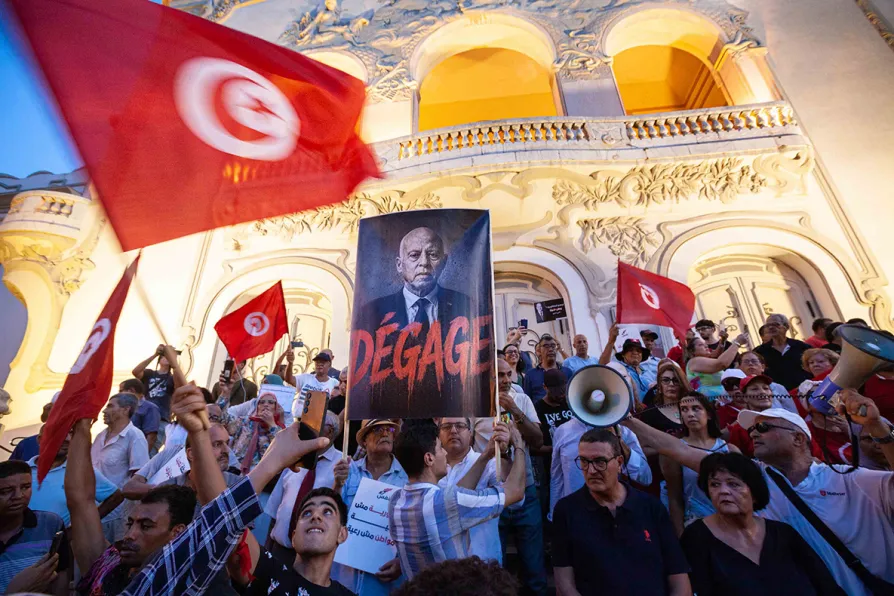
 People take part in a protest against rising prices, declining purchasing power and shortages of basic goods in Tunis, Tunisia, August 20, 2026. Banner in French showing Preident Kais Saied reads ‘Leave’






THOUSANDS of protesters rallied in the Tunisian capital Tunis on Thursday, with many calling on President Kais Saied to leave power.
Mobilised by a new opposition collective, the demonstrators pleaded for improvements to basic utility services and an end to medicine shortages, rising living costs and restrictions on freedoms.
Some denounced what they described as the president’s failure to meet the people’s demands since he was elected seven years ago.
The protest was called by the Nafas movement, which seeks to bring together political parties and independent figures beyond Tunisia’s traditional opposition to President Saied.
The umbrella initiative, launched in May, has been calling for an end to what it describes as government failure and injustice in the country that was the birthplace of the Arab Spring pro-democracy uprisings.
The protest came during a summer of extreme heat, with temperatures reaching up to 50°C in some parts of Tunisia.
The heatwave pushed electricity demand to record levels and led state-owned utility STEG to introduce rationing measures in several regions.
Power cuts also affected water-pumping stations, exacerbating long-running concerns over access to drinking water in parts of the country. Shelves of bottled water emptied quickly as lengthened blackouts disrupted factory operations.
The production slowdown was deepened by a shortage of raw plastic materials, triggered by ongoing shipping disruptions in the Strait of Hormuz, which cut off petrochemical exports to north Africa for bottle manufacturing.
Mohamed Hawel, a university teacher, struggles to make ends meet despite receiving a relatively high salary. A member of the Nafas collective, he said the group was created to unite people around basic necessities, including water, electricity and food.
“We are not making the bare minimum. We keep queuing to get water and bread. This is unbelievable in Tunisia in the 21st century,” he said.
Thursday’s protest and another one by Nafas in Tunis last month brought together opposition activists alongside citizens who had not previously taken part in political demonstrations.
Oussama Farhat, a primary school teacher and online influencer, said he joined the protest because he believed the achievements of Tunisia’s 2011 revolution were being eroded.
He said: “I came out today because I am a strong believer in the revolution’s achievements which have started to fall apart or get eroded.
“We are also calling for the fall of the regime because after seven years, it has been proving its failure without a vision for change and reform.”


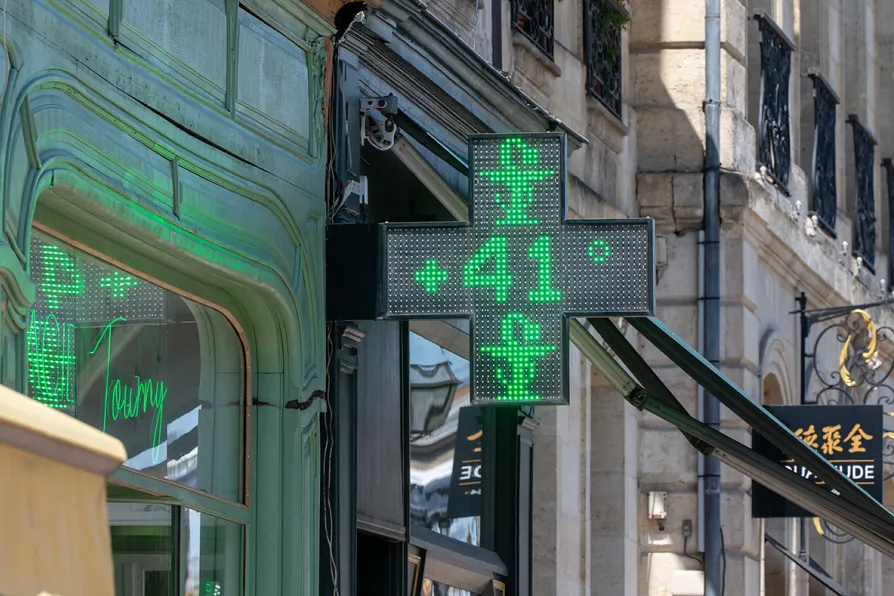
Extreme heat is now one of the defining public health challenges of a warming world, explains Prof IAN WILLIAMS