

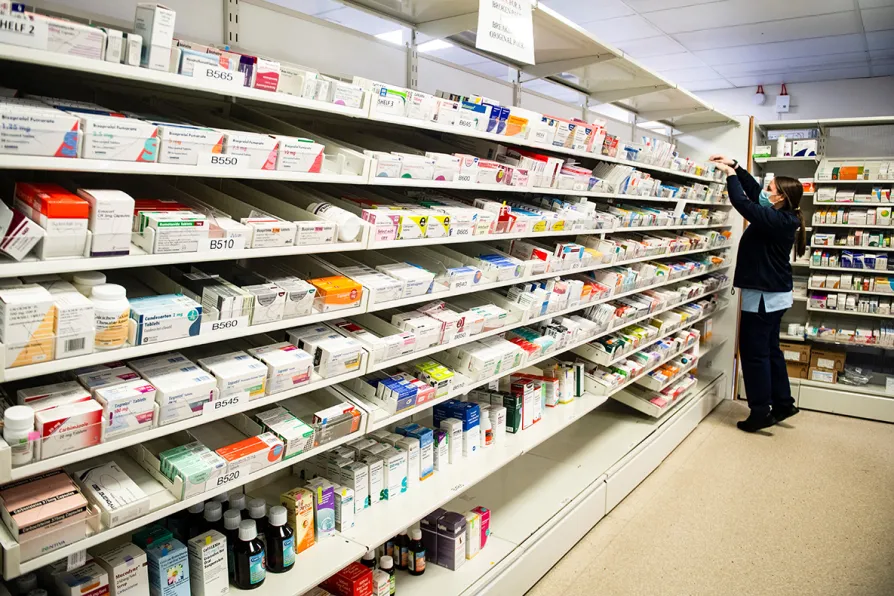
 A view of medications at a hospital pharmacy






AN NHS plan to claw back millions of pounds from community pharmacies this year was slammed by industry experts who say it will “hit pharmacies indiscriminately.”
The National Pharmacy Association (NPA) accused officials of an attempt to avoid negative attention, as they released “an opaque formula” which was “quietly slipped out just before Christmas.”
Its chairman, Olivier Picard, said the cuts will particularly affect community pharmacies less than a year after the government announced a substantial increase in investment to the industry.
The NHS Business Services Authority (NHSBSA) announced on December 23 there had been an “overdelivery” of medicine by the end of last June, meaning the budget would be adjusted as of January 2026, with a “reduction of £16.8m per quarter.”
It also said additional costs to be recouped will be “smoothed over the following 12 months.”
Mr Picard said: “This exposes a complete disconnect between government rhetoric and the real world facing pharmacies, and simply highlights the fact that the current Drug Tariff and pharmacy contract remain seriously underfunded and fundamentally broken.”
He added that chemists will be “left unable to predict, even week to week, what their funding will be.”
“[This] is damaging and can only hold back the reform the government rightly wants to see,” he said.
“[Pharmacies] cannot plan, cannot invest and are forced to dispense NHS medicines, day after day, often at a loss, with little idea of whether they will be reimbursed adequately.
“No other part of the NHS would be expected to operate like this.”
He urged Prime Minister Sir Keir Starmer’s government to “urgently commit to genuine contract reform that funds medicines supply sustainably, gives pharmacies confidence to invest and aligns words with actions.”
Community Pharmacy England warned in December that many local chemists are “hanging on by a thread, losing money and struggling to cope with the ongoing demand from patients and the public.”
It said this was “compounded” this year by a “troubling flu season, resident doctor strikes and severe financial pressures,” adding that pharmacies were ending the year “with no certainty about the future funding beyond March 2026.”
