ROB WARZYNIAK wades knee deep through a pile of ‘dead canaries’ of Trumpist policies which exacerbated the horrors of US capitalism domestically


 Latest editorial

From Methodism to modern Labour: a crisis of conscience
Labour may owe more to Methodism than Marxism, but the wider non-conformist tradition that shaped British democracy is under pressure as protest rights come under increasing attack, warns MARK SEDDON
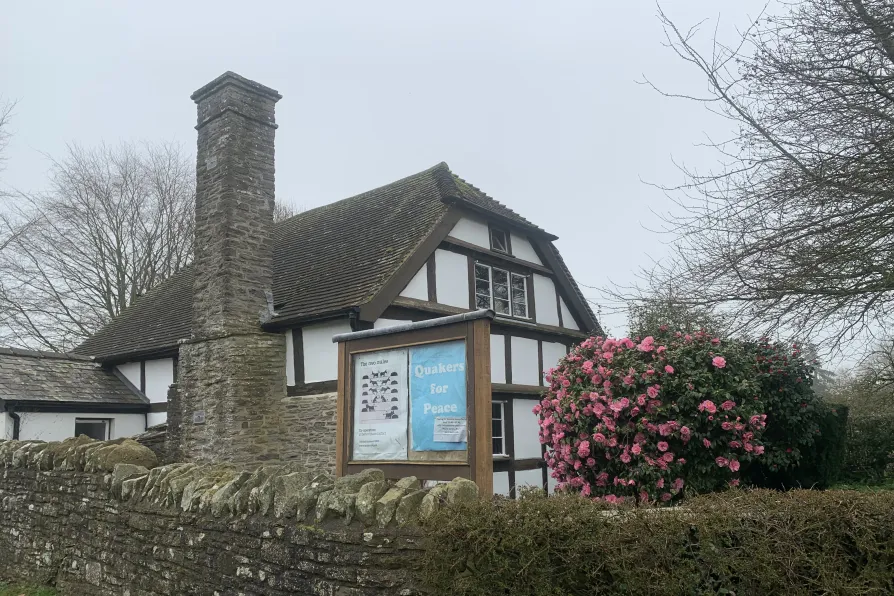 Almeley Wooton Friends Meeting House [Pic: Author supplied]
Without evidence or Nato consultations Berlin’s answer to the Leipzig incident is a rupture of relations. SEVIM DAGDELEN examines why
FRANCISCO DOMINGUEZ introduces the background to a conference on defending Latin America’s sovereignty
The glacier collapse in Nepal is yet another warning that a warming planet is making Himalayan disasters more frequent and destructive – but the countries facing the greatest risks are often those least responsible, says LI YANG
Nick Blair is set to benefit from a hugely lucrative contract to ‘virtually’ train the British army for its next war. Like father, like son, writes SOLOMON HUGHES
Even when tragedy strikes, Western media cannot resist the opportunity to turn it into a sordid propaganda opportunity, as the Nepal-China border tragedy shows, writes CARLOS MARTINEZ
Trade unions should be at the heart of the anti-racist push for reparations for the historic legacy and continuing impact of slavery, writes ROGER McKENZIE





THE jury is still possibly out on whether it was Morgan Phillips, a former general secretary of the Labour Party or his speech writer, Denis Healey, who first coined the phrase, “the Labour Party owes more to Methodism than to Marxism.”
Harold Wilson rather liked the line as well, as did Tony Benn. Either which way, this week Andy Burnham will become leader of the Labour Party by approbation rather than election and I couldn’t help but wonder if he will open the party up to being (excuse the pun) a broad church again?
Can you imagine the late firebrand MP, Ellen Wilkinson or dear old Donald Soper, both Methodists, being allowed to sit on the Labour benches today?
The question has greater urgency since that great dissenting, non-conformist, conscience driven tradition within our society finds itself increasingly battered by draconian legislation which has, for instance, seen the Friends Meeting House in Westminster raided by police three times since 2025.
The Quakers, despite being small in number, have historically been at the front line in championing the right to free assembly and for juries to be able to exercise a right to their conscience, which is yet another basic British human right that is currently being deliberately undermined by both ministers and reactionary elements of the judiciary.
Our village is home to what is likely to be the oldest Quaker meeting house in the country. The story has it that one of the early Quaker preachers, George Fox, came and spoke to a very large crowd in a field and that a local farmer Roger Pritchard was so impressed — and concerned that the crowds were being rained upon — that in 1672 he handed over the small black and white former farmhouse to the Quakers and that is still very much in use.
The history of the Quakers in this area and across the Marches is both a very proud and active one and one that continues to this day. Quakers are often at the forefront of the peace movement, involved in campaigns around climate change and locally here in support of prisoners languishing in the horrendous no-mans-land that is death row in US prisons.
In echoes of the increasingly repressive and intolerant times in which we live today, many local Quakers from our area moved to North America during the 1600s to escape persecution. Roger Pritchard’s son William was one of the 13 signatories of William Penn’s Charter for Pennsylvania, and this link between our local Friends Meeting House and the North American colonies is celebrated with a framed commemorative letter from a Governor Duff of Pennsylvania.
And just up the road, we have Pennsylvania Farm. Those early Quaker settlers, some from our area, were determined to live peacefully alongside local Native Americans but their pacifism did not endear them to Benjamin Franklin, who, although respecting many of their beliefs, plotted to take control of the colony and later organised armed militias when he had done so.
It is perhaps unsurprising that visitors to the early Pennsylvania colony would often come across Native Americans and their settlements, whereas a decade later, with the Quakers in retreat, the Native Americans had largely been driven out.
The non-conformist tradition in Britain has been and remains influential. It is writ large on the some of the colourful banners that were on proud display at the Durham Miners’ Gala last weekend. It is evident in the activities of local groups up and down the country; it speaks to us in so many different ways.
Many Quakers have been arrested under Yvette Cooper’s souped up anti-terrorism laws simply for holding placards that read: “I Support Palestine Action.”
Democracy and freedom of expression and assembly are under direct threat in a country that likes to boast to the world that it is free, when increasingly it isn’t.
A surprise visitor in the kitchen sink
EARLIER in the week I went to fill the kettle and wondered why someone had left a used teabag in the sink. As I switched the tap on, some water splashed on the tea bag, which alarmingly began to pick itself up and gingerly move along the sink.
Closer inspection revealed that the tea bag was in fact a bat that had somehow flown into the kitchen and fallen on its back into the sink.
So, I gently picked it up and took it outside into the sunshine where hopefully it will have soon recovered, found its roost in our roof and prepared itself for a night of adventure shimmering around the dark lanes in search of insects.
For reasons unknown to me, some people are fearful of bats. Perhaps they imagine that they are all vampire bats or might get tangled up in their hair.
Either way this is all nonsense and bats deserve our help and respect. Too many of their roosts have been blocked over the years and modern houses simply don’t have the nooks and crannies they need to hang upside down in.
I have lost count of the people I have bumped into in pubs over the years who have talked of bats being “a problem.”
They are of course protected by law and there are 18 different types of them, thus making up nearly a quarter of all native mammal species in these islands.
Their sonar abilities are of course second to none and their size, usually exaggerated in films, is tiny. Bats in belfries? Yes please; lots more of them!

Similar stories

Welsh wanderings showcase fiery destruction, alternative water ways and revive memories of a local mining legend, writes MARK SEDDON
MARK SEDDON tries to cool off in the countryside to avoid the heatwaves but the greed and incompetence of the privatised water industry is now at boiling point
Millions of elms were wiped out by Dutch elm disease in the 20th century, transforming the landscape forever – yet pockets of hope are keeping this beloved tree alive. MARK SEDDON explains
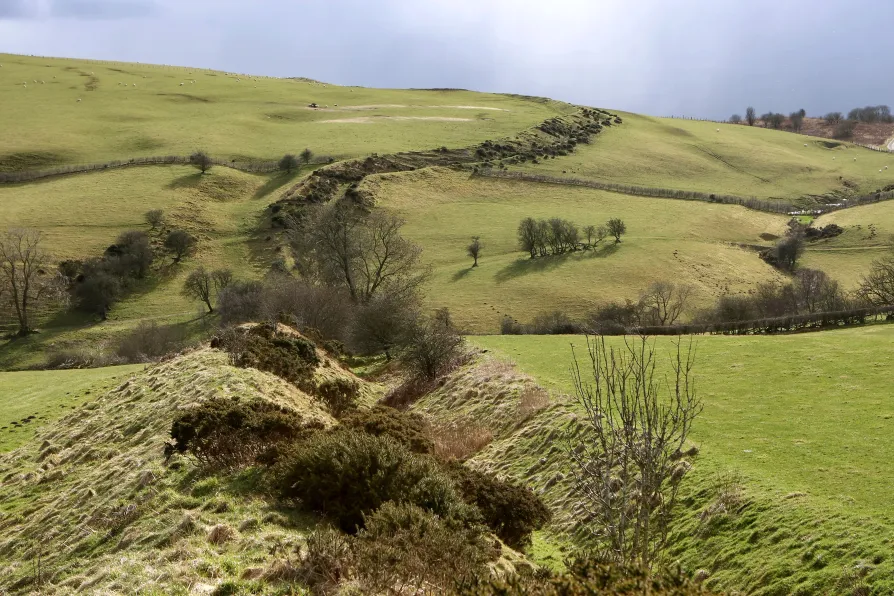
In his fortnightly Borderlands column, MARK SEDDON visits overgrown forts along Offa’s Dyke and reflects on wars past and present