US Justice Department says the ‘reporters are not the targets, those leaking classified information are’. But media freedom advocates warn that Trump's ‘war on the press is looking for another victim’


 Latest editorial
Leaders gather for 38th African Union summit
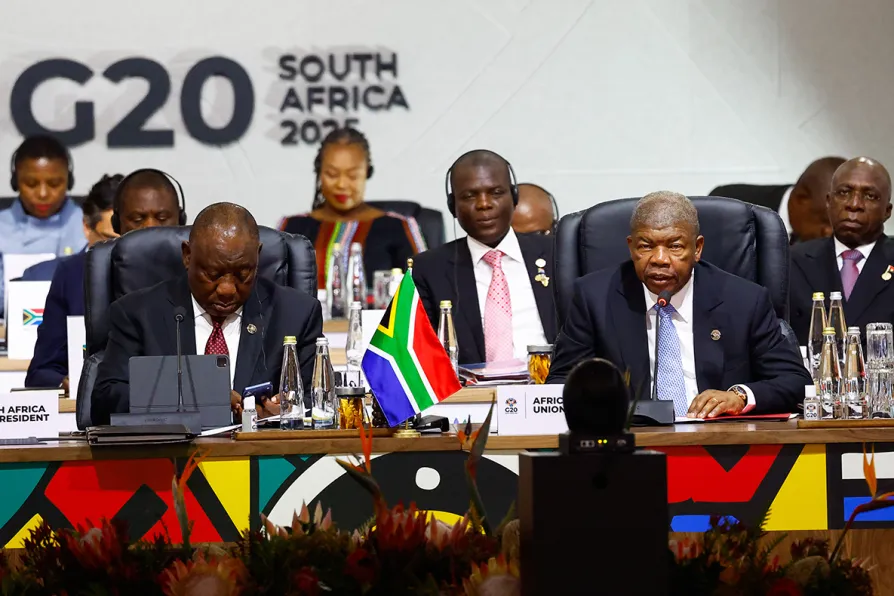 South African President Cyril Ramaphosa and Chairperson of the African Union Joao Lourenco attend a plenary session on the opening day of the G20 Summit, in Johannesburg, South Africa, November 22, 2025





LEADERS of the African Union (AU) gathered for the organisation’s 38th annual summit today.
The meeting comes at a time of a climate emergency, famine, Western proxy wars and coups across the continent.
Formed in 2002, the 55 members of the AU are often on opposing sides of the conflicts. This has contributed towards a reluctance of African leaders to hand any real enforcement power to the AU that could constrain their action, leaving the body underfunded and under-equipped.
Its chairman, Mahmoud Ali Youssouf, is reduced to expressing “deep concern” over the continent’s endless crises, such as the conflicts in Sudan, South Sudan and the Democratic Republic of Congo and the 10 military coups in Africa since 2020.
A recent report by the International Crisis Group said: “At a time when the AU is needed the most, it is arguably at its weakest since it was inaugurated.”
But the AU points out that its work stretches far beyond conflict, with bodies doing valuable work on health, development, trade and much more.
Spokesman Nuur Mohamud Sheekh said its peace efforts went unnoticed because they were measured in conflicts that were prevented.
He said: “The AU has helped de-escalate political tensions and support dialogue before situations descend into violence,” including the work done to prevent war between Sudan and South Sudan over the flashpoint region of Abyei.
A key thread of the conference will be the impact of US trade, foreign aid and immigration policies on the continent.
The slashing of foreign aid by US President Donald Trump, sweeping changes to immigration and his overhaul of trade policy, including the threat of unprecedented tariffs, have all had an outsized impact on Africa.
Even as it threatens the continent, the Trump administration has still sought to set African nations against each other by forging new bilateral agreements with compliant countries, focused on resources and strategic military interests.
The Centre for Global Development (CGD) has assessed that the current US foreign aid cuts could lead to 500,000 to 1 million deaths annually.
In a December report, the CGD said the evidence of Trump’s aid cuts could be seen through increases in malnutrition mortality in northern Nigeria and Somalia, food insecurity in north-east Kenya and malaria deaths in northern Cameroon, among others.
