JAMES NALTON argues that Curtis Jones’s departure leaves Liverpool facing a stark local void as the club’s roots are increasingly swallowed by football’s globalised model



Kelly’s ascent reflects the grit of his hometown
From Wearside streets to rings worldwide, the boxer’s journey embodies resilience and the relentless spirit of his city, writes JOHN WIGHT
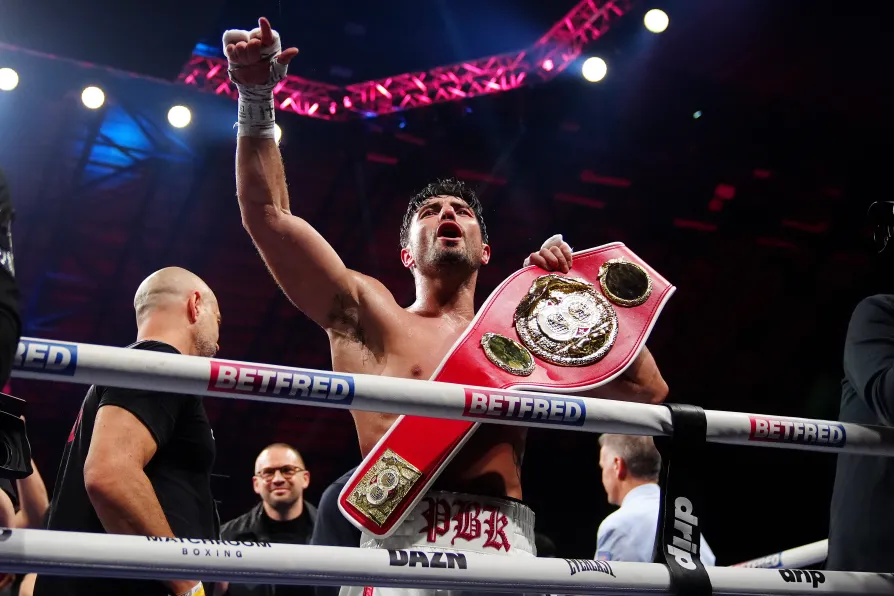
 Josh Kelly celebrates defeating Bakhram Murtazaliev after their IBF World Super Welterweight bout at Utilita Arena, Newcastle, January 31, 2026

As antisemitism spread across Europe and the United States in the 1920s and 1930s, Benny Leonard and Jack ‘Kid’ Berg became symbols of hope and resilience, writes JOHN WIGHT





THERE are places across Britain whose identity is so steeped and immersed in the history of the working class that they remain beacons of such, regardless of the passage of time. One such place is the city of Sunderland, located in the unforgiving north-east, where it abuts the mouth of the River Wear, providing easy access to the North Sea.
Due to its location, in its industrial heyday in the mid-19th century Sunderland’s shipbuilding industry was the largest in Britain, producing a full third of all ships built. Thousands of men were employed there, skilled shipbuilders, feeding a local economy that was as buoyant as it was stable and secure.
During WWII Sunderland’s port was a key target of Hitler’s Luftwaffe, due to its role in producing some 30 per cent of Britain’s merchant ships. Nowadays, Sunderland is a growing hub of advanced manufacturing, low-carbon energy projects, and digital technology. In other words, Sunderland in 2026 has evolved into a reinvented and reconfigured model of supposed progress in this digital and all things green age.
But regardless of the shifting sands of economic life over time, there are some things that never change. And when it comes to those British towns and cities with an entrenched working class history and identity, such as Sunderland, those things include a passion for football and boxing.
When it comes to boxing, Sunderland and Britain’s current bona fide star is Josh Kelly, who recently separated the fearsome punching IBF super-welterweight champion Bakhram Murtazaliev of his title by majority decision in Newcastle. The fight on January 31 was a classic back and forth barnburner, during which both men touched the canvas once, before Kelly emerged in the end with the belt deservedly around his waist and his reputation and status significantly enhanced.
Trained by one of Britain’s finest in the person of Adam Booth, the dignified manner in which Kelly conducts himself and his business marks him out as a throwback. This to a time when bombast, histrionics, and social media stunts by fighters more interested in ploughing the furrow of sensationalism than professionalism would have been regarded as anathema.
As an amateur, Josh fought out of Sunderland’s renowned Houghton and District Amateur Boxing Club. He represented his country — both England and Britain — starting way back in 2012, when he took a bronze at that year’s Youth World Championships in Armenia. His storied journey in the amateur ranks culminated in his appearance at the 2016 Rio Olympics for Team GB, where he lost to the eventual gold medallist Daniyar Yeleussinov of Kazakhstan.
Turning professional a year later in 2017, he has had 20 fights to date, winning 18, drawing one with one loss. That loss came against the formidable Russian-Armenian David Avanesyan back in February 2021. Josh Kelly’s career has been, based on the aforementioned, nothing if not a monument to tenacity, determination and resilience. It is why his world title victory on January 31 could not have been more deserved or satisfying for those who have come to be repelled by the game’s descent into the realm of cringe in recent years.
And speaking of which, if ever a world title was available to be won on the basis of cringe, look no further than John Fury, father of two-time heavyweight champion Tyson Fury. This past week saw him storm around Tottenham Hotspur Stadium, roaring and shouting and threatening all and sundry like a man in clear need of a padded cell. The occasion was the opening press conference to promote Tyson Fury’s latest comeback fight against Arslanbek Makhmudov of Russia.
This particular fight is set to unfold at the same venue, Tottenham Hotspur Stadium, on April 26. However the real story of the presser was John Fury’s antics. The main object of his ire was former world champion Carl Froch, whom he accused of “talking shit” about him on his popular podcast, Froch on Fighting. Froch was in attendance at the venue doing media, and the sight of Fury pointing his finger and screaming at Carl Froch from a safe distance predictably has set tongues awagging.
It was an embarrassing spectacle, all told, but where John Fury is concerned just another of the litany of same he has been involved in over the years. Revelling, clearly, in his status as the father of Tyson Fury, he has asserted the right to go on the rampage at will. While there are those who will find his regular outbursts amusing and entertaining, they do nothing for either his or the sport’s reputation.
In top flight boxing there has long been a John Fury for every Josh Kelly, and vice versa — men of enormous temper co-existing alongside men of commendable temperament. This is perhaps one of the reasons why the female side of the sport has grown in popularity and demand in recent times.
A fighter’s life is a hard life, with no two fighters exemplifying this truism than Nottingham’s Leigh Wood and Leeds fan favourite, Josh Warrington. When they last crossed paths in the ring in Sheffield in 2023, you could almost hear the ground shake, such was the sheer battle of wills that ensued. This weekend they go again in Nottingham — on Saturday February 21, to be precise — in what will be a difficult watch for those who believe that both should have retired by now, due to nothing more than miles on the clock.
Both super featherweights have, unsurprisingly, dismissed such doom-laden opinions, adamant that they are still capable of one more dance. Their respective bank managers and the tax man no doubt agree.
As ever and as always, time will tell.
