
ROB WARZYNIAK wades knee deep through a pile of ‘dead canaries’ of Trumpist policies which exacerbated the horrors of US capitalism domestically


Jailing Murrell is not enough — Scotland needs to lift the curse of Sturgeonism
KENNY MacASKILL says the lines between party, government and Civil Service in Scotland have been blurred and we need a thorough investigation into how
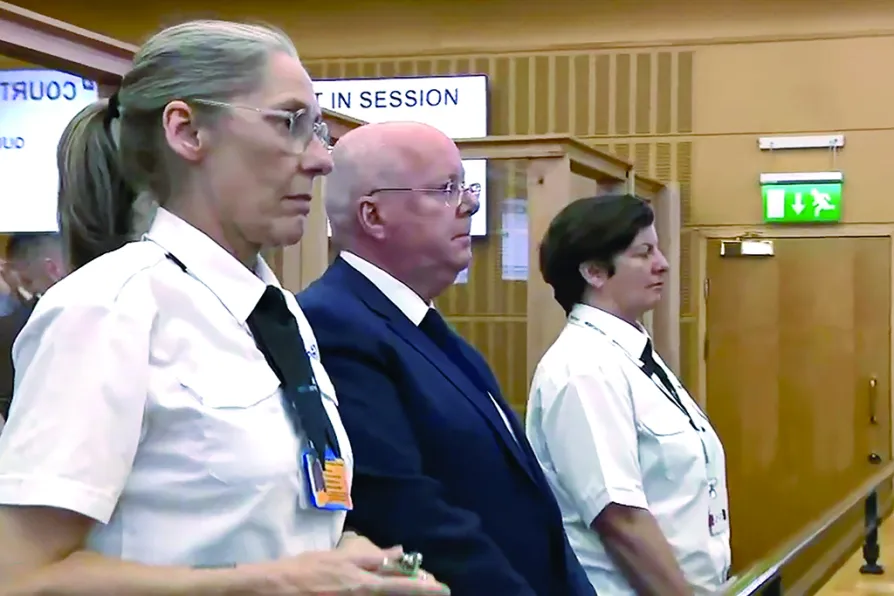
 Peter Murrell being jailed at the High Court in Edinburgh
Without evidence or Nato consultations Berlin’s answer to the Leipzig incident is a rupture of relations. SEVIM DAGDELEN examines why
FRANCISCO DOMINGUEZ introduces the background to a conference on defending Latin America’s sovereignty
The glacier collapse in Nepal is yet another warning that a warming planet is making Himalayan disasters more frequent and destructive – but the countries facing the greatest risks are often those least responsible, says LI YANG
Nick Blair is set to benefit from a hugely lucrative contract to ‘virtually’ train the British army for its next war. Like father, like son, writes SOLOMON HUGHES
Even when tragedy strikes, Western media cannot resist the opportunity to turn it into a sordid propaganda opportunity, as the Nepal-China border tragedy shows, writes CARLOS MARTINEZ
Trade unions should be at the heart of the anti-racist push for reparations for the historic legacy and continuing impact of slavery, writes ROGER McKENZIE





THE cell door has slammed shut on Peter Murrell but the SNP embezzlement saga runs on. Nicola Sturgeon was not charged with any crime but certainly wasn’t exculpated. She’ll be tried in the court of public opinion where a defence of “I didn’t know” has already been found wanting and her actions of “no commenting” throughout a lengthy police interview were in stark contrast to claims of candour.
The SNP will have the funds taken returned from Murrell’s assets though independence campaigners who contributed to a “ring-fenced fund” will be left bereft.
But the real loss has been suffered by Scottish state institutions which have been tarnished, if not compromised, both in this sorry saga and more widely under Sturgeon’s tenure. For her autocratic style of rule has had consequences for the perception, if not role, of the independence of vital public agencies.
The Civil Service, the Crown Office and Prosecutor Fiscal Service (COPFS) and Police Scotland have all been implicated in their conduct in the investigation, and in other actions relating to or for her.
As with the SNP embezzlement it was a few individuals at the top rather than the organisation and staff more widely. But given their position and profile, the impact is upon the totality of the organisation.
That is Sturgeon’s real crime of running a government where agencies which were rightly and necessarily independent of government have been or at least appeared compromised.
Organisations which, while always seeking to support the administration, of whatever political hue, act independently and in the wider state interest. The actions may not have been as flagrant as Trump’s in the United States, or even as pernicious, but the damage to perceived impartiality and public duty is the same.
Having a lifetime in Scots law and politics, as well as having served for nearly eight years as Scottish justice secretary, I know the institutions and even many of the individuals well. I am therefore well sighted to see and lament what I was rightly proud of being corroded and tarnished.
I served in the first ever SNP administrations at Holyrood, something which the both the voting system and arguably even the Parliament had been designed to ensure wouldn’t happen.
Yet the behaviour of the Scottish Civil Service was exemplary. Staff were not only supremely able but very supportive, always though pointing out both potential difficulties and what couldn’t be done legally or otherwise. It was sound advice which I benefited from and welcomed.
A new permanent secretary was appointed during my tenure and was in office during the independence referendum. Sir Peter Housden came up from a UK department but was one of those “Rolls Royce” officials whose ability and neutrality was unquestioned.
Under Sturgeon, Leslie Evans was appointed to the post with many questioning her suitability for the post. Her performance in office shamed the Civil Service. Her errors in the Alex Salmond case saw the administration slammed in court by Scotland’s now most senior judge as illegal, unfair and tainted with apparent bias. Expenses alone amounted to over half a million.
Rather than atone, let alone resign, Evans stated that whilst the battle had been lost the war had not. They were not the actions of an impartial civil servant.
The Crown has similarly been compromised. The office of Lord Advocate is an anachronism being both the Scottish government’s senior legal adviser as well as the nation’s chief prosecutor. A conflict of interest if ever there was one — but which arose from the annals of history when the office ran Scotland before the post of Secretary of State was created.
It should have been and must be split. Salmond did what he could within the Devolution Act powers by having the Lord Advocate only attend cabinet for matters relating to law. Sturgeon ignored that and reverted back.
For sure James Wolffe the then Lord Advocate was not directly involved in Salmond’s prosecution, but he was advising committees of civil servants involved in the civil case.
Lines were crossed and that has continued with his successor seeming to brief government on what was happening with Murrell’s prosecution. Some information to government is essential but who and what should be made public matters and is another reason for an inquiry.
Similarly Police Scotland became embroiled. With Murrell there appears to have been the chief constable advising Sturgeon of his imminent arrest and allowing for her stepping down before it happened.
As with the Crown some advance information is legitimate. But what and when, along with a declaration that it was done, is appropriate in this case. That has not been provided any more than has an explanation for the police resource used in the Salmond prosecution.
Over 400 witnesses interviewed and more than 600 statements taken. An extraordinary amount for a case which saw him acquitted on all charges and with many if not most of the charges of a level which would not have merited any investigation, let alone what transpired.
Sadly, if not shamefully, there appears to be little recognition of that either by the SNP government or by those holding those senior offices in those institutions even now.
Sturgeon’s successors as first minister have failed to act even on such blatant perversities as the dual role of the Lord Advocate. At the head of those services its business as usual and “there’s nothing to see here” when there clearly is.
It’s why there need to be inquiries into what went on and not just with the SNP finances.
There must be atonement and an expunging of “Sturgeonism” with its autocracy and the breaking of the walls between state agencies and government administrations.
Until then the curse of Sturgeon will continue seeing a few individuals brought down, hamper vital civic institutions and, most damagingly of all, undermine faith in Scottish democracy and its apparatuses of state.
Kenny MacAskill was Scottish justice secretary from 2007-14, and served in the Scottish Parliament from 1999-2016 and the British Parliament from 2019-24.

Similar stories

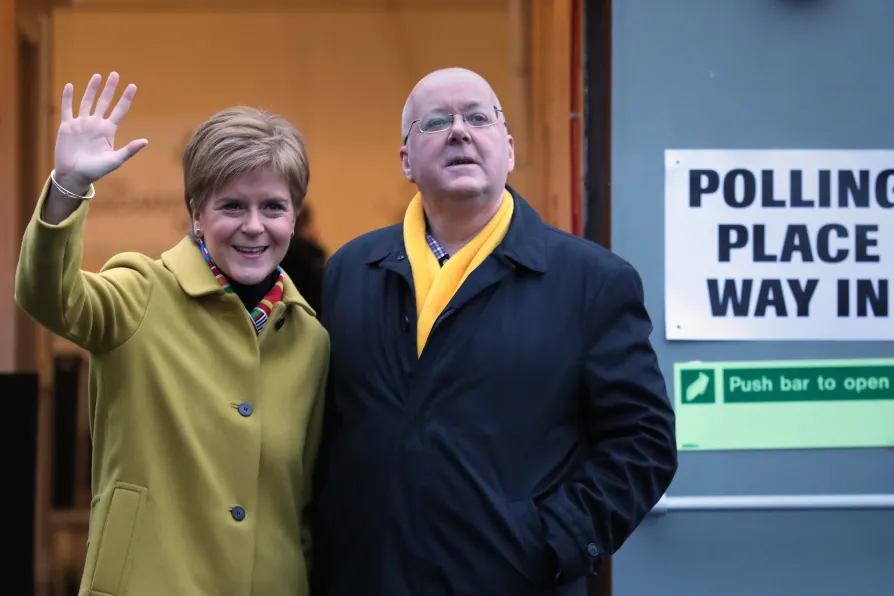
KENNY MacASKILL looks at the depth of the corruption tolerated within the Scottish National Party and the efforts to keep it from public scrutiny

Building is the solution for much of our housing crisis – and will also help to address poverty, ill health, and even anti-social behaviour and alienation, writes KENNY MacASKILL