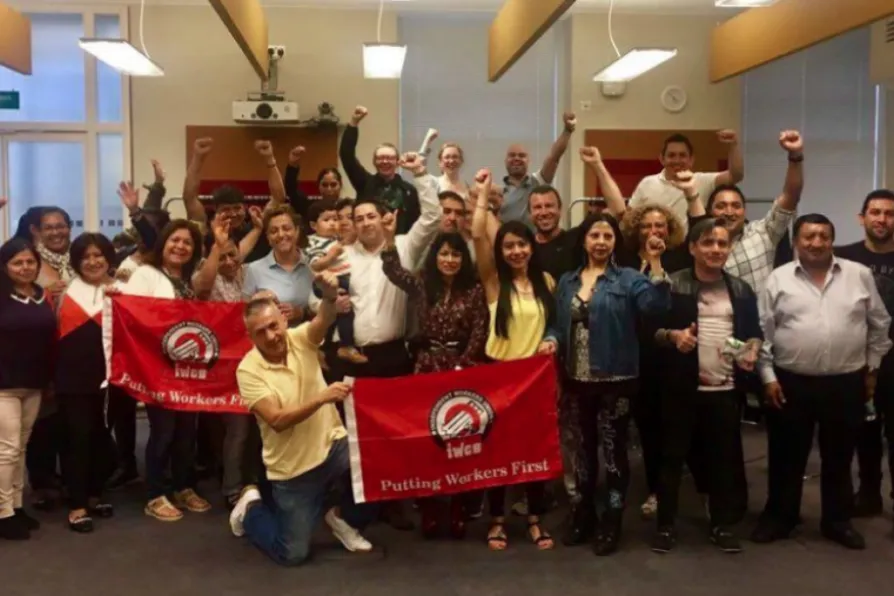
 IWGB University of London branch
[IWGB]
IWGB University of London branch
[IWGB]





THE INDEPENDENT Workers Union of Great Britain (IWGB) is bringing a landmark legal action which could introduce the concept of a “joint-employer” to English law, the union announced today.
The IWGB filed a claim for judicial review at the High Court yesterday, challenging an earlier decision by the Central Arbitration Committee (CAC) which held that outsourced workers were not entitled to collectively bargain with the University of London.
The union has been supporting the university’s outsourced workers in their campaign to be brought back in-house since September.

![IWGB union members protest outside Take-Two House, Rockstar's offices in London, [Pic: IWGB]](https://msd11.gn.apc.org/sites/default/files/styles/desktop/public/2026-07/img-96d2d96e-1fda-4b3c-aa23-b4e13b42587a.jpeg.webp?itok=QPz0DRyK)
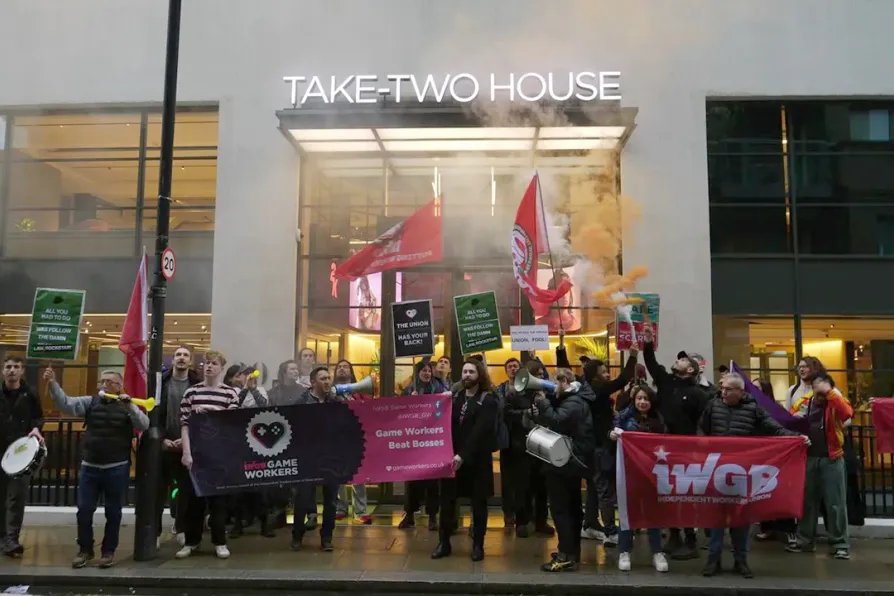
Strike Map co-founder HENRY FOWLER discusses the significance of today’s joint union letter to video game giant Rockstar, demanding trade union recognition for its workers. Their conversation highlights how our movement can harness its collective power to rebuild union power across the private sector

The new Employment Rights Act is a step forward, but restoring collective bargaining and union power remains essential to tackling insecurity, outsourcing and low pay, says PAUL WHITEHOUSE