Latest editorial
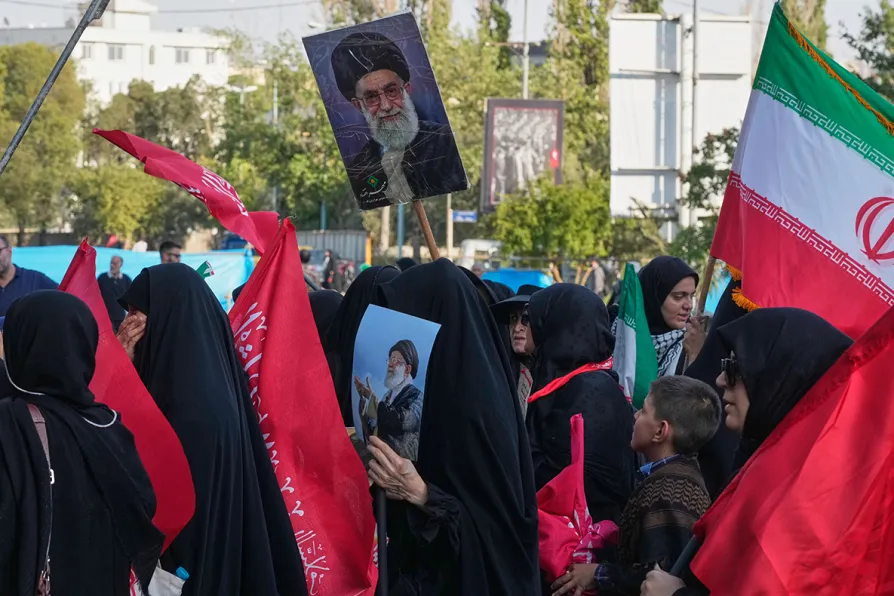
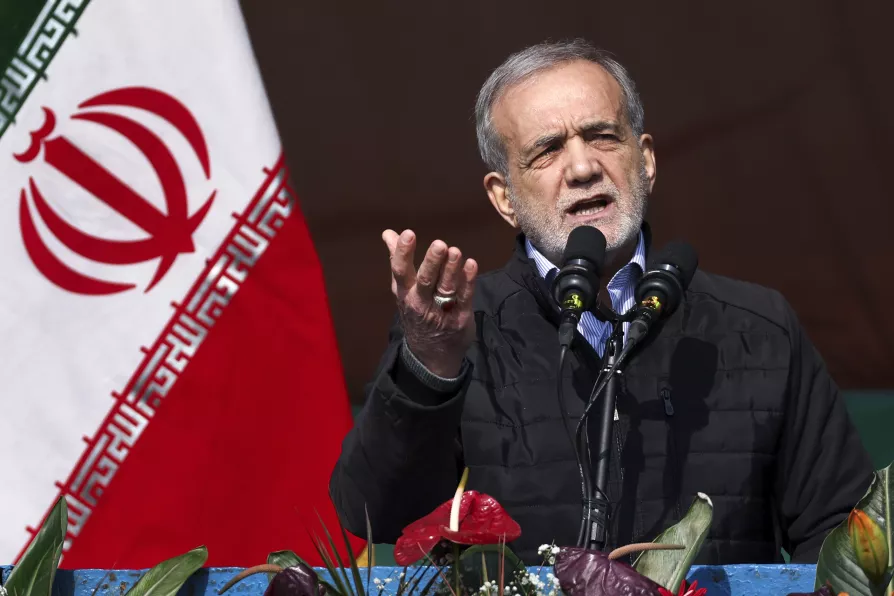 In this photo released by the Iranian Presidency Office, President Masoud Pezeshkian speaks during a rally





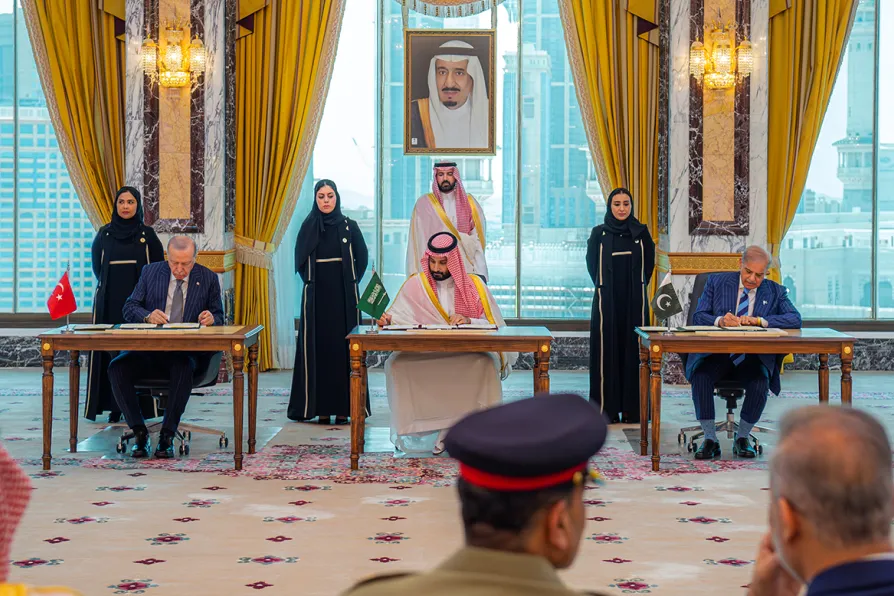
IRAN said today it is reviewing an invitation to join Pakistan, Saudi Arabia and Turkey in a joint defence agreement.
In an interview with Al-Mayadeen, Mehdi Rahimi, the head of the Iranian Parliament’s official news agency, said Iran was considering the proposal to join what has become known as the “Mecca Pact.”
Mr Rahimi also praised the “efforts of states in west Asia to create a regional security umbrella,” saying Iran has long advocated such an initiative.
The announcement comes days after the United States threatened to squeeze Iran’s economy, aiming at regime change in Tehran.
Iran responded on Saturday that it would retaliate against any country supporting Washington’s “economic war.”
Mohsen Rezaei, the new secretary of Iran’s Supreme National Security Council, told state broadcaster IRIB Iran was appealing to all countries around the world, including its neighbours, not to join the US blockade.
“Any country that takes part in imposing economic restrictions on us will be regarded as an enemy,” he said, warning of a “seismic” retaliation.
Mr Rezaei described Iran’s strategy as a three-stage sequence, starting with talks to de-escalate tensions.
“Of course, we will first negotiate with them. We will hold talks and tell them to step aside and distance themselves from the US. But if they do not act, we will strike. We will target that country’s interests,” he said.
But Iranian President Masoud Pezeshkian held the door open to a diplomatic solution to end the conflict that was launched by the US and Israel on February 28.
Mr Pezeshkian defended the Memorandum of Understanding (MoU) agreed with the US in June as the best way out of what he described as a situation of “neither war nor peace.”
“There is not a single provision in this agreement that amounts to capitulation,” President Pezeshkian said in a speech published by the IRNA network early on Sunday.
He added: “The supreme leader sets the policies and we will follow that path.”
The MoU set a 60-day deadline for ending the war with Iran and reaching an accord on its nuclear programme.
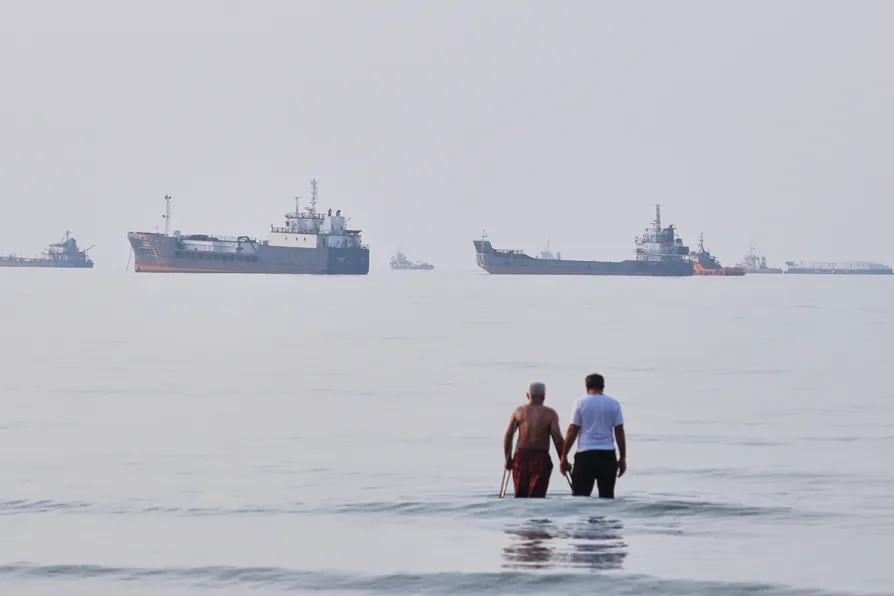
That period ended last week, but no signs of compromise have emerged, especially on the crucial issue of reopening the Strait of Hormuz, vital to global shipping.