

 Latest editorial

JOHN WIGHT tells the story of legendary Cuban boxer Teofilo Stevenson, the fighter who refused to be bought and became a national icon
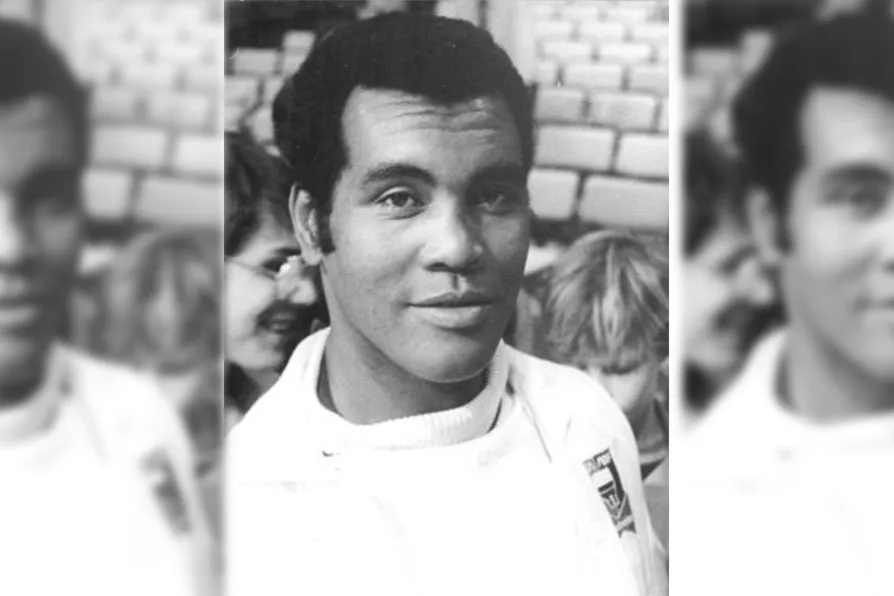





“WHAT is one million dollars compared to the love of eight million Cubans?”
These were the words of the legendary Cuban amateur heavyweight Teofilo Stevenson, which he spoke in response to a lucrative offer to turn pro and fight Muhammad Ali after the Montreal Olympics in 1976. They are words that remain every bit as powerful a testament to the nature and character of the Cuban Revolution today as they did when originally spoken over five decades ago.
Teofilo Stevenson — who died in 2021 aged 60 — dominated world amateur heavyweight boxing in a career that spanned 14 years and three Olympic Games. He returned to Cuba on each occasion with a gold medal to make him one of only three boxers to achieve this remarkable feat in the history of the Games, among them fellow Cuban Felix Savon.
Adding to his exemplary haul of three Olympic gold medals, Stevenson also won three World Amateur Boxing Championship titles and a further two golds at the Pan American Games. All of this before announcing his retirement in 1986 at age 34.
Born in 1952 and brought up in Cuba’s fourth largest city Camaguey the son of immigrant parents, Stevenson’s future as a fighter was all but mapped out. His father had been a boxer, fighting seven times before retiring in dismay at the corruption that was endemic in sport in pre-revolutionary Cuba.
His parents genetically endowed Stevenson with the physical attributes required to succeed in the ring. Indeed, developing an early love of boxing, it wasn’t long before a pre-pubescent Stevenson was making regular trips to the open air gym where his father once trained in his hometown of Camaguey.
It was there, in Camaguey, that he was taken under the wing of former Cuban light heavyweight champion, John Herrera.
During the mid-sixties, Stevenson’s development under Herrera progressed rapidly after winning a junior title. It brought him to the attention of Cuba’s newly created state sponsored boxing school. Headed up by former Soviet-Russian champion, Andrei Chervonenko, the school would mark the beginning of Cuba’s outstanding achievements in the sport, earning the country the world-renowned status it still enjoys in amateur boxing to this day.
When the 20-year-old Stevenson stepped into the ring to mark his Olympic debut at the 1972 games in Munich, Cuba hadn’t won an Olympic gold medal since 1904 — and that had come in fencing. By 1972 the Olympic heavyweight boxing gold medal was felt to be the property of the United States as if by right.
Joe Frazier had taken the gold at the 1964 Games in Tokyo and George Foreman did likewise at the 1968 Games in Mexico City (Cassius Clay’s gold medal at the 1960 Games in Rome had come in the light heavyweight division).
The US heavyweight representative at the Munich Games was Duane Bobick. Bobick was considered the favourite after taking the gold medal at the Pan American Games in 1971, during which he handed the still developing Stevenson a rare defeat.
The stage, then, was set for a rematch when they were drawn in the third round of the Munich Olympics a year later.
At six-three and 215lbs, Bobick was known as a hard puncher. He had arrived in Munich after defeating among others, at home, future heavyweight professional champion, Larry Holmes.
The fight between the American and Cuban lasted three rounds and was to be one of the most brutal of Stevenson’s career.
After a closely fought first round, Bobick came out in the second on the front foot, managing to pin Stevenson back against the ropes, where he attacked him with ripping body shots and vicious hooks and right hands.
But, no matter, Stevenson’s strategy of allowing his opponent to punch himself out paid off, as by the end of the round Bobick had nothing left in tank.
In the third and final round, the Cuban handed his more prestigious US opponent a boxing lesson that he and the world watching would not soon forget.
Utilising a punishing array of jabs and overhand rights, Stevenson proceeded to punch Bobick all over the ring. Such was the big Cuban’s dominance in the third round that Harry Carpenter, commentating on the fight for the BBC, excitedly proclaimed that “the legend of Bobick is absolutely being destroyed here!”
The fight ended after Stevenson put Bobick down on the canvas three times in the third and the referee stepped in to stop what by now was one-way traffic, earning Stevenson, and Cuba, a famous Olympic victory.
Describing the Cuban’s emphatic victory over his US opponent in his book The Red Corner — A Journey Into Cuban Boxing, author John Duncan later wrote: “It was a beautiful moment for Cuban sport, one in which you could sense a whole century of inferiority complexes melting away.”
Four years later and Stevenson again swept all before him at the Montreal Olympics of 1976. Once again he faced a US opponent — this time in the shape of John Tate — in the semi-final. Stevenson comfortably dispatched him with a first round knock out. In the final Romania’s Mircea Simion lasted three rounds against the Cuban before his trainer threw in the towel to prevent him taking any further punishment.
The US team boycotted the 1980 Games in Moscow in protest against Soviet intervention in Afghanistan. Regardless, there seems little doubt Stevenson would still have claimed his third Olympic gold even if the US team had taken part. Yet rather than bemoan another opportunity for glory, Stevenson announced his support for the boycott, describing it as an “act of solidarity.”
Upon retiring from the ring, Stevenson maintained his passion for the sport in his role as vice-president of the Cuban Boxing Federation. It was in this role that in 1999 he was involved in an altercation at Miami International airport on the way home with the Cuban team from an international tournament.
Stevenson retaliated after he and the rest of the team were subjected to insults and verbal abuse from a group of anti-Castro Cuban emigres. Stevenson was arrested, released on bail, and immediately returned to Cuba. He later refused to return to Miami for the resulting court proceedings.
A bona fide boxing legend, Teofilo Stevenson stood and still today stands apart as a man of immense pride and dignity. It dictates that his is a legacy that is guaranteed to endure.
