

 Latest editorial
Gap-year scheme is ‘first step towards conscription’
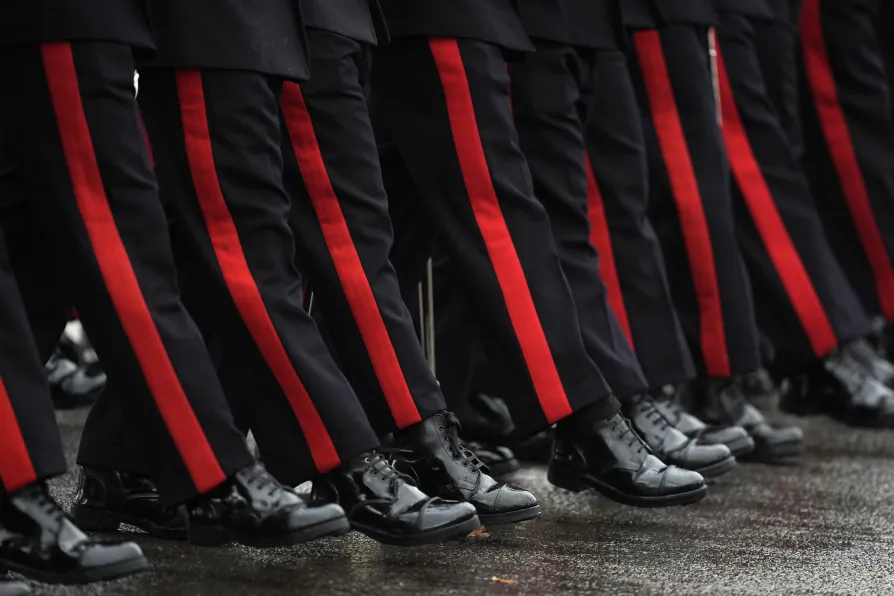






NEW gap year-style schemes by the Ministry of Defence (MoD) are a step towards military conscription, peace campaigners warned yesterday.
The two-year placements are said to be part of a new “whole-of-society” approach to defence.
Defence Secretary John Healey told the i paper that they would “give Britain’s young people a taste of the incredible skills and training on offer across the army, Royal Navy and RAF … I want the outstanding opportunities on offer in our armed forces to be part of that conversation in homes across the UK.”
The government confirmed that about 150 under-25s will be recruited for the pilot programme next March, with plans to expand intake to more than 1,000 per year.
It comes after the chief of the defence staff, Air Chief Marshal Sir Rich Knighton, said Britain’s “sons and daughters” should be “ready to fight” and called for a “whole-of-society” effort to defend the country in the face of Russian aggression.
Stop the War convener Lindsey German said: “This is the latest in the growing fervour for war and the thin end of the wedge for conscription — as is already happening in France and Germany — at a time when unemployment is rising, living standards are slashed and public services are in ruins.
“The trade union movement should stand firm in rejecting it.”
France, Germany and Belgium introduced national service schemes this year.
Former Labour leader Jeremy Corbyn MP said: “Instead of gearing this country and our young people up for war, the government should be investing in a future of sustainability and peace.
“Why can’t the government offer gap year-style schemes in care work, nature restoration or the arts? That is that way to strengthen intergenerational bonds, protect the planet and give hope to young people that a greener, peaceful and more caring society is possible.”
Under the current plans, the army scheme involves 13 weeks of basic training as part of a two-year placement.
The navy scheme would last one year and reportedly provide “profession agnostic” training for sailors, while the RAF’s scheme is less developed.
Pay is not known and the programmes will not involve deployment to active operations or an obligation to stay in the military after completing the scheme.
Yesterday a former 7th Parachute Regiment Royal Horse Artillery soldier told the Morning Star that even soldiers may be reluctant to fight a war that posed the risk of nuclear retaliation.
Craig Hollman, who served in conflict zones across the world with the 16th Air Assault brigade, said: “It’s hard to say for what people think but when you’re serving you want to serve and get on operational duty.
“A war with possible worldwide destruction … would armed forces be up for that? I don’t know.”
He added the scheme could be a way for the government to artificially inflate military recruitment figures “on the cheap.”
“There is a chance of boosting the number of trained personnel without spending the salary on full time soldiers … 10, 20 thousand basic-trained personnel without having to pay full-time salaries, kit and equipment.”
Mr Hollman, who runs a YouTube channel commenting on the military and politics, has said the government could “frame Russia as an enemy” to enforce emergency legislation for a form of mandatory national service.
The army currently offers a one-year internship scheme, formerly known as gap-year commissions, for young people before, during or immediately after university.
Some 30 places are available but fewer than 10 people were enrolled in 2024/25.
The internship is also only available for those considering officer training, while the new gap year scheme is expected to be open more widely.
In June, the government said that Britain should take inspiration from an Australian model that offers a gap year scheme for its military for those aged between 17 and 24.
In 2023, 664 people enlisted in the Australian scheme, with a little more than half going on to a permanent role in the country’s defence force.
Ministers argued that a shorter-term option could make engagement with the military more appealing to women and people from black and ethnic minority backgrounds.
