DOUG NICHOLLS says the parasitic finance markets must be challenged or another British government could be toppled


 Latest editorial

Giving Wales’s young people a fighting chance
KIERA MARSHALL says there is a gulf between the privileged circles in which most politicians move and the lives of working-class youth in left-behind estates – and as a newly elected Senedd member she’s determined to do something about it
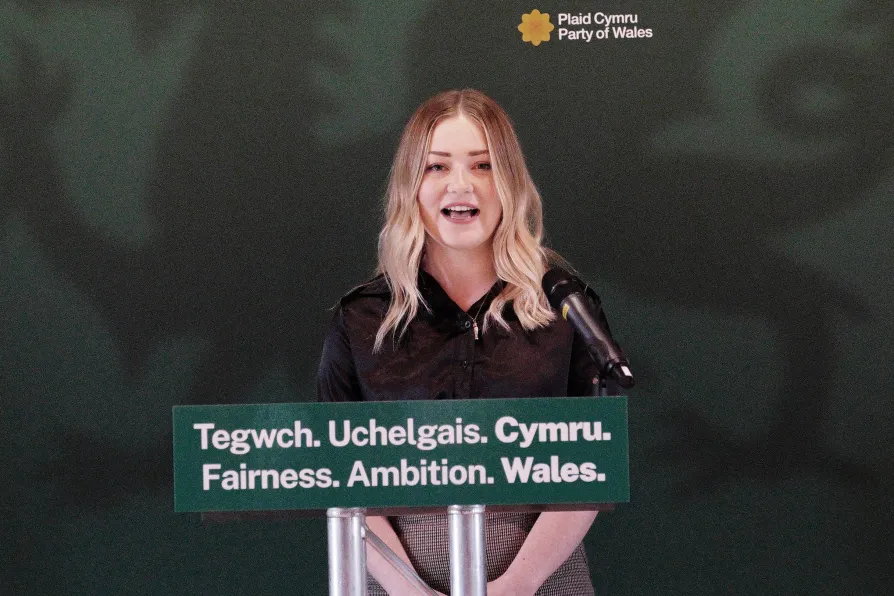 OFFERING HOPE: Kiera Marshall

The late country singer’s Imagination Library has put hundreds of millions of books into children’s hands. We should build on that legacy by defending the libraries at the heart of our communities, says BRENDA AITCHISON
Deprivation is a fundamental factor in criminal behaviour that must be addressed but, KENNY MacASKILL argues, there needs to a major rethink in sentencing to tackle overcrowding
MML director MEIRIAN JUMP outlines the recently refreshed library’s busy autumn schedule that ranges from book sales, archival exploration, community work with online education and the ever popular site tours
Some thinkers and authors on the right are openly discussing the possibility that the historically successful party of the British ruling class may be exhausted
Class struggle is the motor of history but the direction and detail of change at any time and place is the outcome of many factors, suggests the Marx Memorial Library and Workers’ School
TONY BURKE surveys the shifting political landscape and the challenges Labour needs to address if it is to prevail in the 2028 federal elections





AS I write this article, it is 28 days since I was elected as a Plaid Cymru Member of the Senedd for Caerdydd Penarth. It is also just over six weeks since my 28th birthday.
I am both a 28-year-old woman with a nine-month-old-baby and an elected politician. I know too well that these two things do not often coincide.
I am also aware that I am significantly younger than what many people would expect for a politician. The fact that the average age of the last Senedd is around 55 years old is exactly why I decided to run for election.
Our Senedd members should reflect the Wales they seek to represent. While the ultimate goal of the Senedd should be to deliver good policy that improves people’s lives, these two principles are not mutually exclusive. In fact, I believe better representation of those who are often unheard in politics leads to better policymaking.
Studies have shown that increasing the number of women in politics leads to greater attention being paid to issues that directly affect women and better outcomes, for example. It is in this context that I am proud to be one of the 26 women within the 43-strong Plaid Cymru Senedd Group.
But as a young politician specifically, I am determined to give people my age a voice, and to represent the issues we face.
That’s why, during my first Oral Question in the Senedd Chamber, I decided to focus on the lack of opportunities facing young people across Wales.
Wales has seen consistently high proportions of 18 to 24-year-olds not in education, employment, or training, which in turns limits their life chances and holds back our economy, and then leads to young people leaving Wales and their communities because of a lack of opportunities.
Some of these young people have been my friends and neighbours. They deserve someone to fight for them – and I am proud to now be in a position to do exactly that.
This belief in representation is rooted in my own experience. Politics does not usually look like me, and it certainly hasn’t understood me.
Raised on the Hill
After my parents separated at the time of the financial crash in 2008, I spent my formative years growing up in a council estate, Townhill in Swansea – against the backdrop of Tory-imposed austerity that followed. As I got older, I became increasingly aware of the poverty and challenges facing my community.
What I was most aware of, however, was the stigma attached to Townhill. I saw it in how people at school spoke about where I lived. Even now, people make disparaging comments online about the area where I grew up and sometimes do the same to my face.
My mum used to get infuriated when people described our area as “rough.” Whenever my friends used that word, I would repeat what she always said: “It’s not rough; it’s poor. Say what you mean.”
What has shaped my politics has been the contrast between my own experiences and the privilege I encountered elsewhere, first among school friends and later at university.
During my time at the London School of Economics I became acutely aware not only of the wealth inequality between Swansea and London and between Wales and London, but of the difference between myself and my peers. I grew up next door to a baker on one of Wales’ oldest council estates. Suddenly, I was sharing halls with students whose parents owned hobby planes or even private jets.
I attended LSE during the Brexit referendum. My life there felt like a liberal remain bubble — a world away from the problems my community faced back home, with Townhill plastered with Ukip placards.
Now, as a newly elected Member of the Senedd, I cannot help but contrast my new reality with the reality facing many of the people I met on the campaign trail in Caerdydd Penarth. People struggling with the cost of living and pressures of daily life.
For too long, our Senedd and our political institutions have been detached from the people they are supposed to serve.
Growing up, I felt my estate was ignored, forgotten, and left behind. We barely received political leaflets, let alone visits from politicians outside of election time.
I am determined to do things differently.
Community outreach
My focus will be on the communities and people in my constituency who need politics most. I want to bring the realities of communities such as Butetown and Ely and the voices of local people directly to the Senedd chamber.
And in focusing my efforts on community outreach, while acutely aware of the extreme wealth inequality that exists across Cardiff – I have pledged to donate part of my salary to organisations working in the areas of my constituency that need support most.
So, while Reform Senedd members are distracted by culture wars and continually prove themselves to be entirely detached from the realities of poverty and deprivation faced by so many people across our communities; the severity of what people in Cardiff are facing is not lost on me.
Yes, campaigning with a young baby was difficult, spending many hours away from her. But I am so glad that hard work and sacrifice paid off.
Caerdydd Penarth now has an advocate in me that understands all too well the real challenges facing everyday people, and Wales now has a Plaid Cymru Government committed to tackling the cost-of-living crisis and child poverty – to give our young people a fighting chance, and ensure no community is left behind.
Kiera Marshall is Plaid Cymru Member of the Senedd for Caerdydd Penarth, and addressed the Morning Star Wales conference at the weekend.
