


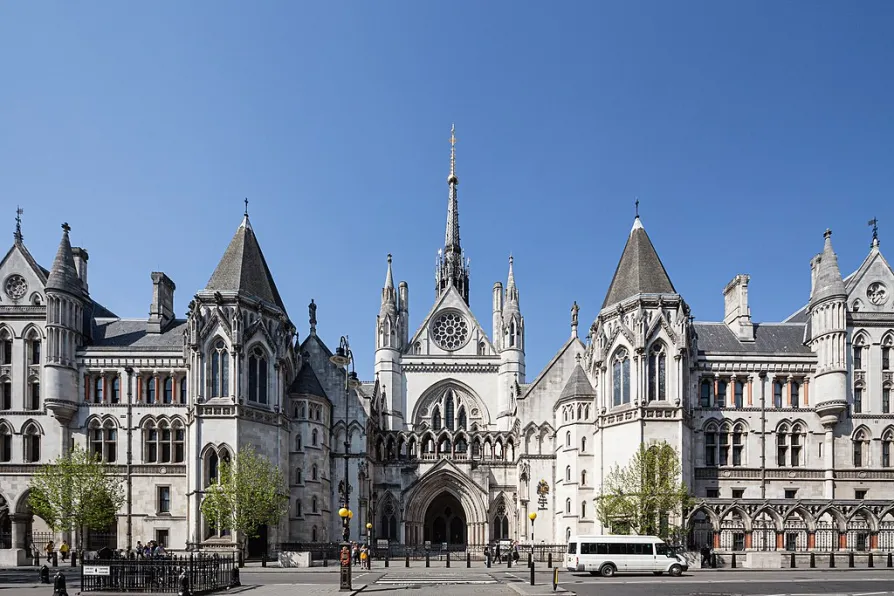
 The Royal Courts of Justice
[David Castor/Creative Commons]
The Royal Courts of Justice
[David Castor/Creative Commons]






A COMPANY’S bid to clawback some £8,000 in training costs from a former employee was thrown out by the Court of Appeal this month because it undermined the national minimum wage.
Joseph Watts had to sign a contract that meant he took £8,108 debt for supposed training costs when he joined software development company Geeks Ltd in March 2019.
He was employed as a trainee quality assurance engineer on a salary of £18,000 and the costs could either be paid off monetarily or through “work contributions” following his first year on the job.
Mr Watts left after eight months after he received a more lucrative job offer elsewhere, having unsuccessfully tried to negotiate an improved salary.
Geeks then began to pursue him for the training costs and the case went to court in July 2023.
A judge’s ruling in favour of the firm was thrown out by the Court of Appeal after judges concluded that the training costs put to Mr Watts were roughly equivalent to his salary for six months.
This effectively amounted to him working unpaid for that period of time and as a result, this undermined public interest policies such as the national minimum wage.
The judges noted that while maintaining a stable and trained workforce was a legitimate interest for Geeks, the debt was payable regardless of the employee’s departure and the costs were “highly artificial.”
Leigh Day solicitor Aman Thakar, who represented Mr Watts, said Geek’s contract as “indentured servitude,” saying: “This decision is highly significant as it demonstrates that such opportunistic working practices are in fact unlawful.”
Mr Watts’s case was supported by the Good Law Project.
Geeks Ltd was contacted for comment.



![[Pic: Andrew Wiard]](https://msd11.gn.apc.org/sites/default/files/styles/desktop/public/2026-01/19860406_a_wiard_0001.jpg.webp?itok=d2RMNwWw)
LAURA DAVISON traces how Murdoch’s mass sackings, political deals and legal loopholes shattered collective bargaining 40 years ago – and how persistent NUJ organising, landmark court victories and new employment rights legislation are finally challenging that legacy