PCS general secretary FRAN HEATHCOTE explains why opposing war is inseparable from defending jobs, wages and public services – and why readers should come to the London Peace Conference on Saturday June 20


 Latest editorial
The Epstein files and the sexualised industrial complex
Systems of power enable, excuse and normalise abuse, while survivors are ignored and women’s exploitation is repackaged as commerce and choice, warns CHARLIE WEINBERG
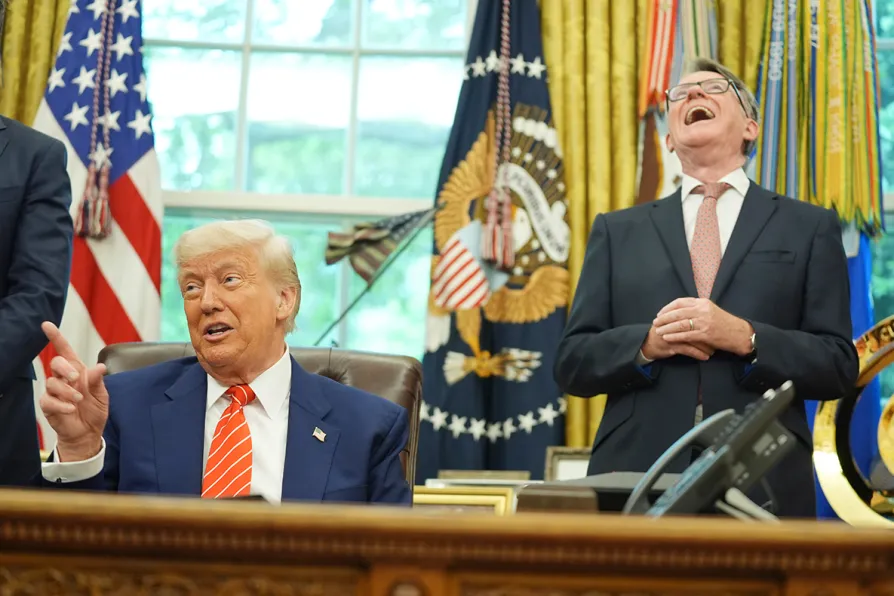 US President Donald Trump and Britain's then ambassador to the United States Peter Mandelson in the Oval Office of the White House, Washington, May 8, 2025
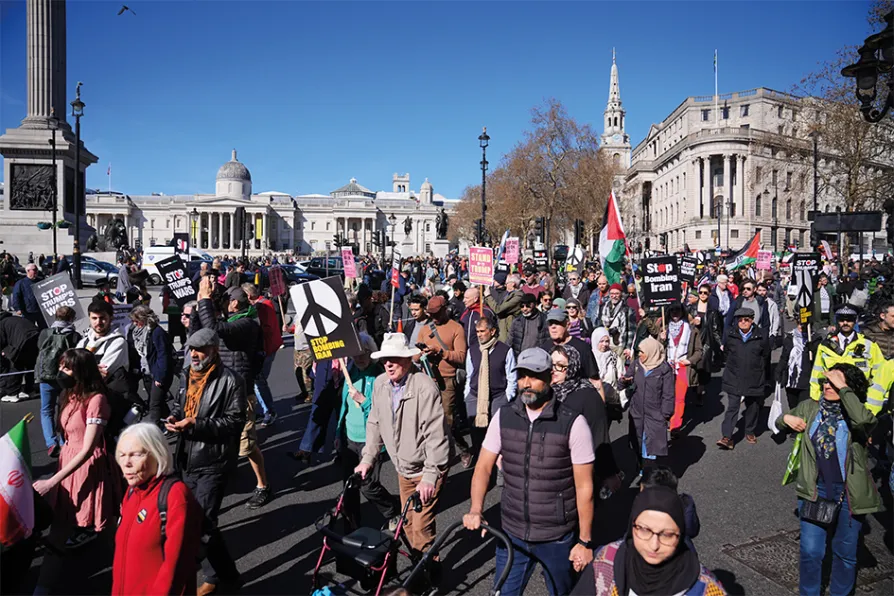
As protests erupt over Henry Nowak’s murder, ANDREW MURRAY argues that anger is being exploited to advance a wider racist and anti-immigration agenda
CARLOS MARTINEZ explains the sound case for car manufacturing co-operation with China
The National Emergency Briefing outlines the need for urgent action to address environmental crisis, says PAUL DONOVAN, warning that there’s no time to indulge the arguments of the fossil-fuel-funded climate-change deniers
Campaigners say criticism of Labour MP Stephen Morgan’s position on Gaza has been met with police intervention and cancelled opportunities for debate. HESTER WOLFE reports
The Committee for the Defence of Iranian People’s Rights warns of escalation danger in Iran war





THE Epstein files represent another in a long cycle of sexualised exploitation on industrial scale. I term this the sexualised industrial complex given its now undeniable international, multilayered nexus of power and control.
In recent decades we have lived through the Catholic church, Oxfam, the Paedophile Information Exchange and the undercover police officers who lied to women for years with full protection of the state or abused women in their duties.
There are similarly numerous examples of high-profile individuals (including those in seats of power) involved in sexualised abuse and exploitation. There are innumerable examples of sexualised abuse and exploitation across political and cultural divides, social and professional class and institution.
From Sean Combs to Michel Foucault, there is a long list of publicly documented histories of involvement with girls or boys for sexualised abuse. Some of these stories have been entrenched through popular films, further romanticising the idea of the willing, consenting and lucky girl (or, less frequently, boy).
When I worked in a drug advice service as a young adult myself in the 1990s, I interviewed a man who self-referred (the project did not accept referrals from anyone but the drug user themselves) as the first step in his access to our services.
Through that interview I learnt that during the 1970s and ’80s, Frank Beck had risen through the ranks of the county social services department, eventually becoming head of the entire system, raping and abusing boys and, it later emerged, social work trainees under his dominion. The man I was interviewing was a bus driver, now using crack and heroin to cope with the physical and emotional scars of his childhood in a home where Beck had worked.
Like Epstein, Beck was found dead in a prison cell shortly after his conviction. Just as now, there followed public outrage and swift policy and practice changes to “child protection” (as it was ironically named back then) and vetting procedures, supervision and attention to quality standards in children’s care.
Like Epstein, Beck was enabled, ignored and protected by hundreds of people in his wake. Fear, uncertainty, rank, role and lack of assurance that complaints will be taken seriously create the conditions in which abuse proliferates.
What changes after exposure is not access, but language. New protocols are written; the same hierarchies remain. Abuse adapts faster than institutions or cultural norms and expectations.
During the years I worked in drug and young people’s services in Leicester (where Beck reigned for so long), a friend applied for a leadership role in a drugs service agency for which she was eminently qualified and experienced. She was refused the role apparently based on her “criminal associations.”
Her ex-partner supposedly had ties to a criminal network that precluded her from the position given the vulnerabilities of the client group. I cannot verify or explain the details of that situation now, but it does make me wonder if there is any truth to that story, how and why due diligence for someone entering the highest echelons of government cannot identify even such tenuous “associations.”
Many years later in my career, another friend was denied access to continue her work in sensitive locations because of her “association” with a person of concern to the authorities. Again, I struggle with the question of how it can be possible for another black woman to be prohibited from her work in a public institution and yet not for a senior government official to raise any flags.
Racism, class and function play important parts in the assessment of “entry” to influence and power, of course.
The Epstein files do not reveal anything new or unknown about abuse, exploitation and the objectification of girls and women. The fact we have a term for human trafficking implies a good sense of the problem globally.
One acutely clear pattern of note in the industrial-scale abuse networks is that survivors are ignored, denied and denigrated over many years.
The pattern revolves around two assumptions that implicitly underpin this system, in almost every country around the world, such is the nature of patriarchal control.
1. Rape is part of being female. Women, no matter how much we may “protest” are ultimately responsible for sexualised violence against us.
2. It doesn’t really matter if women are raped or abused because of 1.
When it is convenient for people to access vulnerable (young) people or to provide access to power and influence, it seems there are routes. Jimmy Savile is perhaps one of the best recent examples. Unless you prefer as an example of institutional dereliction of duty, Wayne Couzens.
Decades of global data repeat the facts: reporting is rare, conviction rarer, institutional accountability all but absent.
If the public outrage, handwringing, news feeds and headlines are to mean anything, it must be that the access to sexualised abuse and exploitation on industrial scale is brought to an end.
Unless there is only to be concern when “rich” or “migrant” men are the perpetrators of abuse, it must be acknowledged that the same economic logic that enables elite abuse, normalises commodified sexual access everywhere. It is therefore relevant to remind ourselves Epstein was from a working-class, immigrant family. He was not protected by wealth or networked into power by birth.
Working-class, left-wing and non-elite men participate in the reproduction of sexist and misogynist culture that results in Pornhub and Onlyfans. These global platforms make sexualised exploitation and abuse, mainstream commercial fodder for a global public of all ages.
In Britain, sister campaign organisation Nordic Model Now has a current petition to prevent the state agency the Department of Work and Pensions from promoting OnlyFans as an income stream for female benefits claimants. Women are being encouraged to “sell” their bodies to exit or reduce their welfare burden.
If this society holds with the sale of bodies for survival, perhaps we need to review many of our rights, policy positions and international aid programmes. Selling human bodies is not, many people have concurred, a justifiable way to administer an economic system.
Human trafficking is illegal. Organ harvesting is understood to be barbaric. While it is no doubt possible to access such networks on the dark web, KidneyHub and OnlyModernSlaves are yet to reach TikTok on subscription. Why is the strangulation, subjugation and violent abuse of girls and women legally available?
If there is any genuine commitment to the end of abuse of women and girls, the left must commit to women’s liberation as a precondition for a socialist society. Similarly, the political right must give up its double standards and fundamental adherence to the patriarchal code that sustains women as subordinate in every way.
Commercial pornography is an extension of the political consent for violence against women and girls.
Each of us, from wherever we stand, must now commit to not swallow the lies we are fed by a media, education, health and economic system, designed to uphold a racist, misogynistic status quo that reduces women and girls to commodities and men to consumers. Spit it out.
Charlie Weinberg is a member of the Women’s Liberation Alliance steering group.
